Info
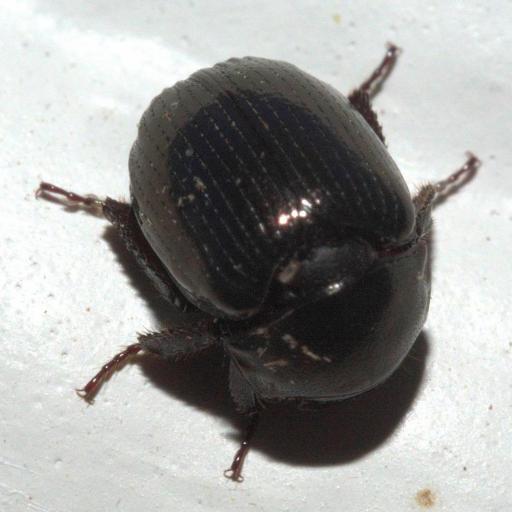
Often called "Scavenger Scarab Beetles," these tiny armored tanks are the cleanup crew of the insect world. While they might look like common beetles at first glance, their distinct, prominent jaws give them a slightly prehistoric, rugged appearance. They are harmless neighbors that play a vital role in the ecosystem by recycling nutrients back into the earth.
🔍 How to Identify
- 🪲 The "Hunchback" Profile: Their bodies are highly convex and rounded, often looking like a polished dome or a tiny, glossy pebble.
- 👄 Visible Mandibles: Unlike many other beetles whose mouthparts are tucked away, Hybosoridae have large, sickle-shaped jaws that protrude forward and are clearly visible from above.
- 📡 Clubbed Antennae: They possess short antennae that end in a distinct, 3-segmented club, which they use to sniff out decaying organic matter from a distance.
🌲 Habitat & Ecology
- 🔦 Night Owls: These beetles are primarily nocturnal. If you see a small, shiny beetle buzzing around your porch light or camping lantern, there’s a good chance it’s a member of this family.
- ♻️ Expert Decomposers: As their name suggests, they live on a diet of "leftovers." They are frequently found in animal dung, decaying fungi, or buried near small carcasses, where they accelerate the decomposition process.
- 🌍 Subterranean Stages: Their larvae (grubs) typically live underground or inside rotting wood, quietly processing organic debris and enriching the soil.
⚠️ Safety & Toxicity
- ✅ Harmless Neighbor: These beetles are completely non-aggressive. They do not sting, and while their mandibles look intimidating, they are designed for scavenging and are not strong enough to pierce human skin.
- 🐶 Pet Safety: They are non-toxic and pose no threat to curious cats or dogs. However, their hard, chitinous shells might cause a bit of indigestion if swallowed in large quantities by a pet.
✨ Fun Fact
Some species of Hybosoridae are "musical" insects! They possess specialized ridges on their bodies that they rub together to create tiny squeaking sounds (stridulation), likely used to startle predators or communicate with potential mates in the dark.
More Details








