Info
The Oak Winter Highflier is a master of camouflage that braves the chilly months when most other insects are still in deep slumber. Named for its habit of fluttering high among the canopy of coastal oaks, this moth is a subtle herald of the coming spring. In the Western United States, catching a glimpse of one resting on a lichen-covered trunk is like finding a hidden treasure, as they blend perfectly into the forest landscape.
🔍 How to Identify
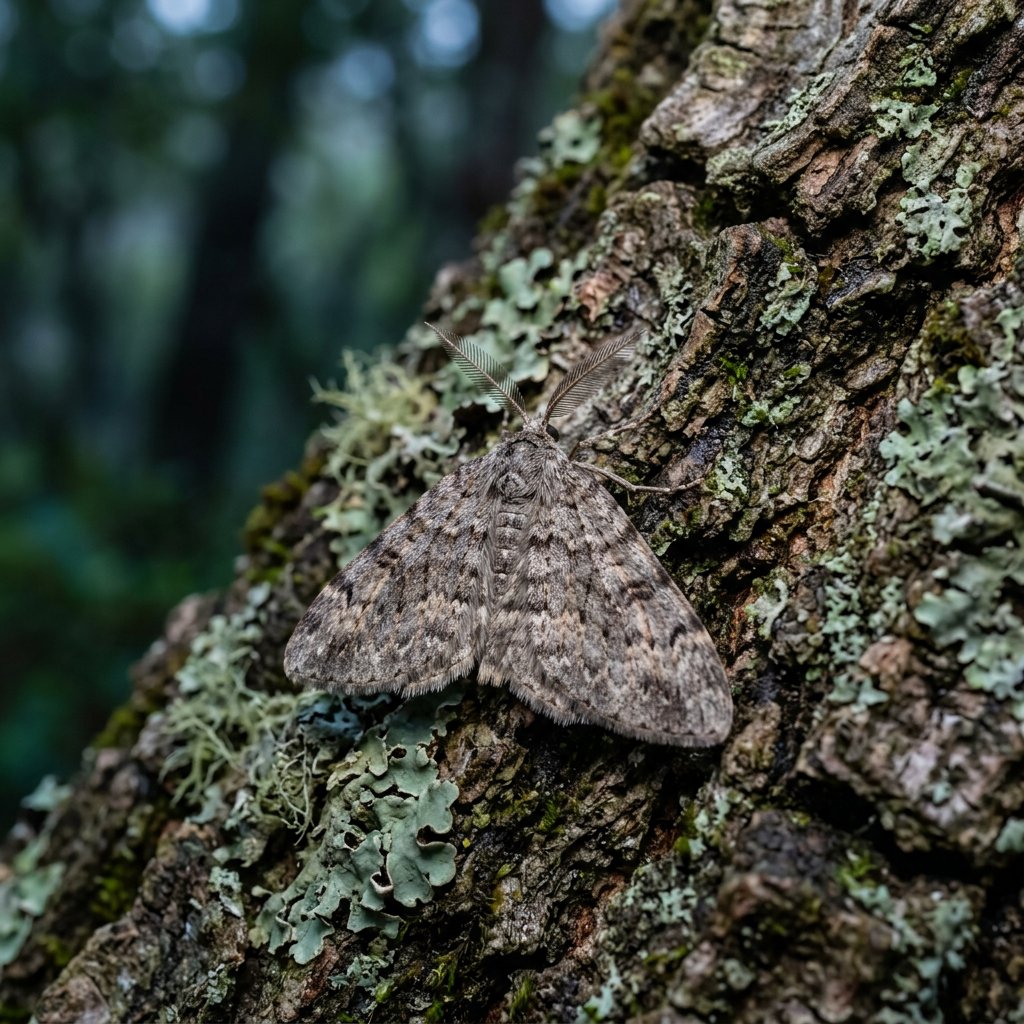
- 🦋 The Wings: Feature a complex, "clouded" pattern of wavy gray, brown, and charcoal bands. The scientific name nubilofasciata literally translates to "cloudy-banded."
- 📐 Resting Posture: Unlike butterflies, this moth rests with its wings spread flat against the surface, creating a distinct triangular or "delta" silhouette that minimizes shadows.
- 🌿 Size and Shape: A relatively small moth with a slender body, often appearing slightly "fuzzy" around the head and thorax to help insulate it against the winter air.
🌲 Habitat & Ecology
- 🌳 Oak Specialists: You will almost exclusively find these moths near Oak woodlands, particularly where Coast Live Oaks thrive. The larvae (caterpillars) rely on tender new oak leaves for their first meals.
- 🧗 The "Looper" Life: Before they take to the skies, the young are classic "inchworms." They move with a looping gait, anchored at both ends, perfectly mimicking a tiny green twig to avoid hungry birds.
- 🌙 Night Owls: While they are called "highfliers," they are primarily nocturnal or crepuscular, often drawn to porch lights or the windows of homes near wooded areas.
⚠️ Safety & Toxicity
- ✅ Harmless Neighbor: The Oak Winter Highflier is completely safe. They do not bite, sting, or carry diseases, and they possess no chemical defenses that would irritate human skin.
- 🐾 Pet Friendly: If your cat or dog manages to catch one, there is no cause for alarm. They are non-toxic, though the scales on their wings might cause a tiny puff of "dust" if disturbed.
✨ Fun Fact
The "Highflier" isn't just a fancy name—these moths are known for their impressive vertical range. While many moths stick close to the shrubs, this species is frequently found active in the very tops of 60-foot oak trees, mating and laying eggs where the newest, softest leaves will first appear.
More Details








