Info
Known as the Lesser Silver Water Beetle, this sleek aquatic navigator is often overshadowed by its larger cousin, the Great Silver Water Beetle. Despite its "lesser" name, it is a fascinating underwater engineer that carries its own oxygen supply wherever it goes. In some regions, like the UK, it is a rare and protected species, acting as a tiny, armored ambassador for healthy wetland ecosystems.
🔍 How to Identify
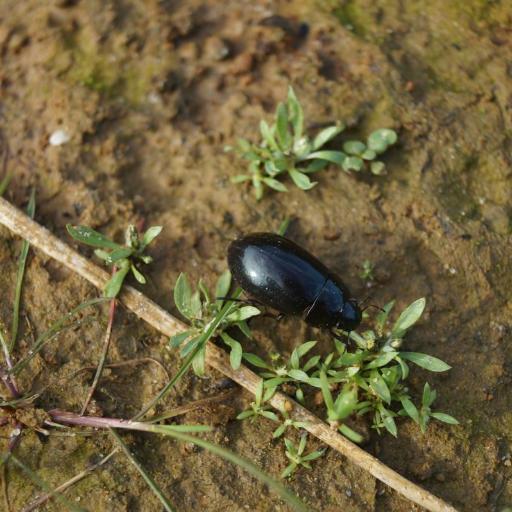
- 🪲 The Body: Features a smooth, oval, and slightly convex shape. It is typically a deep olive-black or brownish-black with a polished, high-gloss finish.
- ✨ The "Silver" Belly: When submerged, the beetle's underside appears to shimmer like liquid silver. This is actually a thin layer of trapped air bubbles held against tiny, water-repellent hairs.
- 🚣 Swimming Legs: Its middle and hind legs are fringed with long, stiff hairs that act like oars, allowing it to "row" gracefully through stagnant or slow-moving water.
🌲 Habitat & Ecology
- 💧 Still Waters: It favors shallow, permanent water bodies like fens, ditches, and ponds that are rich in submerged vegetation. It relies on these plants for both food and a place to hide from larger predators.
- 🍽️ Dietary Shift: This insect undergoes a total lifestyle change as it grows. The larvae are "fierce" predators that hunt aquatic snails, while the adults are mostly peaceful scavengers, munching on decaying plant matter and algae.
⚠️ Safety & Toxicity
- 🟢 Harmless: The Lesser Silver Water Beetle is completely non-toxic and lacks a stinger. It is safe to observe and poses no threat to humans or curious pets.
- 🤏 Gentle Handling: While it may attempt a tiny "pinch" with its mandibles if squeezed, it is not strong enough to break human skin. It is best to observe them in their watery homes rather than picking them up.
✨ Fun Fact
To breathe underwater, this beetle uses its antennae to "snorkel." It pokes them through the surface film to pull a fresh bubble of air down onto its belly, essentially wearing a natural SCUBA tank that it refills periodically!
More Details








