Info
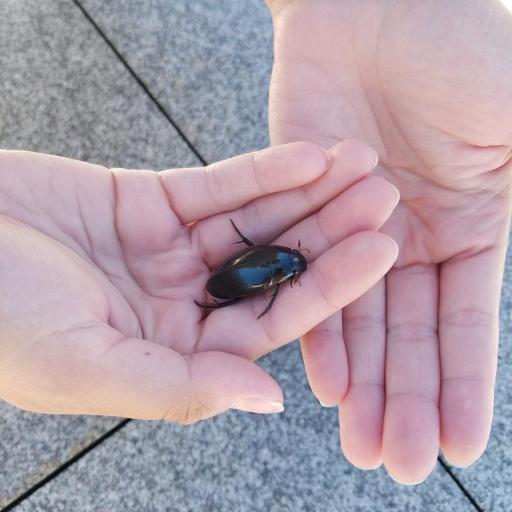
Often called the Giant Water Scavenger Beetle, this sleek, jet-black insect is the "submarine" of the backyard pond. Frequently seen crashing into porch lights at night or swimming gracefully through aquatic plants, it looks far more intimidating than it actually is. Across North America, it is celebrated as a vital part of freshwater ecosystems, acting as a natural cleaning crew for stagnant waters.
🔍 How to Identify
- 🛳️ Body Shape: A large, smooth, elongated oval body that can reach nearly 2 inches in length, typically shimmering with a deep black or dark olive sheen.
- 🗡️ The Ventral Spine: Its most famous feature is a long, needle-like "keel" or spine on its underside. While it looks like a stinger, it is actually part of its skeletal structure.
- 🛶 Oar-like Legs: The hind legs are flattened and fringed with fine hairs, acting like specialized paddles to propel the beetle through the water with an alternating "walking" stroke.
🌲 Habitat & Ecology
- 🫧 Scuba Gear: These beetles carry their own oxygen supply! They trap a thin layer of air against their silver-haired underbelly, which looks like a shimmering metallic bubble when they dive.
- 🥗 Pond Janitors: While their larvae (known as "water tigers") are fierce predators, the adults are primarily scavengers. they spend their time eating decaying plant matter and organic debris, helping to keep pond water clear.
- 🌙 Night Travelers: They are surprisingly strong fliers. On humid nights, they leave their ponds to find new mates, often mistaking the reflection of streetlights or swimming pool lights for the moon hitting a water surface.
⚠️ Safety & Toxicity
- 🤏 The Pinch: They are not venomous and do not seek out humans. however, if handled roughly, they can deliver a sharp pinch with their mandibles or a defensive poke with their underside spine.
- 🐾 Pet Safety: They are non-toxic to pets. If a curious dog or cat finds one, the beetle’s hard exoskeleton usually makes it an unappealing—and very crunchy—toy rather than a snack.
✨ Fun Fact
🔊 The Squeaker: If you pick one up, don't be surprised if it "talks" back! When threatened, the Giant Water Scavenger Beetle can produce a faint, audible squeaking sound by rubbing its abdomen against its wing covers to startle would-be predators.
More Details








