Info
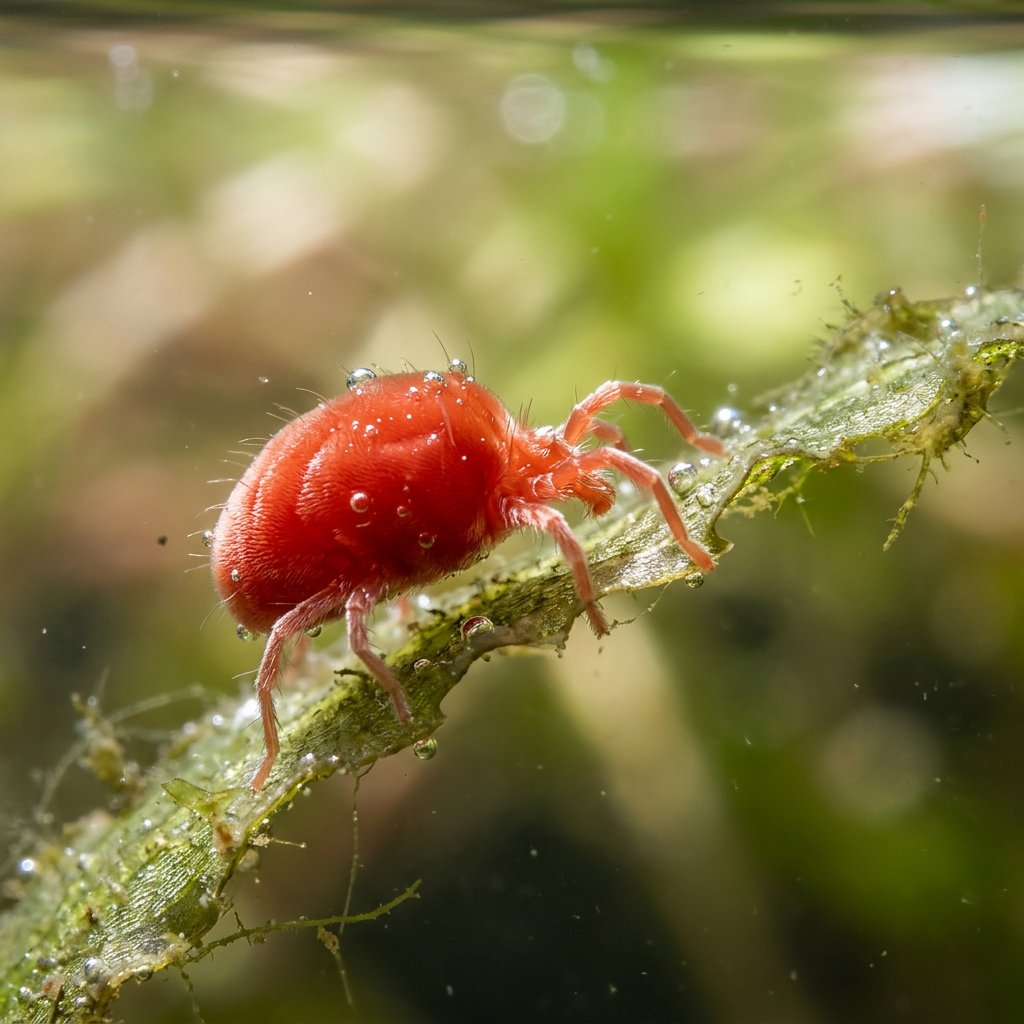
Known as "Water Mites," these tiny crimson gems are the hidden jewels of the freshwater world. Often mistaken for swimming spiders due to their eight legs, these arachnids are vital indicators of a healthy ecosystem. While their bright red color might look like a warning, they are fascinating predators that transition from tiny "hitchhikers" to skilled underwater hunters.
🔍 How to Identify
- 🔴 Vibrant Color: Most species are a striking "caution" red or deep orange, making them highly visible against green pond weeds or dark sediment.
- 🕷️ Leg Count: As arachnids, adults possess eight legs. These are often fringed with fine, swimming hairs that act like tiny oars to propel them through the water.
- 🧸 Velvety Texture: Their bodies are soft and covered in dense, microscopic bristles, giving them a fuzzy, velvet-like appearance even when submerged.
🌊 Habitat & Ecology
- 💧 Quiet Waters: You will typically find them in the "slow lane"—stagnant ponds, marshes, and the calm edges of lakes where they hunt for small crustaceans and insect eggs.
- 🦟 The Parasitic Phase: Their life cycle is a bit of a thriller. As larvae, they are parasitic and latch onto flying insects like dragonflies or mosquitoes, sucking their "blood" (hemolymph) before dropping back into the water to mature.
- 🦠 Ecological Balance: By feeding on midge and mosquito larvae, they act as a natural pest control system within your local pond or backyard water feature.
⚠️ Safety & Toxicity
- ✅ Safe for Humans: Despite their bright "warning" colors, Hydryphantidae are completely harmless to people and pets. They do not bite or sting humans.
- 🛡️ Natural Defense: Their bright red color is actually "aposematic," telling fish that they taste bitter and unpleasant, which helps them avoid being eaten.
✨ Fun Fact
Scientists call their unique way of traveling "phoresy." A single dragonfly can sometimes be seen carrying dozens of these bright red mites on its underside, looking like it is wearing tiny, living ruby jewelry while it flies between ponds!
More Details








