Info
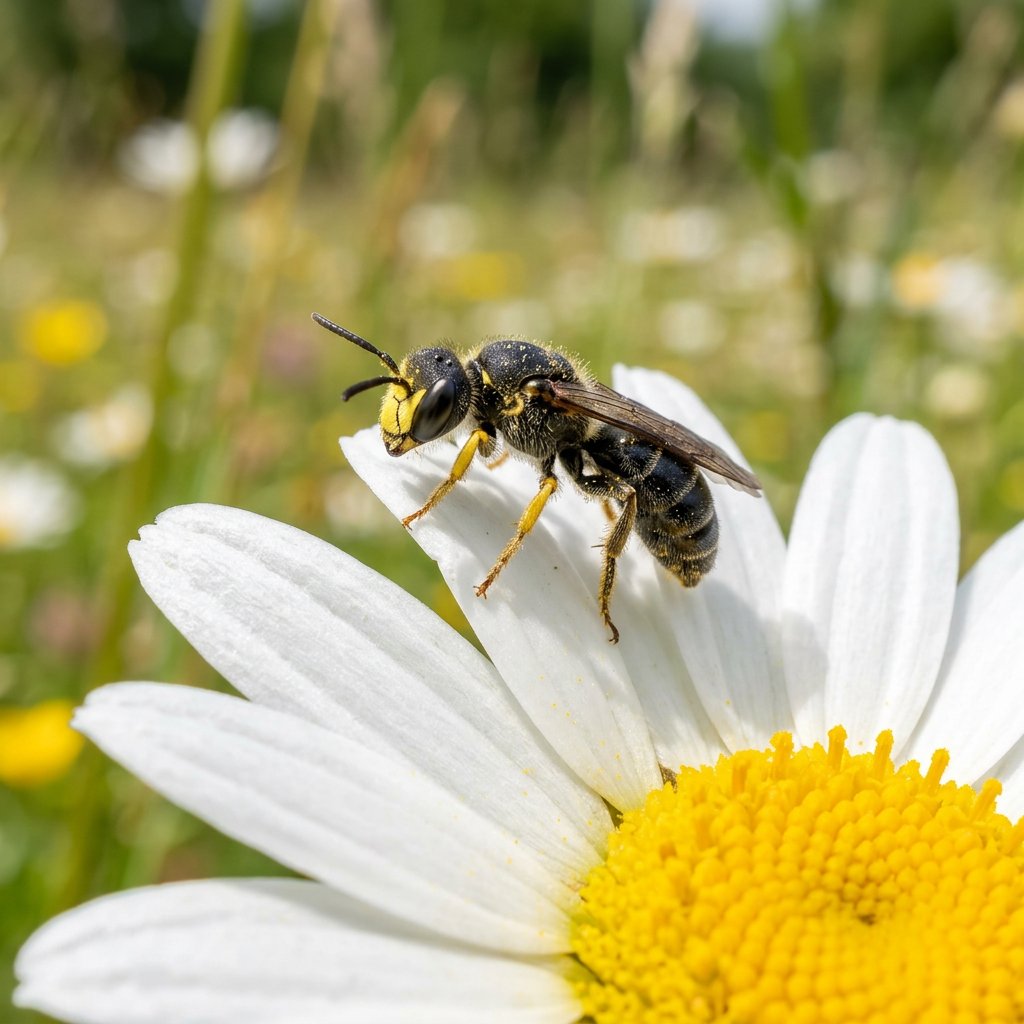
Often mistaken for a tiny wasp, Hylaeus annulatus—commonly known as the Annulated Masked Bee—is a fascinating, solitary native bee. They are the "minimalists" of the bee world, lacking the fuzzy, golden coats we usually associate with honeybees. Instead, they sport sleek, black bodies and mysterious "masks" that make them look like tiny superheroes patrolling your garden.
🔍 How to Identify
- 🎭 The "Mask": The most striking feature is the ivory or pale yellow markings on the face. In males, this "mask" covers most of the lower face, while females typically have two small, triangular spots near the eyes.
- 🖤 Sleek Physique: Unlike fluffy bumblebees, these are slender, black, and relatively hairless. This smooth appearance often leads people to mistake them for small, non-aggressive wasps.
- 📏 Diminutive Size: They are quite small, usually measuring only 6 to 8 millimeters. You’ll need to look closely at flower centers to spot these fast-moving pollinators.
🌲 Habitat & Ecology
- 🪵 The Stem-Nester: These bees are solitary and don't build large hives. Instead, they seek out hollow twigs, pithy bramble stems, or abandoned beetle burrows in dead wood to create individual nurseries for their young.
- 🥗 Internal Transport: Most bees carry pollen on their legs or belly, but Masked Bees are unique; they swallow pollen and nectar, carrying it in a specialized internal stomach (crop) to transport it back to their nests.
- 🌸 Summer Specialist: You are most likely to see them active during the mid-to-late summer months, frequenting open-faced flowers like wild carrot, daisies, and garden herbs like fennel or mint.
⚠️ Safety & Toxicity
- 🛡️ Harmless Neighbor: Despite their wasp-like appearance, they are exceptionally docile. Because they have no queen or hive to defend, they have no reason to be aggressive toward humans or pets.
- 🐝 Minimal Sting Risk: While females technically possess a stinger, it is very small and used only if the bee is physically crushed. For most people, a "sting" from a Masked Bee is barely noticeable and less painful than a mosquito bite.
✨ Fun Fact
Masked bees are often called "Cellophane Bees" because they produce a waterproof, plastic-like secretion from a special gland. They use their tongues to paint this "liquid silk" onto the walls of their nests, creating a shiny, moisture-proof lining for their larvae!
More Details








