Info
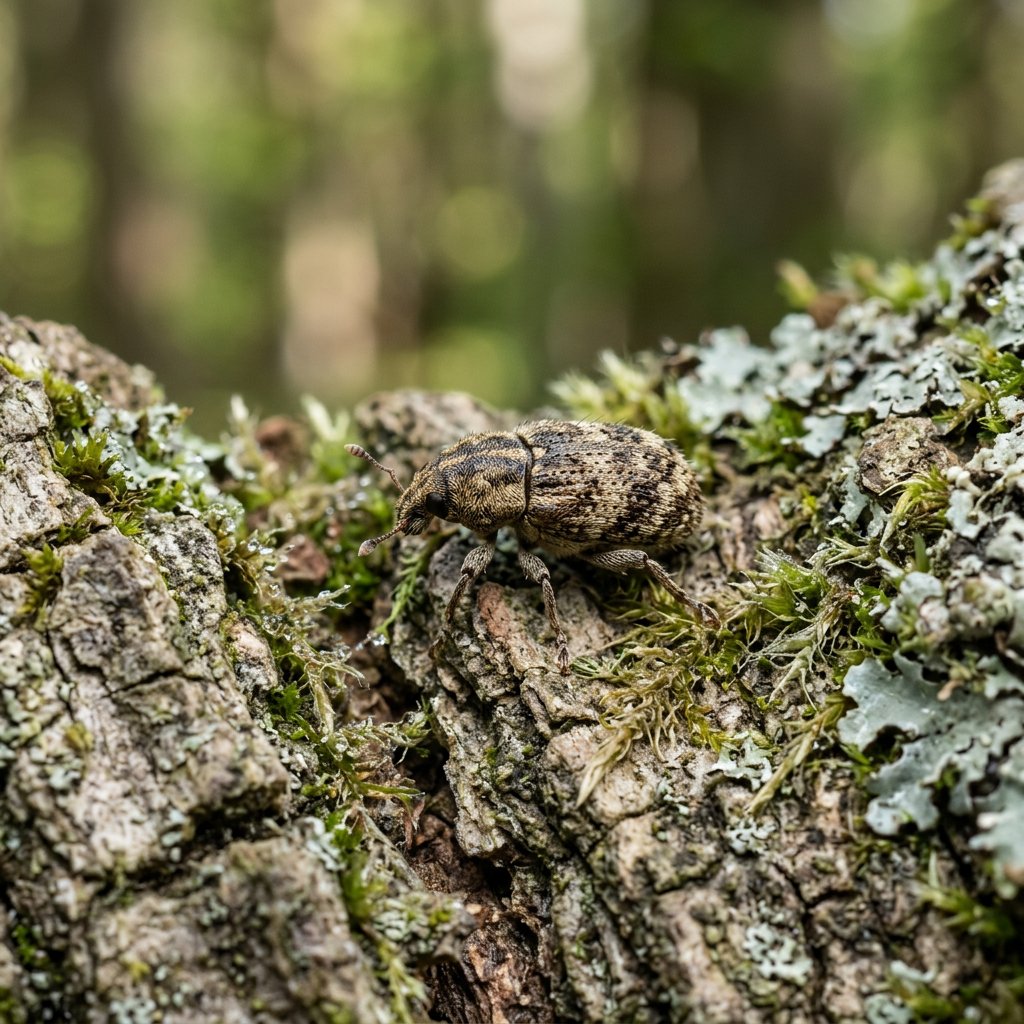
Often called the Ash Bark Beetle, this tiny insect is a master of camouflage and a hidden architect of the forest. While it may look like a harmless speck of dirt to the naked eye, it plays a significant role in the lifecycle of timber, acting as a "foe" to weakened trees but a vital recycler in the natural ecosystem.
🔍 How to Identify
- 🎨 Mottled Armor: Its most striking feature is the variegated pattern of light and dark scales on its wing covers, which mimics the look of lichen or weathered bark.
- 🪵 Cylindrical Build: It possesses a classic "bullet-shaped" body, a specialized evolution that allows it to navigate tight, pressurized tunnels beneath tree bark.
- 🔍 Microscopic Presence: Adults are incredibly small, typically measuring only 2.5 to 3.5 millimeters in length—roughly the size of a sesame seed.
🌲 Habitat & Ecology
- 🌳 The Ash Specialist: This beetle is highly selective, almost exclusively targeting Ash trees (Fraxinus). It is particularly drawn to trees that are already stressed, diseased, or recently fallen.
- 🖼️ Artistic Galleries: The beetle is famous for the "engravings" it leaves behind. Females bore horizontal tunnels (galleries) to lay eggs, while the larvae chew vertical paths outward, creating a beautiful, fan-like pattern etched into the wood surface.
- 🍂 Forest Recycler: By breaking down the inner bark of dying trees, they help speed up the decomposition process, eventually returning nutrients to the forest floor.
⚠️ Safety & Toxicity
- 🛡️ Harmless to Humans: The Ash Bark Beetle is entirely "neutral" toward people and pets. It does not bite, sting, or carry any venom or diseases that affect mammals.
- 🍂 Plant Health Risk: While safe for humans, they are considered a pest in managed forests or gardens. A heavy infestation can girdle a branch, causing "flagging" (where leaves turn brown and die) or weakening the overall structure of a prized Ash tree.
✨ Fun Fact
The intricate tunnels left by these beetles are so precise and geometric that early naturalists sometimes referred to them as "Scolytid art," and in some folklore, the patterns were mistakenly thought to be a secret "language of the trees" or ancient runes.
More Details








