Info
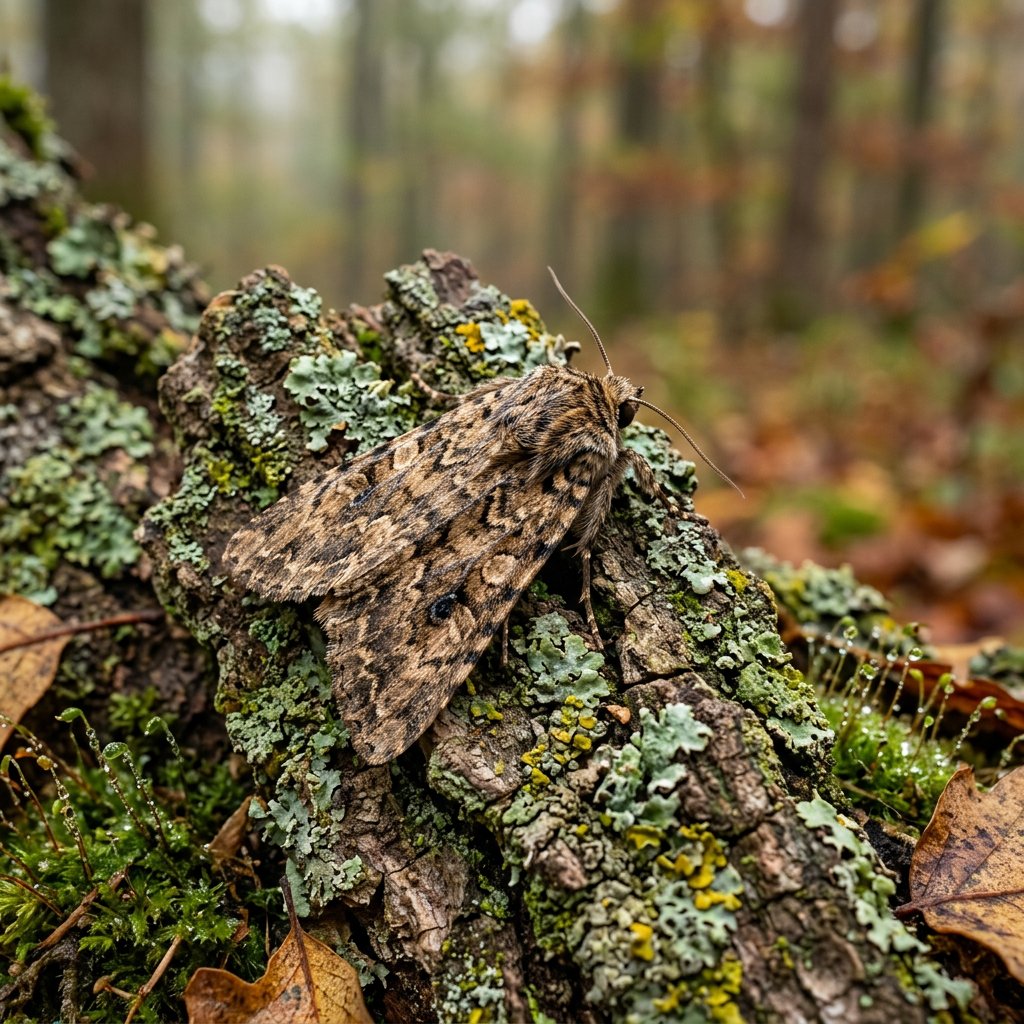
Often called the One-spotted Variant, this moth is a master of camouflage that hides in plain sight across North American forests. Looking more like a piece of weathered tree bark than a living creature, it is a frequent guest at porch lights during summer evenings. While it may seem like a plain "little brown moth," its intricate patterns are a testament to nature's artistry in concealment.
🔍 How to Identify
- 🦋 The "One" Spot: Look for a single, distinct white or dark discal spot on the forewing, which gives the moth its scientific name, unipunctata.
- 🍂 Mottled Wings: The wings are decorated with wavy, brownish-gray lines and "peppered" speckles that mimic the texture of lichen and wood.
- 📐 Resting Posture: Unlike butterflies, this moth rests with its wings spread flat against a surface, minimizing its shadow to better blend in with the tree bark.
🌲 Habitat & Ecology
- 🍽️ A Generalist Eater: The larvae are "inchworms" that aren't picky eaters; they munch on a wide variety of trees including birch, oak, willow, and even some pines.
- 🦉 Nocturnal Life: This moth is strictly a creature of the night. During the day, it stays perfectly still on tree trunks, relying on its "invisible" coloring to hide from hungry birds.
- 🌳 Forest Resident: You’ll most likely find them in deciduous or mixed woodlands, though they often stray into suburban backyards with plenty of leaf litter and trees.
⚠️ Safety & Toxicity
- ✅ Harmless Neighbor: The One-spotted Variant is entirely non-toxic and lacks any ability to sting or bite.
- 🐾 Pet Friendly: They are safe around curious cats and dogs. They pose no threat to your garden plants compared to more destructive pests like the Spotted Lanternfly.
✨ Fun Fact
The caterpillars of this species are so good at mimicking twigs that they even have "nodes" on their bodies that look like leaf scars, making them nearly impossible to see until they start "inching" along a branch!
More Details








