Info
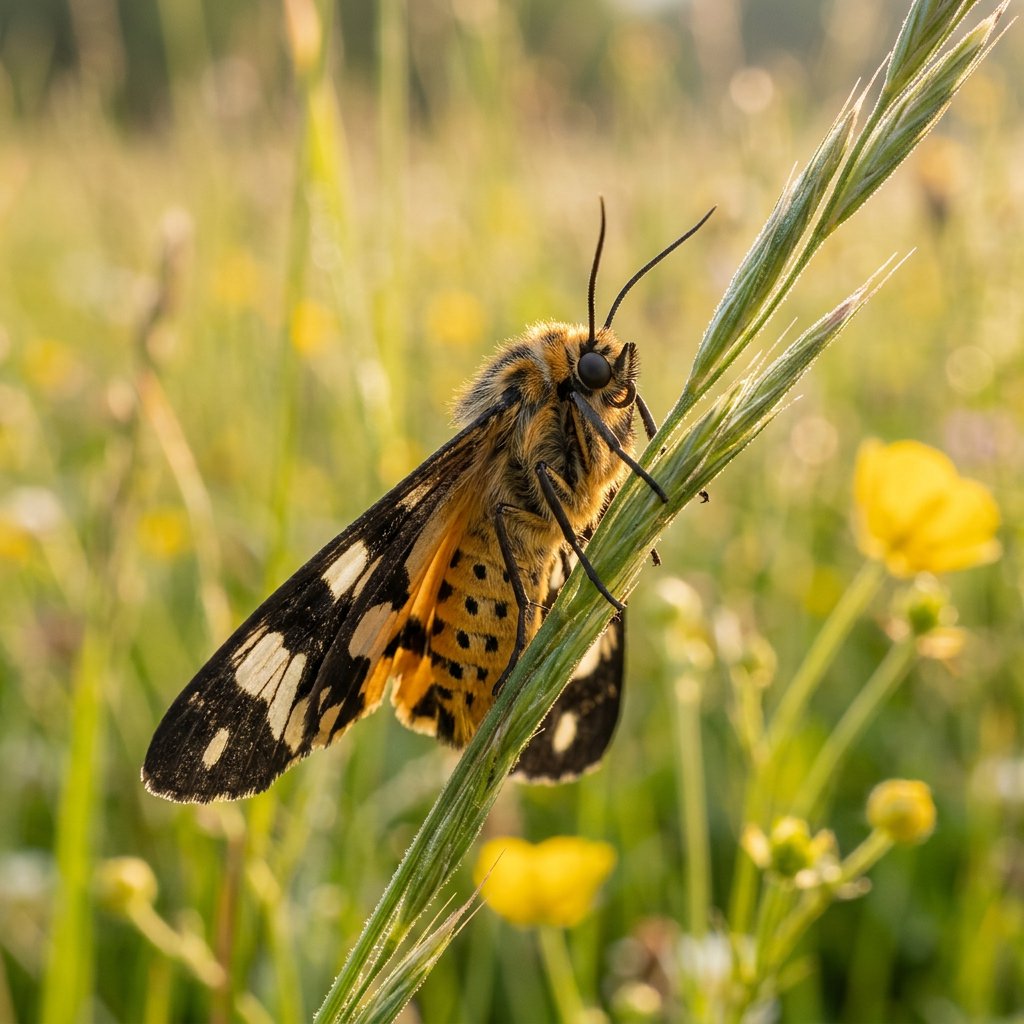
Often called the Courtly Tiger Moth, Hyphoraia aulica is a stunning example of nature's "don't touch me" warning system. While many moths hide in the shadows of the night, this vibrant species is a sun-lover, often seen flitting through meadows like a misplaced butterfly. Its name "Aulica" comes from the Latin for "courtly" or "princely," a nod to its elegant, regal patterns.
🔍 How to Identify
- 🦋 Forewings: Deep chocolate brown or charcoal black, decorated with distinct, irregular cream or pale yellow spots that look like a sophisticated mosaic.
- 🔥 Hindwings: Brilliant golden-orange or sun-yellow with large, bold black blotches, usually hidden when the moth is at rest but visible during flight.
- 🧶 Fuzzy Thorax: A thick, velvety "fur" coat covers its upper body, helping it regulate temperature during its daytime flights.
🌲 Habitat & Ecology
- ☀️ Sun Worshiper: Unlike most moths that wait for the moon, the males are highly active during the day. They can be found racing over warm, dry grasslands, heathlands, and sunny forest clearings.
- 🥗 The "Woolly" Diet: As a caterpillar, it is a generalist "woolly bear." It grazes on various low-growing wildflowers and weeds, including dandelions, plantains, and hawkweeds.
- 🕸️ Winter Sleep: This species spends the winter as a caterpillar, tucking itself away in the leaf litter before emerging in the spring to finish growing and spin a cocoon.
⚠️ Safety & Toxicity
- 🛡️ Harmless Resident: The Courtly Tiger Moth is completely harmless to humans. It has no stinger and does not bite; it relies entirely on its "scary" colors to trick predators into thinking it is poisonous.
- 🧤 Hairy Caterpillars: While the adult is safe to watch, avoid picking up the fuzzy caterpillars with bare hands. Their stiff hairs can cause mild skin irritation or an itchy rash (dermatitis) in sensitive individuals or curious pets.
✨ Fun Fact
The bright orange hindwings serve as a "flash defense." When a bird or lizard tries to grab the moth, it suddenly reveals the burst of orange to startle the predator, giving the moth a split second to dive into the grass and disappear!
More Details








