Info
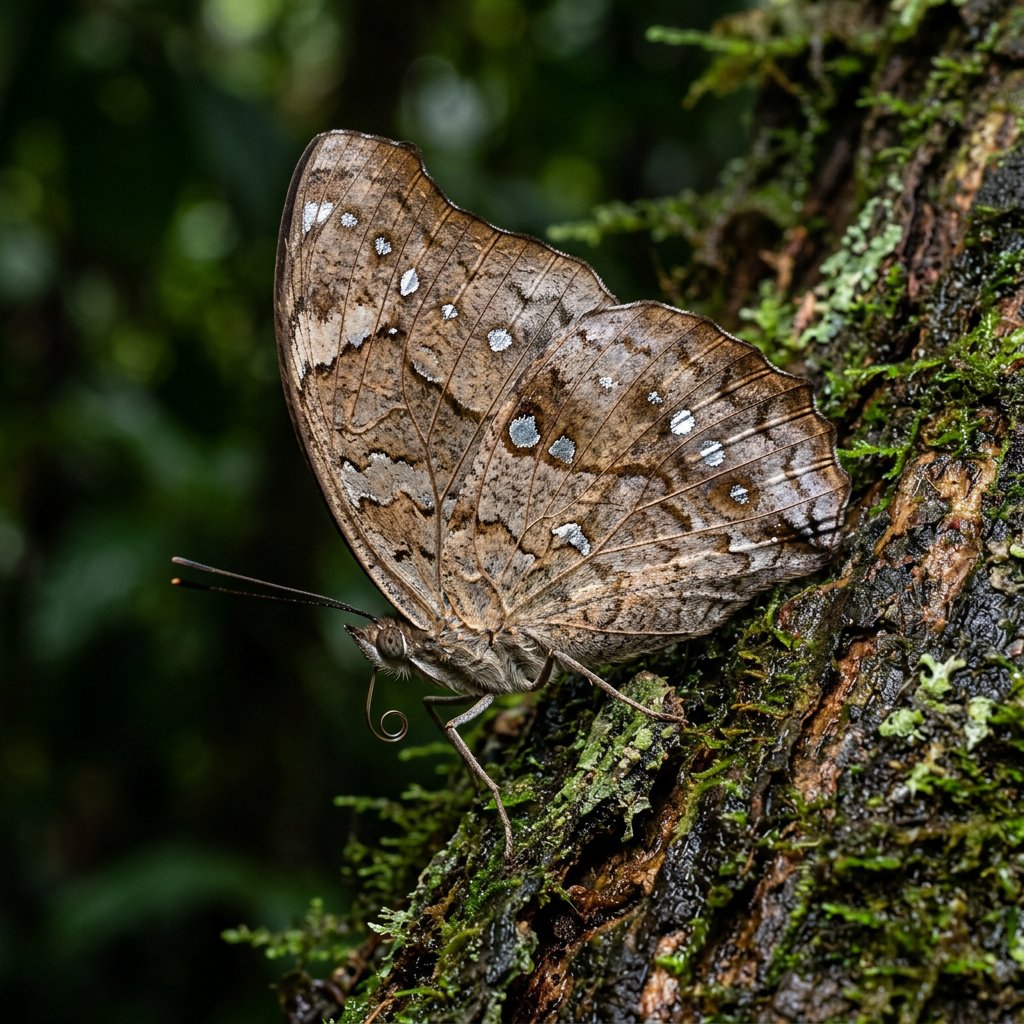
Often called the Silver-studded Leafwing, Hypna clytemnestra is one of nature’s most impressive illusionists. While it may look like a common, dried-out leaf when resting on a branch, it reveals a dramatic, velvety chocolate and cream interior the moment it takes flight. Found primarily in the tropical forests of Central and South America, this butterfly relies on its "dead leaf" disguise to vanish from the sight of hungry predators.
🔍 How to Identify
- 🦋 Wing Shape: Look for a unique, "falcate" (hooked) forewing and short, elegant tails on the hindwings that break up its insect-like silhouette.
- 🍂 The "Dead Leaf" Underside: The bottom of the wings is a complex mosaic of marbled browns, greys, and metallic silvery spots, perfectly mimicking decaying foliage.
- 🍫 Upperside Contrast: When open, the wings display a deep, velvety brownish-black base marked with bold, creamy-white or yellowish bands and spots.
🌲 Habitat & Ecology
- 🍎 A Different Diet: Unlike many butterflies that flutter from flower to flower, the Leafwing rarely visits blossoms. Instead, it prefers "forest floor delicacies" like fermenting fruit, tree sap, and even carrion.
- 🌿 Forest Dweller: They are most at home in the shaded understory of tropical forests, where they stay low to the ground to blend in with the leaf litter.
- 🛡️ Master of Stillness: Their primary defense is remaining perfectly motionless; their jagged wing edges and "stem-like" tails make them virtually invisible to birds and lizards.
⚠️ Safety & Toxicity
- ✅ Harmless Friend: The Silver-studded Leafwing is a "friend" to humans. It does not sting, bite, or possess any chemical toxins that are dangerous to people or pets.
- 👐 Fragile Beauty: While safe to watch, their wings are covered in microscopic scales that provide their color and camouflage. Touching them can rub these scales off, making the butterfly more vulnerable to moisture and predators.
✨ Fun Fact
The genus name Hypna is derived from the Greek word for "sleep." This is a nod to the butterfly's habit of resting so motionless for such long periods that it appears to be in a deep, leaf-like slumber!
More Details








