Info
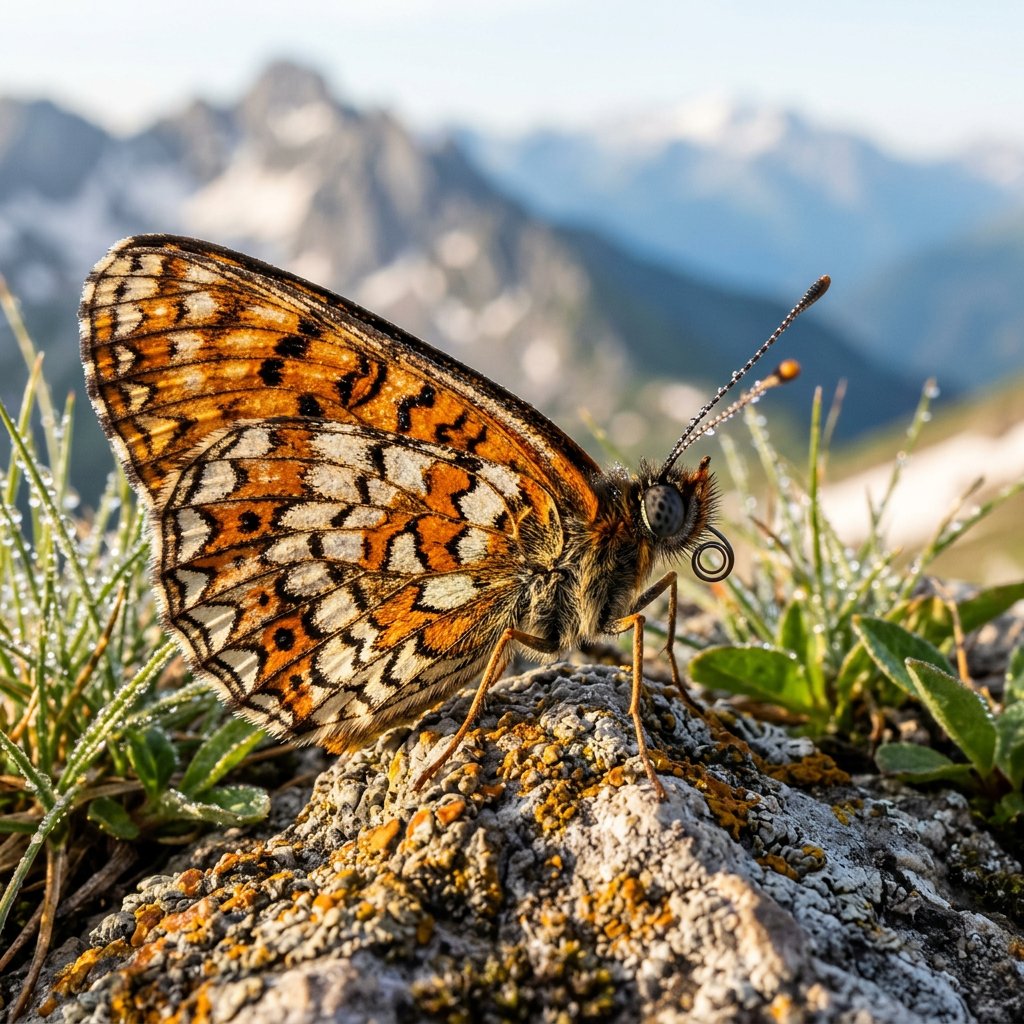
Known as the "Highland Jewel," the Cynthia’s Fritillary is a high-altitude specialist native to the European Alps and Bulgaria. Named after the Greek goddess of the moon, this butterfly is a true mountaineer, often found fluttering above the tree line where few other species dare to live. It is a rare and breathtaking sight for hikers, known for its distinct "checkerboard" beauty and its ability to withstand freezing mountain temperatures.
🔍 How to Identify
- 🦋 Sexual Dimorphism: Unlike many butterflies, the males and females look strikingly different. Males feature a bold white-and-red checkerboard pattern, while females display the more traditional "fritillary" orange-and-black mosaic.
- 📏 Size and Shape: They are small to medium-sized with a wingspan of about 35-45mm. Their wings are rounded, and their bodies are covered in dark, dense "fur" that helps them trap heat in thin mountain air.
- 🐛 Larval Appearance: The caterpillars are dark, nearly black, and covered in tiny, protective spines. They are often found huddled together in silk webs to keep warm during the early spring.
🏔️ Habitat & Ecology
- 🏔️ Alpine Enthusiast: This insect is almost exclusively found in subalpine and alpine meadows, rocky scree slopes, and high-altitude pastures. They are most active during the short mountain summers (June to August).
- 🥗 Specialized Diet: The caterpillars are picky eaters, primarily feeding on Alpine Plantain (Plantago alpina) and various species of Speedwell (Veronica). As adults, they are important pollinators for high-altitude wildflowers that have short blooming windows.
⚠️ Safety & Toxicity
- 🍀 Harmless Friend: The Cynthia’s Fritillary is entirely harmless to humans, pets, and gardens. They do not bite, sting, or carry any toxins.
- 🛡️ Handle with Care: Because they live in such fragile ecosystems, they are very sensitive to habitat disturbance. In many regions, they are a protected species. If you find one, it is best to observe from a distance to avoid damaging their delicate wings or the rare plants they depend on.
✨ Fun Fact
Because mountain summers are so short, the Cynthia’s Fritillary often takes two full years to reach adulthood. The caterpillars actually hibernate twice—once in their early stages and again when they are almost fully grown—spending two long winters tucked safely under the alpine snow!
More Details








