Info
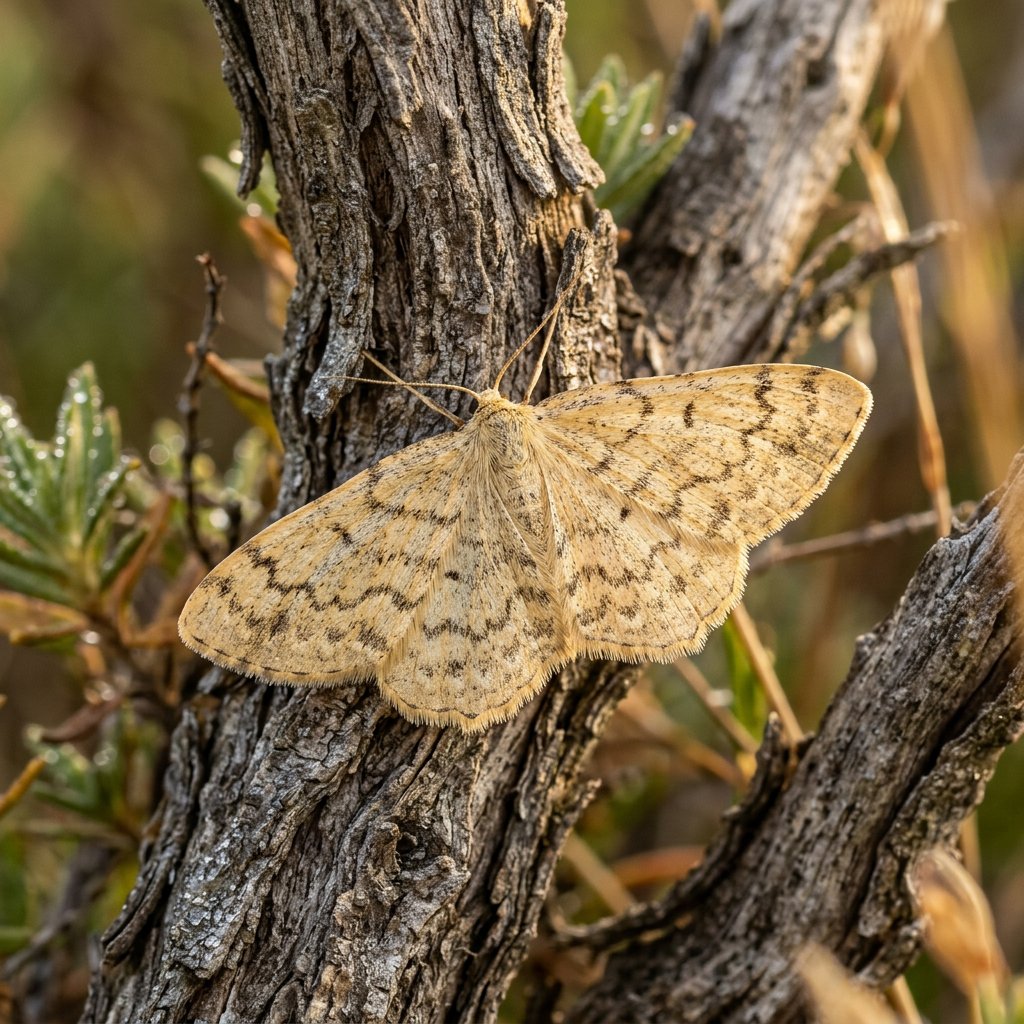
The Portland Ribbon Wave (Idaea degeneraria) is a delicate, small moth that looks like a tiny piece of antique parchment caught in the breeze. While its name might sound a bit harsh—"degeneraria" stems from its variable appearance—it is a beloved sight for moth-enthusiasts across Europe and the Near East. In the UK, it was famously associated with the Isle of Portland, earning it its sophisticated common name.
🔍 How to Identify
- 🎨 The "Ribbon": Its most striking feature is a broad, dark, brownish-grey band (the ribbon) that runs across the center of both the forewings and hindwings.
- 📜 Parchment Texture: The base color of the wings is a soft, creamy buff or pale ochre, often peppered with tiny dark scales that give it a "dusty" look.
- 〰️ Wavy Lines: True to its "Wave" family name, the wings are decorated with fine, scalloped transverse lines that run parallel to the central ribbon.
- 📐 Resting Posture: Like most Geometrid moths, it rests with its wings held flat against the surface, creating a distinctive triangular or fan-like silhouette.
🌲 Habitat & Ecology
- 🌿 The Caterpillar Diet: The larvae are not picky eaters; they feast on low-growing "weeds" like Dandelions, Knotgrass, and various species of Dock. This makes suburban gardens a surprisingly good habitat for them.
- 🌙 Night Owl Habits: While they are strictly nocturnal and frequently visit garden light traps, they are easily disturbed during the day from their hiding spots in deep foliage or rocky crevices.
- 🏝️ Coastal Preferences: In many parts of its northern range, it shows a strong preference for limestone cliffs and coastal scrub, though it has been expanding its territory into more inland gardens recently.
⚠️ Safety & Toxicity
- ✅ Harmless: The Portland Ribbon Wave is completely safe for humans, children, and pets. It does not bite, sting, or possess any irritating hairs.
- 🛡️ Fragile Nature: Like most small moths, they are extremely delicate. If one wanders into your home, it is best to gently relocate it using a glass and a piece of paper to avoid damaging its fragile wing scales.
✨ Fun Fact
Despite its name "Portland Ribbon Wave," this moth isn't a traveler from Oregon! It was named in the 1800s after the Isle of Portland in Dorset, England, which was once one of the only places in Britain where this "rare" beauty could be found. Since then, it has become much more widespread!
More Details








