Info
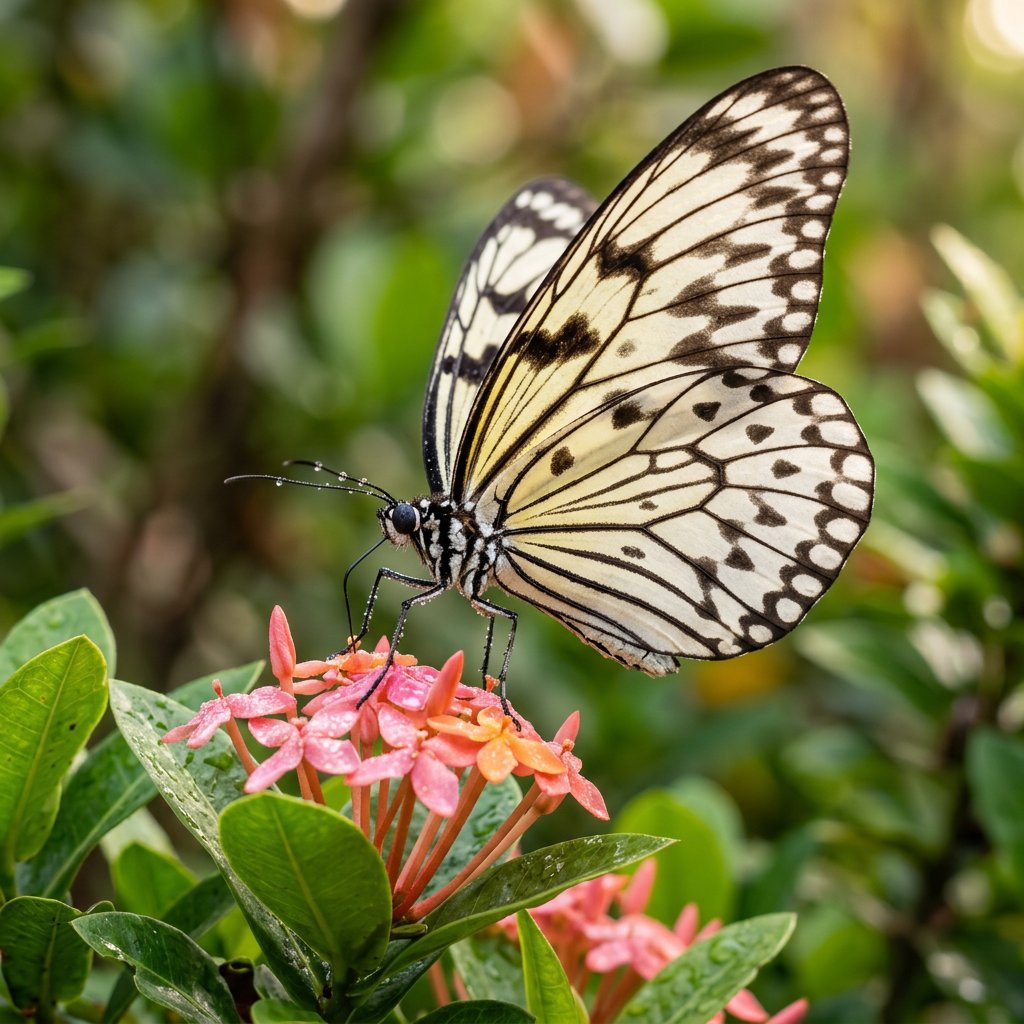
Known as the "Rice Paper Butterfly" or the "Paper Kite," Idea leuconoe is one of the most serene sights in the tropical canopy. With its translucent, parchment-like wings, it floats through the air like a discarded scrap of fine lace or a piece of paper drifting in the wind. This butterfly is a global favorite in conservatories because of its exceptionally calm nature and "tame" behavior around humans.
🔍 How to Identify
- 🦋 The Wings: Large, semi-transparent white or creamy wings intricately marked with heavy black veins and a row of smudged black spots along the outer edges.
- 🪁 Flight Style: A distinctive, slow "skipping" or floating flight pattern. It often glides for long periods, appearing more like a falling leaf than a powered flier.
- ⚫ The Body: A slender, dark body often featuring small white dots that mirror the high-contrast patterns of its wings.
🌲 Habitat & Ecology
- 🌺 Nectar Hunter: These butterflies are frequent visitors to a variety of tropical flowers. In their native Southeast Asian rainforests, they play a vital role as pollinators for deep-tubed blossoms.
- 🛡️ Chemical Shield: As caterpillars, they feast on toxic vines (specifically from the Parsonsia genus). They sequester these toxins in their bodies, which remain present in the adult butterfly to discourage birds and other predators from eating them.
- 💤 Social Roosting: Unlike many solitary butterflies, Paper Kites are often found gathering in small groups at night to roost together under large leaves for protection.
⚠️ Safety & Toxicity
- ✅ Friend of the Garden: The Paper Kite is entirely harmless to humans. It possesses no stinger or mandibles capable of biting, and its "tame" disposition makes it a safe delight for children to observe.
- 🐱 Pet Safety: While they are not "poisonous" to touch, they are chemically defended. If a curious cat or dog were to ingest one, the stored plant toxins could cause mild stomach upset or vomiting.
✨ Fun Fact
The Paper Kite is a marathon runner of the butterfly world! While many common butterflies live for only two weeks, Idea leuconoe can live for several months, making it one of the longest-lived butterfly species in the tropics.
More Details








