Info
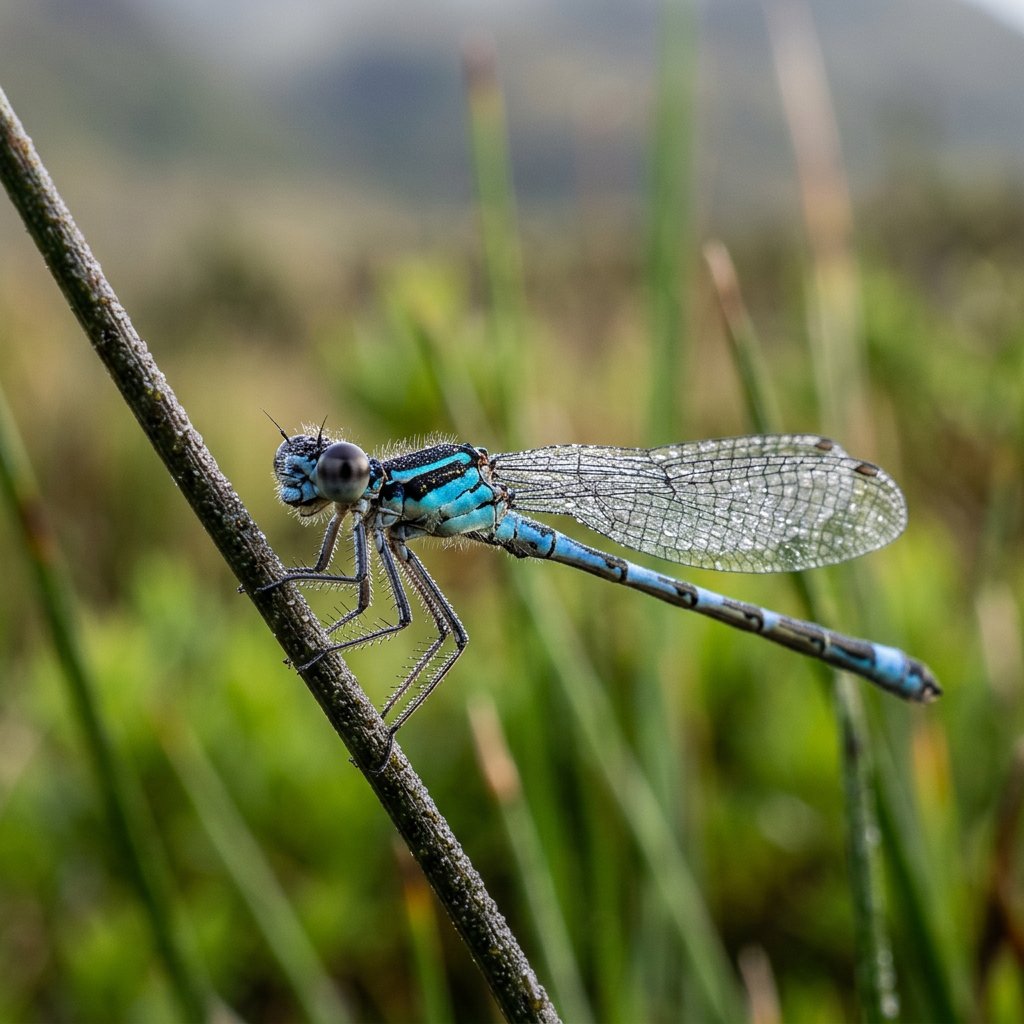
Often called the Black-fronted Forktail, this tiny damselfly looks like a winged sliver of neon light darting over the water. It is a "living toothpick" that brings a splash of electric color to garden ponds and marshes. Despite their delicate, jewelry-like appearance, they are skilled aerial hunters that play a vital role in keeping backyard pest populations in check.
🔍 How to Identify
- 🟢 The Thorax: Males sport a striking neon green or pale blue thorax marked with thick, jet-black stripes.
- 📏 Diminutive Size: This is one of the smaller damselflies, often measuring barely an inch in length, making it look like a floating needle.
- 🔱 The "Forktail": Look at the very tip of the male’s abdomen; it features a tiny, raised projection or "fork" that is a signature of its genus.
- 🟠 Female Color Phases: Females are masters of disguise. Young females are often a bright, beautiful orange, but they can turn olive-green or even mimic the male's blue color as they age.
🌲 Habitat & Ecology
- 💧 Still Waters: You will most likely spot them hovering near the edges of ponds, slow-moving streams, or even well-vegetated ditches. They prefer areas with plenty of reeds or tall grass to perch on.
- 🦟 Mosquito Hunter: They are voracious predators. While they look dainty, they spend their days snatching gnats, mosquitoes, and aphids out of mid-air or off the surface of leaves.
- 🌾 Perching Behavior: Unlike dragonflies that often soar, these damselflies prefer to stay low to the ground, frequently resting on blades of grass with their wings folded neatly over their backs.
⚠️ Safety & Toxicity
- ✅ Friend to Humans: The Black-fronted Forktail is completely harmless. They do not have a stinger, and their mandibles are far too small to bite a human.
- 🐾 Non-Toxic: They are not poisonous. If a curious pet or bird happens to catch one, there is no risk of toxicity, though their incredible speed usually keeps them out of harm's way.
✨ Fun Fact
Female Black-fronted Forktails often use "male mimicry." By developing the same blue and black patterns as the males, they can avoid the constant (and often exhausting) attention of amorous suitors, allowing them more time to focus on hunting and eating!
More Details








