Info
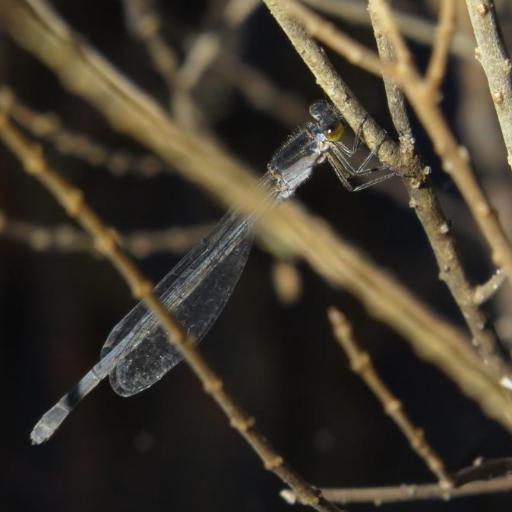
Known widely as the Common Bluetail, this slender inhabitant of the Australian wetlands is a master of the air. Despite its delicate, needle-like appearance, it is a fierce predator of the miniature world. Often seen darting between reeds, it acts as a shimmering guardian of backyard ponds, keeping pesky gnat and mosquito populations in check.
🔍 How to Identify
- 💎 The "Tail Light": Males feature a striking, bright blue segment near the end of their otherwise dark abdomen, which looks like a tiny neon light.
- 📏 Slender Profile: Unlike the bulkier dragonflies, this damselfly is exceptionally thin and rests with its wings folded vertically over its back.
- 👀 Compound Eyes: It possesses large, widely spaced eyes that give it a "barbell" look, allowing it to spot movement from almost any angle.
- 🎨 Female Mimicry: Interestingly, some females are "andromorphs," meaning they look exactly like the blue males to avoid excessive attention from suitors!
🌲 Habitat & Ecology
- 💧 Water Lovers: You will almost always find them near still or slow-moving water, such as garden ponds, lakes, or marshes, where they lay their eggs on aquatic plants.
- 🦟 Nature’s Pest Control: They are voracious insectivores, catching midges, mosquitoes, and other tiny flying insects mid-air or snatching them off leaves.
- 🌾 Perching Habits: Unlike dragonflies that often fly long distances, Bluetails prefer to stay low, perching on grass stems or reeds to survey their territory.
⚠️ Safety & Toxicity
- 🛡️ Completely Harmless: Despite their somewhat "alien" appearance, damselflies do not have a stinger. They are incapable of stinging humans or pets.
- 🤝 Garden Friend: They are considered beneficial insects. Having them in your garden is a sign of a healthy ecosystem and clean water nearby.
- 🚫 Fragile Bodies: While safe to observe, they are incredibly fragile. Avoid handling them, as their wings and legs can be easily damaged by human touch.
✨ Fun Fact
The Common Bluetail is a pioneer species! They are often the very first Odonates (dragonflies/damselflies) to colonize a brand-new garden pond, sometimes appearing just days after the water has been added.
More Details








