Info
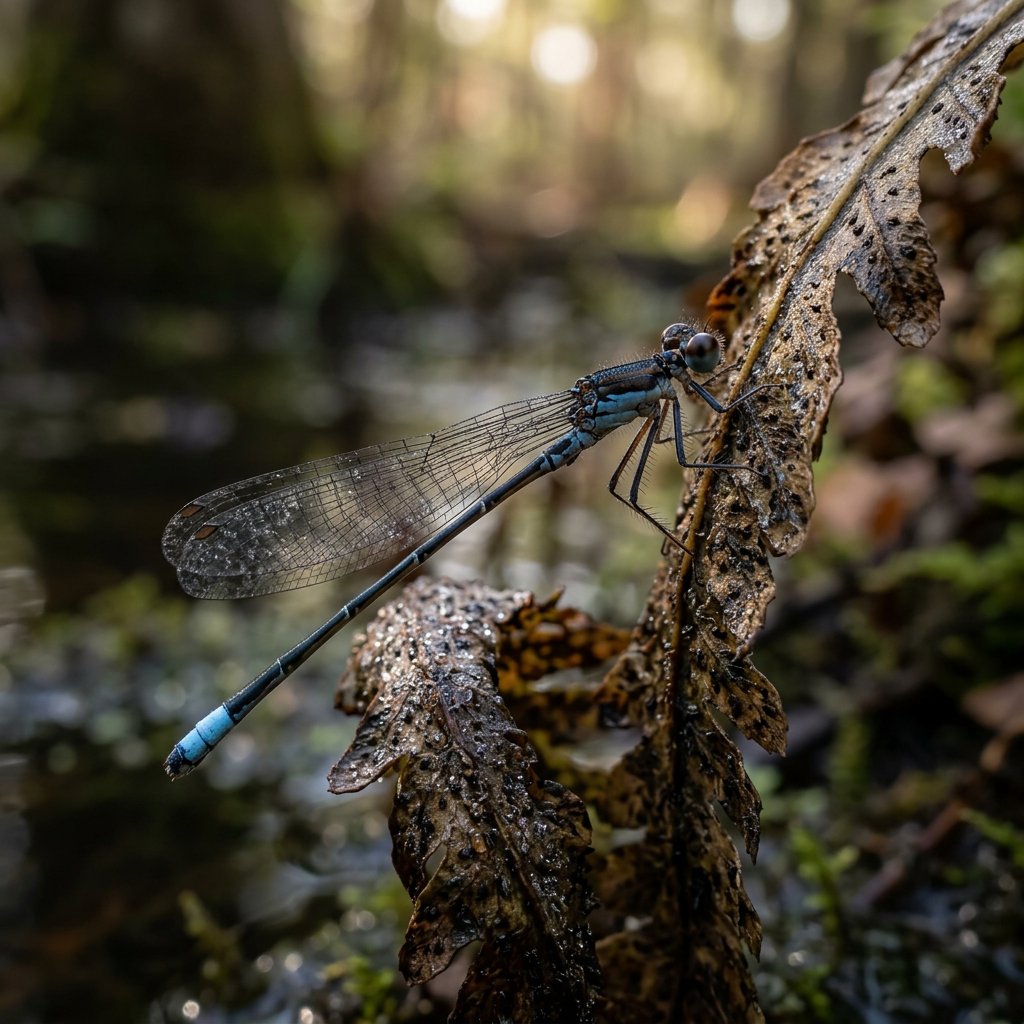
The Furtive Forktail (Ischnura prognata) is the "shadow-dweller" of the damselfly world. While most of its cousins bask in the bright midday sun, this elegantly long and slender insect prefers the emerald gloom of swampy forests and shaded wetlands. It is often called "furtive" because of its secretive habit of hiding deep within dense vegetation, making it a prized find for keen-eyed nature observers.
🔍 How to Identify
- 🧵 Elongated Abdomen: It is notably longer and thinner than most other forktails, giving it a very delicate, needle-like appearance.
- 💚 Neon Highlights: Males feature a striking, almost "glow-in-the-dark" lime green thorax and a bright blue segment near the tip of their dark tail.
- 🟠 Color Shifting: Young females start their lives a vibrant, pumpkin orange before maturing into a more camouflaged olive-brown or slate gray.
🌲 Habitat & Ecology
- 💧 Swamp Specialist: You will typically find them near stagnant or very slow-moving water, particularly in "blackwater" cypress swamps or heavily vegetated pond edges.
- 🌿 Low-Level Hunter: Unlike dragonflies that patrol high in the air, the Furtive Forktail stays low, weaving through reeds and grasses to snatch up mosquitoes, gnats, and other small flies.
- 🕵️ Shade Seeker: They are masters of the "understory" of the marsh. Their dark bodies blend perfectly with the shadows, allowing them to hide from larger predators like birds and frogs.
⚠️ Safety & Toxicity
- ✅ Perfectly Harmless: Despite the "fork" in its name, this insect has no stinger and does not bite humans. It is a beneficial predator that helps keep gnat populations in check.
- 🐾 Safe for Pets: They are non-toxic and pose no threat to curious pets, though their flighty nature usually keeps them well out of reach of a snapping dog or cat.
✨ Fun Fact
- 🔦 The Neon Ghost: The Furtive Forktail is considered "sciophilous," which literally translates to "shade-loving." Because they live in such dark environments, their bright green and blue markings act like tiny biological reflectors, helping them find mates in the dim forest light.
More Details








