Info
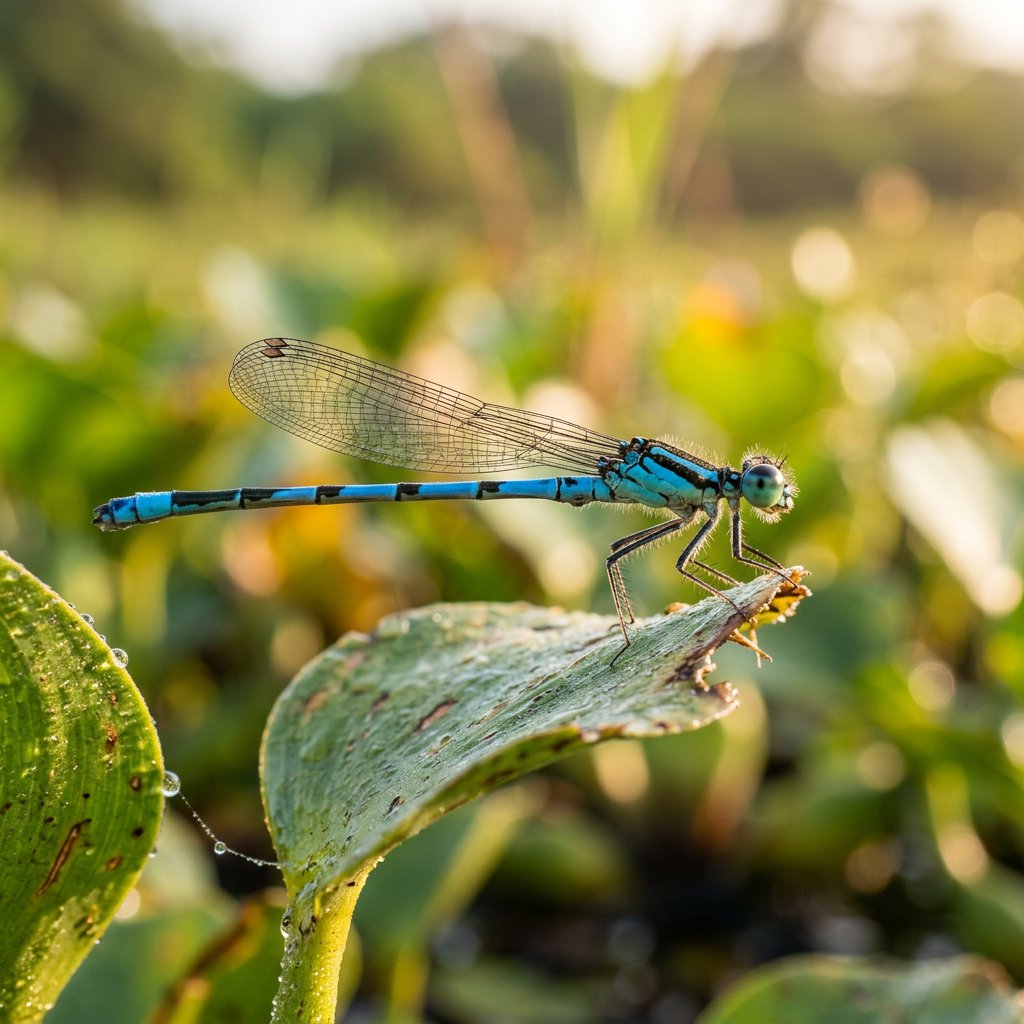
Often called the Common Bluetail or the Senegal Soda Damselfly, this tiny aviator is a resilient traveler found across Africa, the Middle East, and Asia. Unlike many sensitive aquatic insects, this damselfly is a "tough nut" of the insect world, famous for its ability to thrive in water where others can't survive, including salty or slightly polluted ponds. It acts as a miniature guardian of the garden, patrolling the air for pesky gnats and mosquitoes.
🔍 How to Identify
- 💎 The "Tail Light": Males are easily spotted by their slender black bodies tipped with a vibrant, neon-blue segment near the end of the abdomen (specifically segment 8), looking like a tiny floating sapphire.
- 🎨 Color-Shifting Females: Females are masters of disguise and come in different color forms; some are bright orange (rufous) when young, while others mimic the blue and black coloration of the males to avoid unwanted attention.
- 📏 Resting Posture: Like all damselflies, it rests with its wings folded vertically over its back, unlike dragonflies which keep their wings spread wide like an airplane.
🌿 Habitat & Ecology
- 💧 The Ultimate Survivor: While most damselflies need pristine water, Ischnura senegalensis is famous for colonizing "soda lakes" and marshes with high salinity. If there is a puddle, a slow stream, or a backyard pond, they will likely find it.
- 🦟 Aerial Hunter: These are beneficial predators. They spend their days perched on tall grasses, darting out with surgical precision to snatch midges, mosquitoes, and other small flying insects from the air.
- 🌾 Marshland Loyalty: They rarely stray far from the water's edge, as they rely on submerged vegetation to lay their eggs and for their larvae (nymphs) to hide from fish.
⚠️ Safety & Toxicity
- 🛡️ Completely Harmless: Despite their needle-like appearance, they have no stinger and do not possess the jaw strength to bite humans. They are "fliers," not "fighters" when it comes to people.
- 🐶 Pet Friendly: They are non-toxic. If a curious cat or dog happens to snap one out of the air, there is no risk of poisoning or irritation.
✨ Fun Fact
Female Senegal Soda Damselflies often engage in "andromorphy"—they look exactly like males. Scientists believe they do this as a clever camouflage strategy to avoid being harassed by over-eager males, allowing them more time to feed in peace!
More Details








