Info
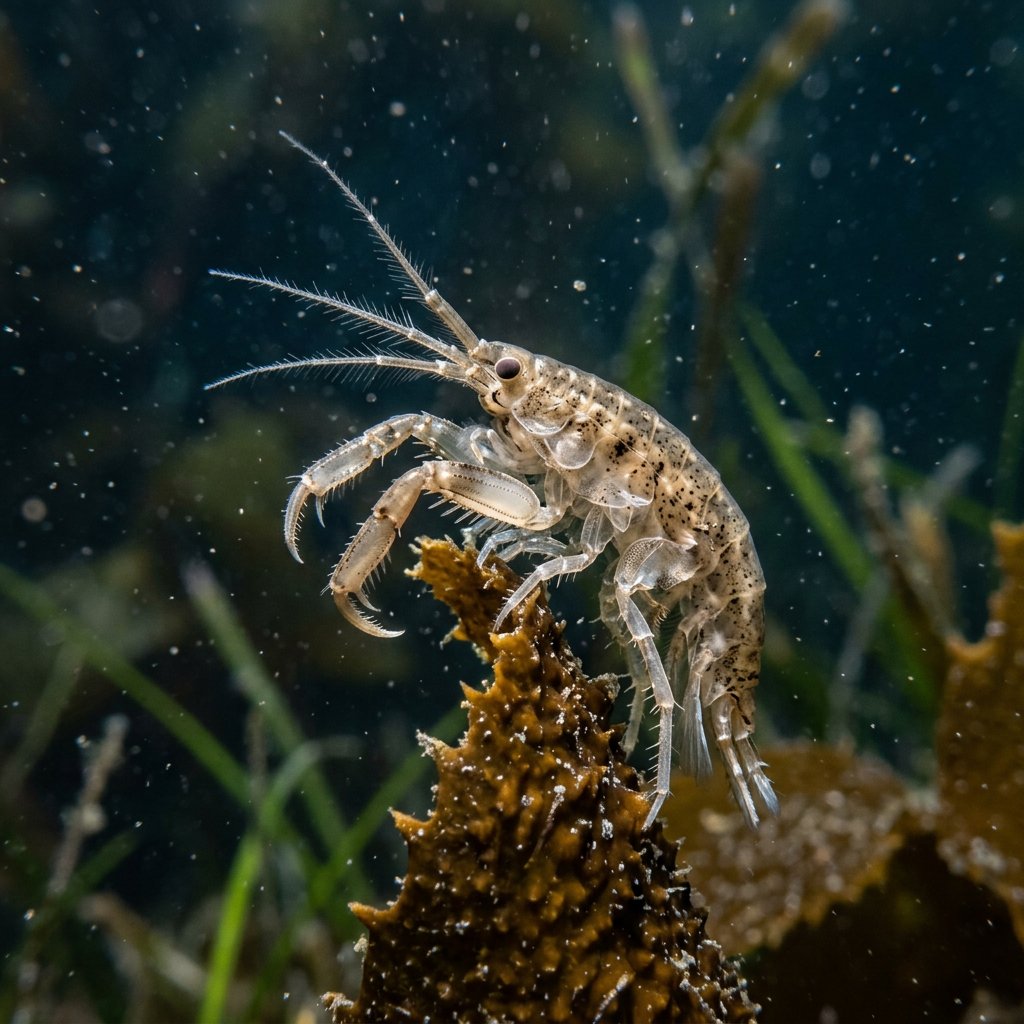
Often mistaken for tiny underwater insects or miniature shrimp, members of the Ischyroceridae family are actually master architects of the sea. These specialized crustaceans, commonly known as tube-building amphipods, spend their lives weaving intricate "bunkers" out of silk to survive the turbulent coastal waters they call home.
🔍 How to Identify
- 🦐 Body Shape: They have a classic "hunched" amphipod profile, looking like a tiny, side-flattened shrimp usually measuring only a few millimeters in length.
- 📡 Robust Antennae: Look for a second pair of antennae that is noticeably thick and powerful; they use these to pull food from the water or defend the entrance of their homes.
- 🏠 The "Silk" Tube: Their most identifying "mark" is the tube they live in. These are constructed from "amphipod silk" (secreted from their legs) and decorated with sand, mud, and bits of seaweed for camouflage.
🌊 Habitat & Ecology
- 🐚 Submerged Real Estate: They are typically found in marine or brackish environments, clinging to docks, ship hulls, seaweed, or rocky reefs where the water flow is high.
- 🧹 Filter Feeders: Instead of hunting, most Ischyroceridae act as the ocean's janitors. They sit at the mouth of their tubes and use their feathery limbs to catch passing organic detritus and plankton.
⚠️ Safety & Toxicity
- 🟢 Completely Harmless: These creatures are non-aggressive and possess no stingers or venom. They are far more afraid of you than you are of them.
- 🛡️ Eco-Indicator: Because they are sensitive to water quality, their presence usually indicates a relatively healthy and oxygenated aquatic environment.
✨ Fun Fact
Ischyroceridae are some of the few creatures in the ocean that produce their own "silk." This biological cement is so strong that it can harden underwater, allowing them to build "apartment complexes" that can withstand heavy crashing waves!
More Details








