Info
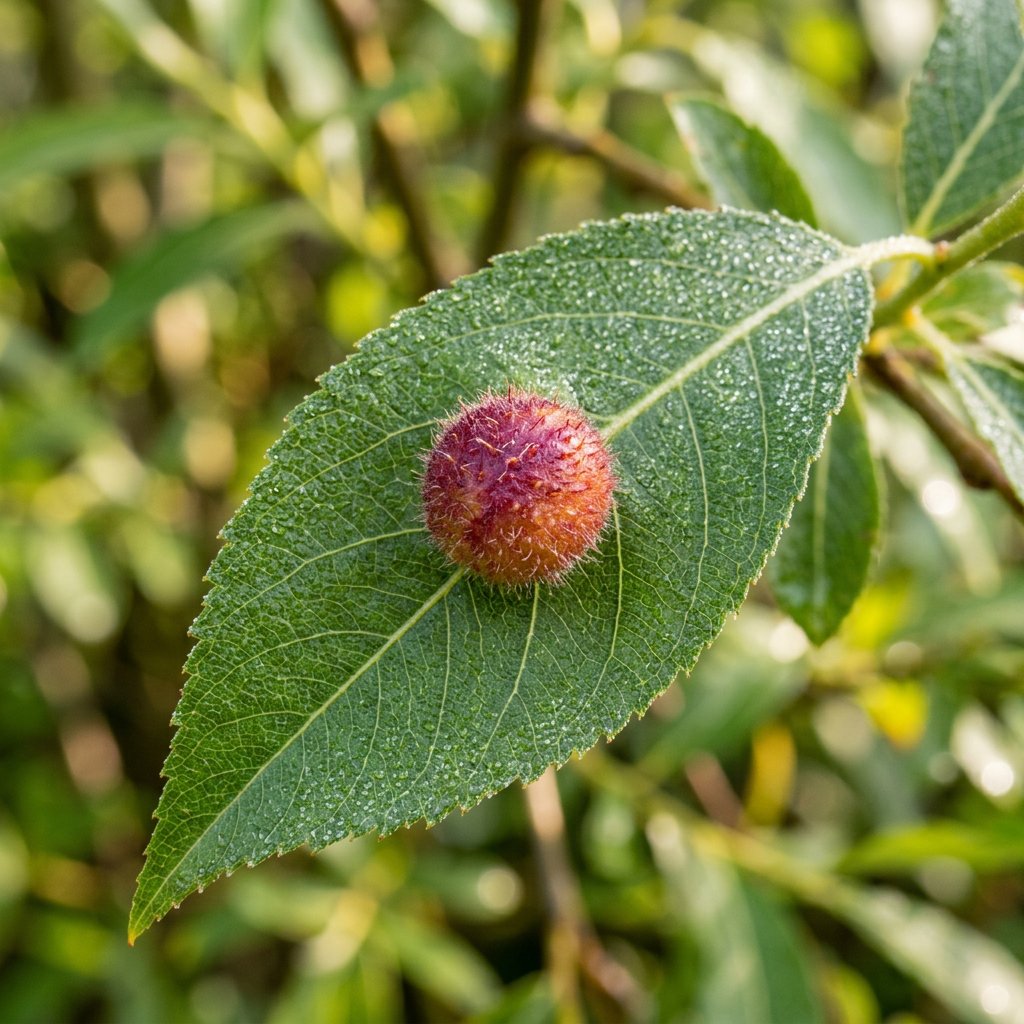
Commonly known as the Willow Gall Midge, this tiny architect is more often identified by its "construction" than its body. It turns willow leaves into miniature nurseries, creating distinctive pimple-like bumps. While they might look like a leaf disease at first glance, they are actually the result of a fascinating chemical conversation between a tiny fly and a giant tree.
🔍 How to Identify
- 🍃 The Gall: Look for small, hard, circular bumps protruding from the leaf surface, usually measuring about 2–4mm in diameter.
- 🎨 The "Target" Look: The galls are typically pale green or yellowish but often develop a striking reddish or purple center, resembling a tiny bullseye.
- 📍 Placement: These galls are almost always found on the leaves of Sallows and Willows (especially Salix caprea), often clustered along the midrib or veins.
🌲 Habitat & Ecology
- 🏠 A Custom Home: Inside each bump lives a single, tiny orange or reddish larva. This larva secretes special chemicals that trick the willow tree into growing a protective wooden "bunker" around it to keep it safe from predators.
- 🍂 The Great Escape: In late autumn, the larvae chew a tiny exit hole in the gall and drop to the forest floor. They bury themselves in the soil to spend the winter, emerging as delicate, adult midges the following spring.
⚠️ Safety & Toxicity
- 🛡️ Status: Completely harmless. These midges do not bite or sting humans or pets.
- 🌳 Plant Health: While a heavy infestation can make a tree look a bit "spotty," the damage is purely cosmetic. The Willow Gall Midge is a natural part of the ecosystem and rarely impacts the long-term health of the host tree.
✨ Fun Fact
The Willow Gall Midge is a master "hacker." It produces plant hormones (auxins) that mimic the tree's own growth signals, effectively hijacking the leaf's DNA to force it to build a house that provides both food and shelter for the larva!
More Details








