Info
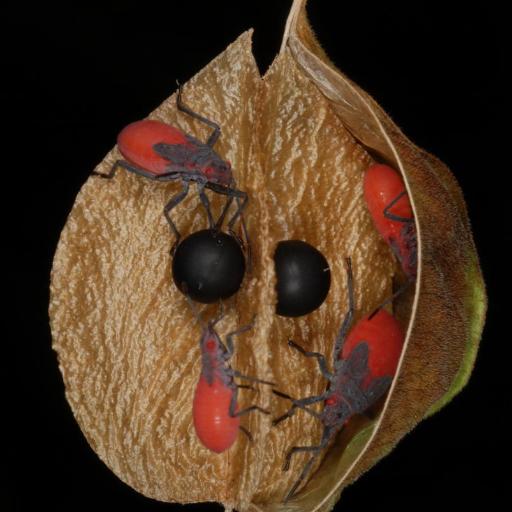
Often called the "Red-shouldered Bug," this striking insect is a frequent guest in Southern backyards and suburban gardens. While their bright red and black coloring might look like a bold warning sign, they are harmless neighborhood residents that just really love a good seed pod. You’ll often find them throwing "parties" in large groups on tree trunks or sun-drenched walls during the warmer months.
🔍 How to Identify
- 🔴 The Shoulders: The most telling sign is the bright red border along the "shoulders" (the prothorax), which contrasts sharply against their matte black or dark gray wings.
- 👁️ Crimson Eyes: They possess distinctive, bulging red eyes that give them an alert, slightly cartoonish appearance.
- 📐 Body Shape: They have an elongated oval body, typically about half an inch long, with long antennae and wings that overlap to form a flat "X" on their back.
🌲 Habitat & Ecology
- 🌳 Seed Specialists: These bugs are "specialists" that feed primarily on the seeds of the Soapberry family. They are most commonly found under Goldenrain trees and Western Soapberry trees, where they use needle-like mouthparts to drink nutrients from fallen seeds.
- ☀️ The Social Crowd: Jadera bugs are highly gregarious. It is perfectly normal to see hundreds of them—both the winged adults and the bright red, wingless nymphs—clumping together on sidewalks or the sunny side of your house to regulate their body temperature.
⚠️ Safety & Toxicity
- ✅ Non-Threatening: The Red-shouldered bug is completely harmless to humans and pets. They do not bite, they do not sting, and they do not carry any diseases.
- 🎨 Staining Potential: While they aren't toxic, they can be a minor nuisance. If crushed, their body fluids can leave a stubborn reddish-orange stain on light-colored carpets, curtains, or outdoor siding. It is best to gently sweep them away rather than squashing them.
✨ Fun Fact
Scientists have used the Red-shouldered bug to study "evolution in real-time." When the invasive Goldenrain tree was introduced to the US, these bugs evolved different beak lengths in just a few decades to better reach the seeds of the new, non-native trees!
More Details








