Info
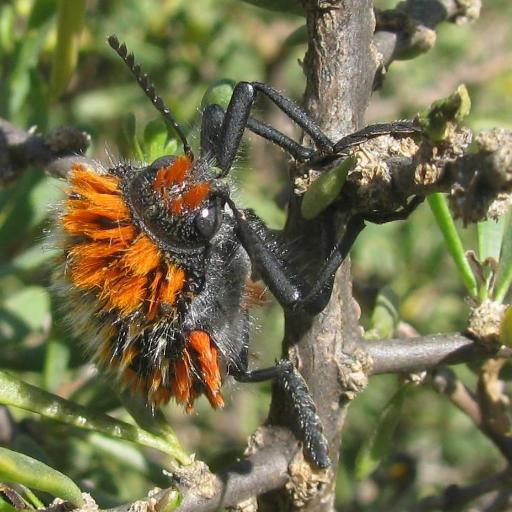
Often referred to as the "Embroidered Jewel Beetles," members of the Julodis genus look like they have been hand-decorated by a jeweler. These stunning insects are icons of the arid regions across Africa, the Middle East, and the Mediterranean, appearing like living brooches crawling through desert shrubs. In many historical cultures, their iridescent shells were so prized that they were collected to be used as actual sequins for royal garments.
🔍 How to Identify
- 💎 Metallic Sheen: Their exoskeleton boasts a deep, metallic luster, typically ranging from a brilliant emerald green to a warm coppery bronze.
- 🧶 Waxy Tufts: A standout feature of many Julodis species is the presence of small, fuzzy tufts of yellow or white wax. These look like tiny, soft "pom-poms" or dots of wool scattered across their hard wing covers.
- 🛡️ Bullet Shape: They have a robust, heavy-set body that is roughly cylindrical and very hard to the touch, designed to withstand the harsh, dry environments they call home.
🌵 Habitat & Ecology
- 🏜️ Sun Seekers: These beetles are most active during the hottest parts of the day. You’ll typically find them in semi-desert landscapes or scrublands, where they bask in intense heat to fuel their energy.
- 🌿 Niche Diet: While the adults are often found clinging to the branches of shrubs like Acacia, where they feed on foliage, their larvae live a very different life underground, feeding on the roots of woody plants.
- 🛡️ The Tank of the Insect World: Their shells are incredibly thick. This armor serves a dual purpose: it protects them from predators and acts as a seal to prevent precious moisture from evaporating in the desert heat.
⚠️ Safety & Toxicity
- ✅ Gentle Giant: Julodis beetles are completely harmless to humans. They do not sting, and they lack any form of chemical spray or venom.
- 🤏 Prickly Feet: If one lands on you, you might notice its "sticky" grip. They have powerful legs with tiny claws designed to hold onto wind-swept desert plants, which can feel slightly scratchy on sensitive skin but is not dangerous.
✨ Fun Fact
The "wool" or tufts on their backs aren't actually hair! They are specialized waxy secretions. Scientists believe these tufts might help break up the beetle’s silhouette to hide it from birds, or perhaps help regulate its temperature in the blistering sun.
More Details








