Info
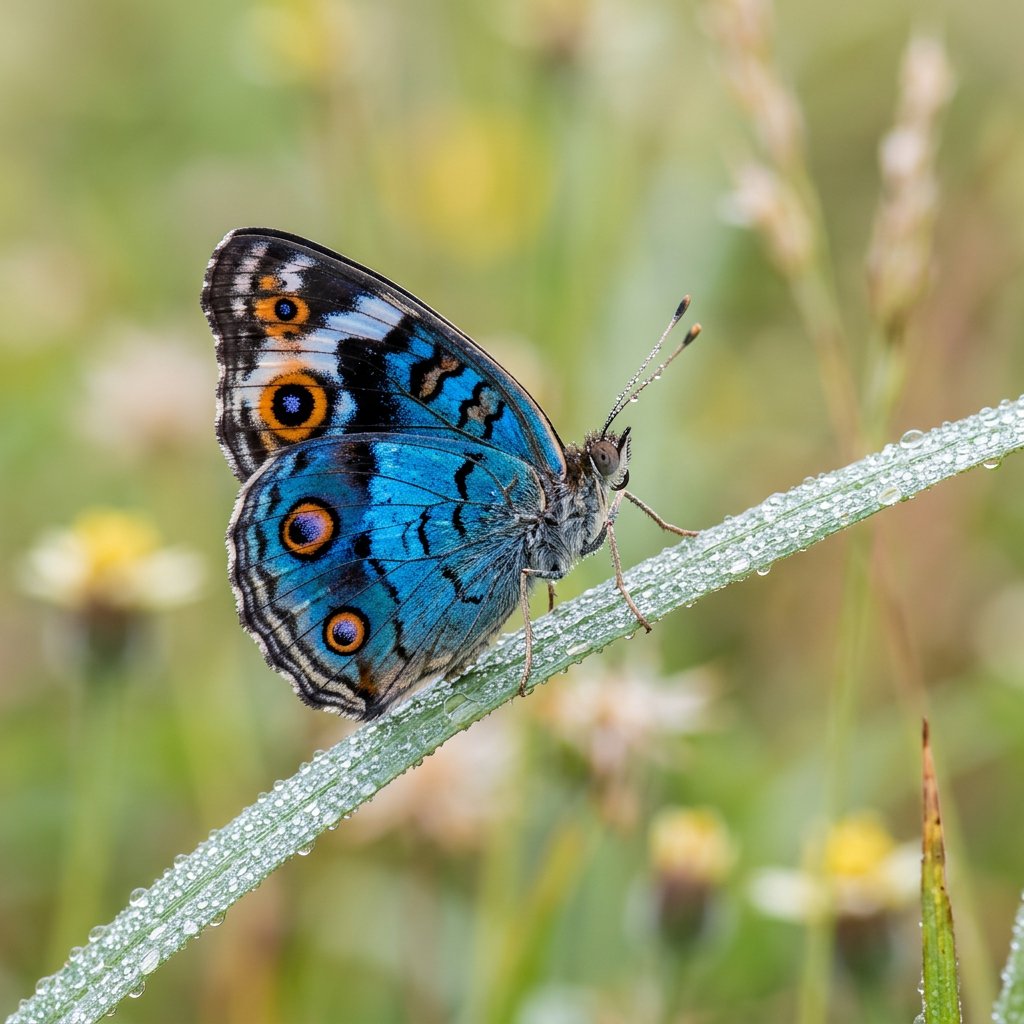
Often called the Blue Pansy, this stunning creature is frequently mistaken for a botanical species due to its name. In reality, it is one of the most vibrant butterflies found across Africa, Asia, and Australia. Known for its bold "eyespots" and electric blue wings, it flits through gardens like a living jewel, often landing on sunny patches of bare earth to bask.
🔍 How to Identify
- 🦋 Brilliant Blue Wings: The male is easily recognized by the intense, velvety blue on its hindwings, while females tend to have more brownish tones with smaller blue patches.
- 👁️ Protective Eyespots: Both sexes feature striking circular "eyespots" (ocelli) in orange, black, and white. These mimic the eyes of a larger animal to startle hungry birds.
- 🍂 Master of Disguise: When the wings are closed, the underside is a dull, sandy grey-brown. This allows the butterfly to vanish instantly against dry soil or dead leaves.
🌲 Habitat & Behavior
- ☀️ Sun Seeker: You will most likely spot the Blue Pansy in open, sunny areas, including grasslands and domestic gardens. They are "ground-huggers," preferring to sit on the warm earth rather than high in trees.
- ⚔️ Territorial Nature: Don't let their beauty fool you; the males are feisty! They are known for "hill-topping," where they claim a high point or a specific patch of ground and aggressively chase away any other butterflies that fly too close.
- 🌿 Larval Hosts: While the adult drinks nectar, the caterpillars rely on specific host plants like Justicia, Ruellia (Wild Petunias), and members of the Snapdragon family to grow.
⚠️ Safety & Toxicity
- ✅ Harmless: The Blue Pansy is a "friend" in every sense. It does not bite, sting, or possess any toxins that are dangerous to humans.
- 👶 Child Friendly: Because they often land on the ground and stay still while basking, they are wonderful subjects for children to observe closely without the need for handling.
✨ Fun Fact
The Blue Pansy is a master of the "flash-and-hide" tactic. By snapping its wings open, it reveals its bright blue colors and scary eyespots to a predator, then slams them shut to look like a shriveled leaf, leaving the predator completely confused!
More Details








