Info
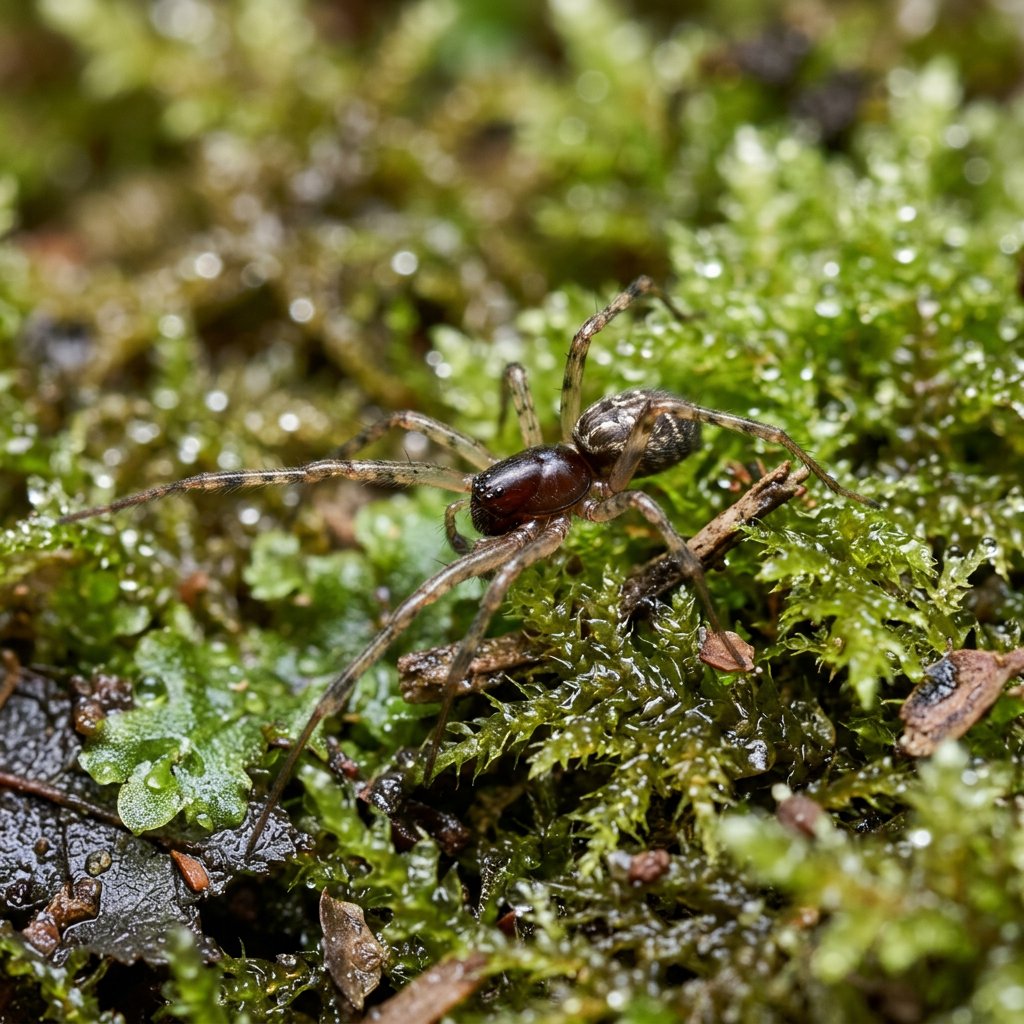
Often called the Pimpled Sheet-weaver, Labulla thoracica is a delicate architect that prefers the quiet, shaded corners of woodland floors and overgrown gardens. While its long, spindly legs might give some a startle, this spider is a shy, beneficial neighbor that spends its life suspended upside-down beneath a silken canopy. It is a master of the "low-light" hunt, thriving where other predators find it too damp or dark.
🔍 How to Identify
- 🕷️ The Chest Shield: Look for a distinctive dark, heart-shaped or triangular marking on its cephalothorax (the front body segment), which often looks slightly raised or "pimpled."
- 🎨 Mottled Abdomen: The abdomen is usually a pale yellowish-brown or gray, decorated with dark, irregular blotches that provide perfect camouflage against tree bark.
- 🦓 Banded Legs: It possesses notably long, slender legs that are "annulated," meaning they have dark rings or bands, giving them a striped, zebra-like appearance.
🌲 Habitat & Ecology
- 🕸️ The Sheet Web: Unlike the classic circular webs, this spider weaves a large, flat, horizontal sheet of silk. It waits patiently underneath the sheet; when an insect hits the "tripwires" above and falls onto the silk, the spider strikes from below.
- 🍂 Shadow Dwellers: You’ll rarely find them in direct sunlight. They prefer the moist microclimates of hollow logs, the undersides of large leaves, or the base of broad-leafed trees like Oak and Beech.
- 🦟 Natural Pest Control: They are highly efficient at catching small flying insects, particularly fungus gnats and midges, making them a "friend" to any gardener dealing with damp-loving pests.
⚠️ Safety & Toxicity
- 🟢 Status: Completely Harmless.
- 🛡️ Details: This spider is non-aggressive and possesses no venom of medical concern to humans. Their fangs are generally too small to penetrate human skin. They pose no threat to curious cats, dogs, or children.
✨ Fun Fact
While most of its cousins in the Linyphiidae family are tiny "Money Spiders" that can fit on the head of a pin, Labulla thoracica is considered a "giant" of the group, reaching a body length of about 7mm—a massive scale for a sheet-weaver!
More Details








