Info
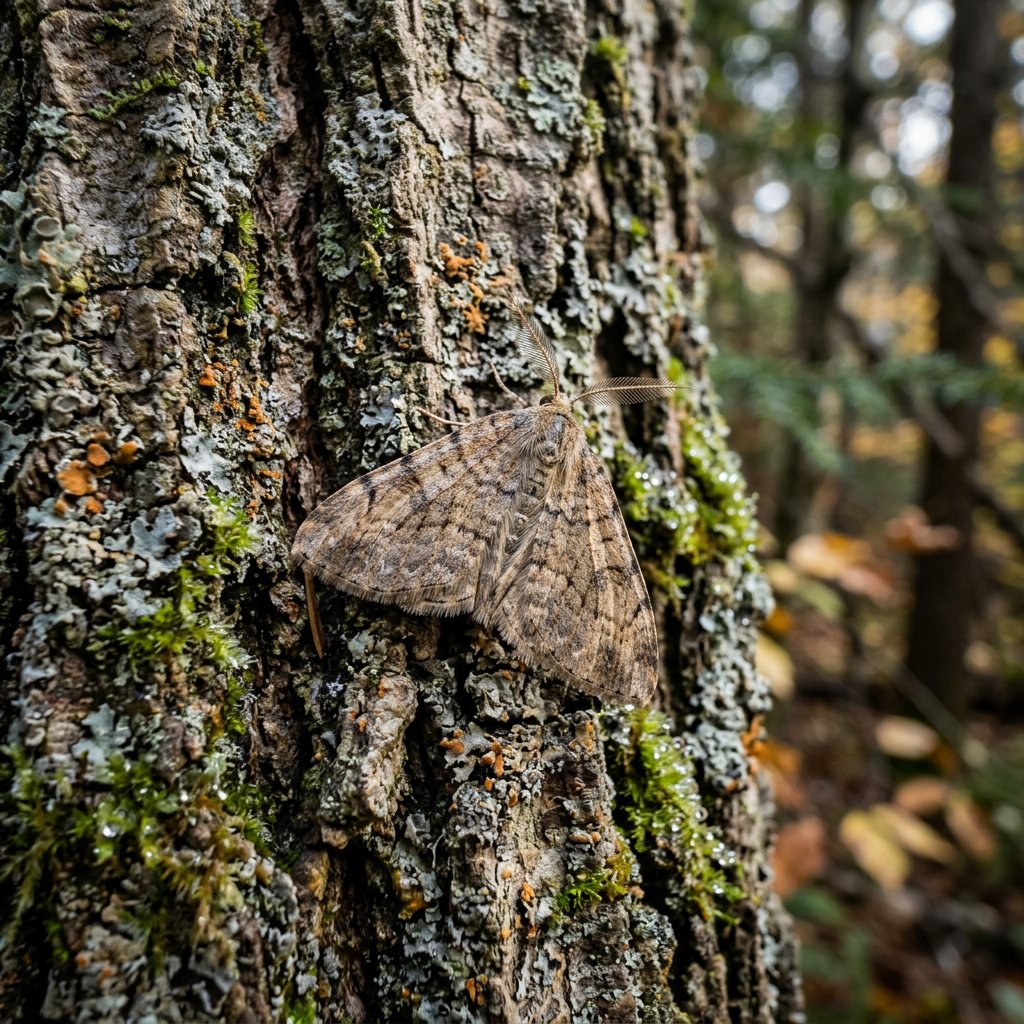
Known as the Hemlock Looper, this moth is a master of disguise that looks like a delicate, dried leaf. While the adult moth is a ghostly and elegant flyer, its caterpillar stage is a famous "inchworm" that plays a massive role in the lifecycle of North American forests. It is generally considered a "foe" by foresters and gardeners due to its incredible appetite for evergreens.
🔍 How to Identify
- 🦋 The Wings: Adults have thin, cream-to-tan wings marked by two dark, wavy lines that look like pencil strokes. When resting, they hold their wings flat against bark to vanish from sight.
- 📐 The "Looper" Walk: The larvae lack legs in their middle section, forcing them to arch their bodies into a high loop (like a Greek letter Omega) to move forward.
- 🍂 Feeding Damage: You can identify their presence by "scorched" looking trees. They don't eat the whole needle; they take a bite and move on, leaving the rest to turn brown and fall off.
🌲 Habitat & Ecology
- 🌲 Conifer Specialist: They are most commonly found in cool, moist forests, specifically targeting Eastern Hemlock, Balsam Fir, and various Spruce species across North America.
- 🍽️ Wasteful Feeders: These insects are unique because they are "messy eaters." By nipping the base of needles without finishing them, a single caterpillar can cause significantly more foliage loss than other species of its size.
- 🔄 Cyclic Outbreaks: Their populations are "irruptive," meaning they stay invisible for years before suddenly exploding into massive numbers that can change the landscape of a forest in just one summer.
⚠️ Safety & Toxicity
- ✅ Safe for Humans: The Hemlock Looper is completely harmless to people and pets. They do not possess stingers, biting mandibles, or irritating hairs.
- 🛡️ Plant Protection: While safe for you, they are dangerous for your landscape. If you have ornamental hemlocks, keep an eye out for "browning" needles in July and August, which may indicate a need for organic intervention.
✨ Fun Fact
When startled, the larvae will suddenly drop from a branch and hang by a single strand of invisible silk, dangling in mid-air like a tiny bungee jumper until the danger passes!
More Details








