Info
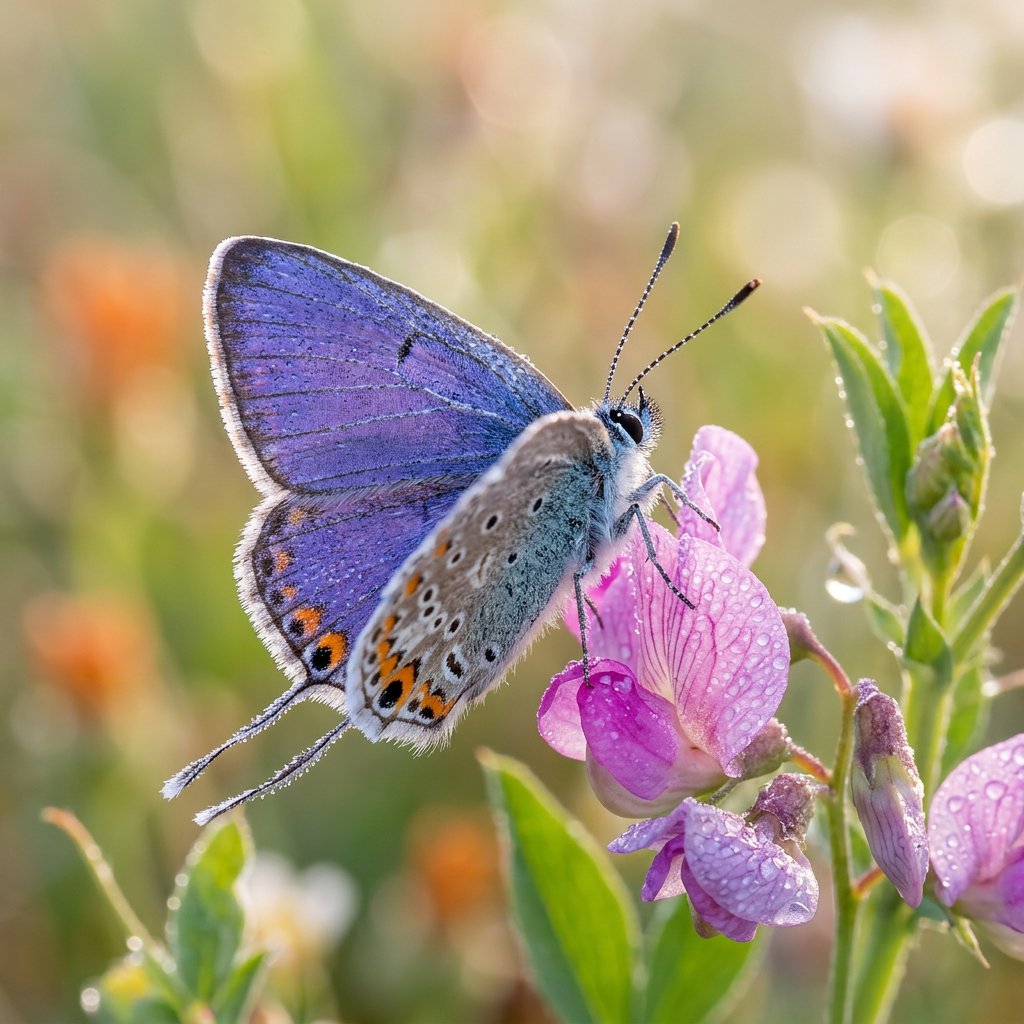
Often called the Long-tailed Pea Blue, this shimmering wanderer is one of the most widely distributed butterflies in the world. A tiny but mighty traveler, it is famous for its "decoy" strategy—using its delicate tail to trick predators into attacking the wrong end. While it may look fragile, this butterfly is a hardy survivor found everywhere from tropical gardens to high mountain passes.
🔍 How to Identify
- 🦋 The Iridescent Sheen: Males are a brilliant, metallic violet-blue on the upper side, while females are mostly brown with a soft blue dusting near the body.
- 🏹 The "Fake Head": The hindwings feature two small, dark eyespots and thin, thread-like tails that wiggle in the wind, mimicking antennae to confuse birds.
- 🦓 Underside Pattern: When the wings are closed, you’ll see a complex "zebra" pattern of sandy-brown and white wavy lines that help it blend into dry grass.
🌲 Habitat & Ecology
- 🌍 The Global Nomad: This insect is a powerful migrator, capable of crossing seas and mountain ranges. You’ll find it in sunny gardens, meadows, and agricultural fields across Africa, Europe, Asia, and Australia.
- 🌱 The Legume Specialist: The larvae (caterpillars) are uniquely adapted to feed on the flowers, pods, and seeds of legumes like garden peas, beans, and wild gorse, often living inside the pod for protection.
⚠️ Safety & Toxicity
- ✅ Harmless Friend: The Long-tailed Pea Blue is completely safe for humans and pets. It does not bite, sting, or carry any toxins.
- 🌻 Gardener’s Note: While the adults are excellent pollinators, their caterpillars can be minor pests in vegetable patches if you are growing a large crop of peas or broad beans.
✨ Fun Fact
The caterpillars of this butterfly are "ant-loving" (myrmecophilous). They produce a sweet, sugary nectar from a specialized gland that attracts ants; in exchange for this "honey," the ants act as fierce bodyguards, protecting the caterpillar from predatory wasps and spiders!
More Details








