Info
The Lamprosema moths are small, delicate members of the Crambidae family, often known by the nickname "Leaf-rollers" because of their crafty larvae. While many moths rely on dull colors to hide, several species in this genus possess a subtle, pearlescent shimmer that catches the light like a hidden gem tucked away in the foliage. They are the quiet architects of the insect world, often found fluttering through tall grasses or resting beneath large leaves.
🔍 How to Identify
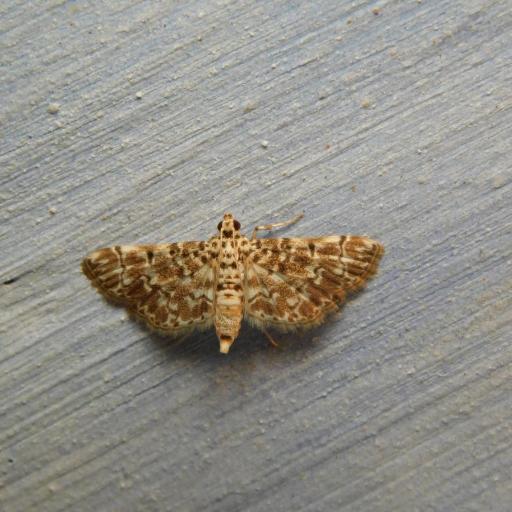
- 📐 Wing Shape: When at rest, they hold their wings in a distinct delta or triangular shape, hugging the surface of a leaf closely to minimize their silhouette.
- 🎨 Intricate Patterns: Their wings are typically decorated with fine, dark, wavy lines (transverse lines) set against a tan, golden-brown, or cream-colored background.
- ✨ Satiny Luster: Up close, their scales have a polished, satiny finish that can appear slightly metallic under direct light, distinguishing them from more "matte" moth species.
🌲 Habitat & Ecology
- 🍃 The Origami Architect: As caterpillars, Lamprosema are master builders. They use silk to fold or "roll" the edges of leaves into protective tubes. This tiny green fortress shields them from predators while they feed on the host plant.
- 🌙 Nighttime Visitors: The adults are primarily nocturnal and are frequently drawn to porch lights. During the day, they prefer to hide in damp, shaded areas like the undersides of bean plants, sweet potato vines, or ornamental shrubs.
⚠️ Safety & Toxicity
- 🦋 Harmless: Lamprosema moths are completely safe for humans and pets. They do not possess stingers, biting mouthparts, or irritating hairs.
- 🌱 Garden Nuisance: While they won't hurt you, they can be "foes" to your vegetable patch. In large numbers, their leaf-rolling larvae can cause aesthetic damage or "skeletonize" leaves, though they rarely threaten the overall life of the plant.
✨ Fun Fact
🧵 Nature’s Tension Experts: To roll a leaf, the caterpillar doesn't just pull; it spins "bridge" lines of silk that contract as they dry, slowly bending the leaf over its body. It’s a feat of biological engineering that uses physics to build a home!
More Details








