Info
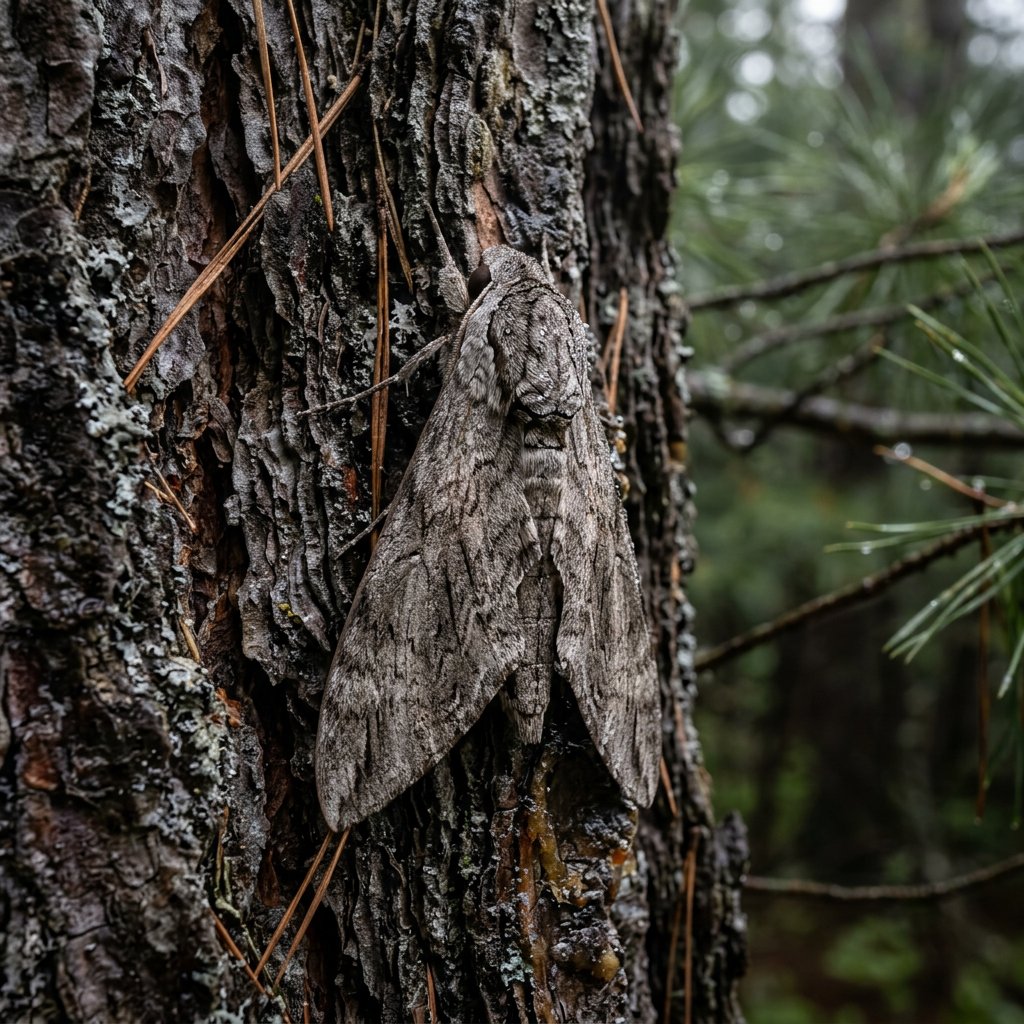
The Southern Pine Sphinx is a master of camouflage that haunts the pine forests of the Eastern United States. Often called the "Ghost of the Pines," this moth is so well-disguised that it can hide in plain sight against a backdrop of rough bark. While its cousins in the sphinx moth family might be flashy and colorful, this species prefers a minimalist, stealthy existence among the needles.
🔍 How to Identify
- 🦋 Bark-Like Wings: The adult moth features narrow, grayish-brown wings with subtle dark streaks. When resting on a tree, its pattern aligns perfectly with the texture of the pine bark, making it nearly invisible.
- 🚫 No Flashy Colors: Unlike many other hawk moths, it lacks bright "eye-spots" or pink patches on its hindwings. It is strictly monochromatic to maintain its disguise.
- 🐛 The "Needle" Larva: The caterpillar is bright green with white or yellowish longitudinal stripes. Its body shape and color allow it to blend seamlessly with the pine needles it feeds upon.
🌲 Habitat & Ecology
- 🌲 Pine Specialists: As the name suggests, these insects are tied to Pinus species. You will most often find them in Loblolly, Longleaf, or Pitch pine forests where the larvae have plenty of food.
- 🌙 Nocturnal Pollinators: The adults emerge at dusk to feed. They hover like hummingbirds in front of deep-throated flowers, using their long proboscis to sip nectar while staying on the wing.
- 🍂 Silent Neighbors: Because they rarely appear in massive "outbreak" numbers, they are considered neutral members of the ecosystem. They provide a vital food source for nocturnal birds and bats without harming the health of the forest.
⚠️ Safety & Toxicity
- ✅ Completely Harmless: The Southern Pine Sphinx is a gentle giant of the insect world. It does not possess a stinger, and it does not bite.
- 🐾 Safe for Pets: Neither the moth nor the caterpillar is known to be toxic. If a curious dog or cat happens to find one, there is no risk of poisoning or skin irritation.
✨ Fun Fact
- 🚀 The Hornless Rebel: Most sphinx moth caterpillars are called "hornworms" because of a distinct, pointy horn on their rear end. However, Lapara coniferarum is a bit of a rebel—it is one of the few species in its family where the caterpillar completely lacks a horn!
More Details








