Info
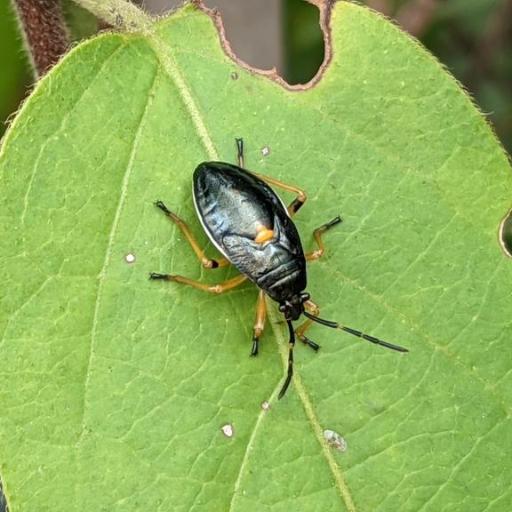
Often mistaken for the more notorious Boxelder Bug, the Eastern Bordered Plant Bug (Largus succinctus) is a common sight in gardens across North America. With its sleek, dark body outlined in vibrant sunset colors, it looks like a tiny armored knight patrolling your flowers. While they might look intimidating in large groups, they are generally peaceful residents of the undergrowth.
🔍 How to Identify
- 🪲 The "Border": Its most striking feature is the thin, bright orange or red line that runs along the outer edge of its dark wing covers.
- 🍐 Pear-shaped Profile: They have a distinct oval or pear-like shape, appearing flatter than a beetle but sturdier than a common fly.
- 🖤 Matte Finish: The main body color is a charcoal-grey or matte black, which provides a high-contrast background for its colorful trim.
🌲 Habitat & Ecology
- 🍽️ The Generalist Eater: These bugs are not picky. They use their needle-like mouthparts to sip juices from various plants, fallen seeds, and occasionally even scavenge on dead insects.
- 🌞 Sun Seekers: You will often find them "basking" on broad leaves or wooden fences during the morning. They are most active in late summer and autumn as they prepare for the cooler months.
- 🌿 Garden Role: While they do feed on plants, they rarely cause significant damage to flowers or crops. They are considered "minor" pests and usually don't require any chemical intervention.
⚠️ Safety & Toxicity
- ✅ Harmless: The Eastern Bordered Plant Bug is completely non-toxic and lacks a stinger. They are safe to have around children and curious pets.
- 🤏 Mouthpart Nuance: If handled very roughly, they may give a tiny "poke" with their proboscis (feeding tube). It is not a true bite, contains no venom, and is rarely more painful than a tiny pinprick.
✨ Fun Fact
- 🎭 The Blue Nymph: The babies (nymphs) look almost nothing like the adults! Before they mature, they are a brilliant, metallic cobalt blue or purple with a single bright red spot in the center of their backs. Many gardeners mistake the youngsters for exotic beetles!
More Details








