Info
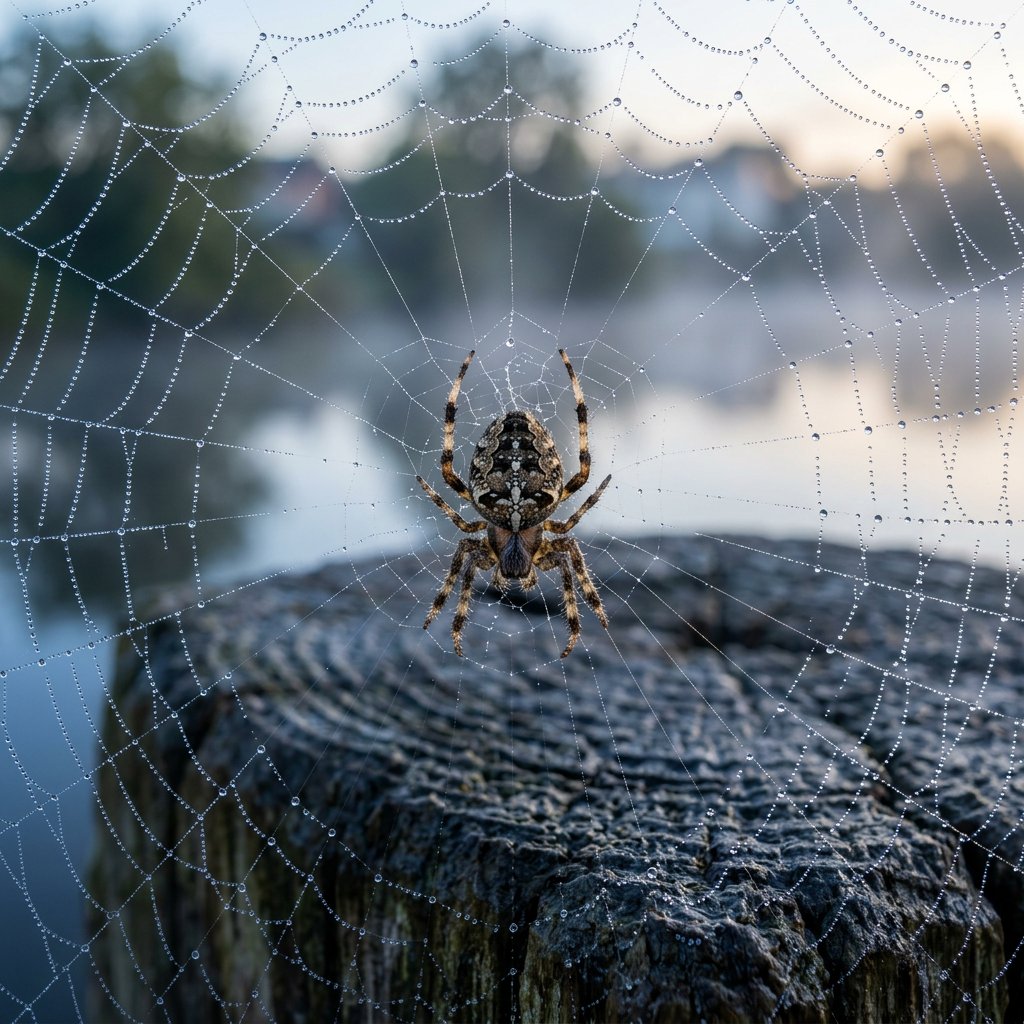
Often called the Bridge Spider or Gray Cross Spider, Larinioides sclopetarius is the ultimate urban architect. While many spiders prefer the quiet of the woods, this clever orb-weaver has a "big city" personality, choosing to build its home on bridges, steel girders, and piers. It is a master of using human engineering to its advantage, turning our streetlights into its personal hunting grounds.
🔍 How to Identify
- 🕷️ The Pattern: It features a distinct "folium" (leaf-like) marking on its abdomen with dark, wavy borders and a pale, grayish center.
- 🦵 The Legs: The legs are strikingly banded with alternating dark and light gray rings, giving them a rugged, "zebra" appearance.
- 📐 Body Shape: It has a somewhat flattened, bulbous abdomen compared to other orb-weavers, allowing it to squeeze into tight crevices on man-made structures during the day.
🌉 Habitat & Ecology
- 💡 Light Seekers: This spider is famous for its love of artificial light. It builds webs near streetlamps and floodlights because it knows these lights act as a magnet for its favorite snacks—moths, midges, and flies.
- 💧 Water Connection: You will almost always find them near water. They rely on the massive hatches of aquatic insects (like mayflies) that emerge from rivers and lakes.
- 🌑 Nocturnal Rituals: They are strictly nocturnal. During the day, they hide in cracks or under ledges, but as soon as the sun sets, they emerge to sit at the very center of their large, circular webs.
⚠️ Safety & Toxicity
- 🤝 Friend Status: These spiders are considered beneficial "friends." They are excellent at controlling pest populations, particularly mosquitoes and biting midges near waterfronts.
- 🩹 The Bite: They are not aggressive and will almost always choose to run and hide rather than bite. While they do have venom to paralyze insects, it is not medically significant to humans; a rare bite feels similar to a mild bee sting.
✨ Fun Fact
- ✨ Scientists have found that Bridge Spiders living in brightly lit cities grow faster and produce more eggs than those in darker areas, making them one of the few species that actually benefits from "light pollution!"
More Details








