Info
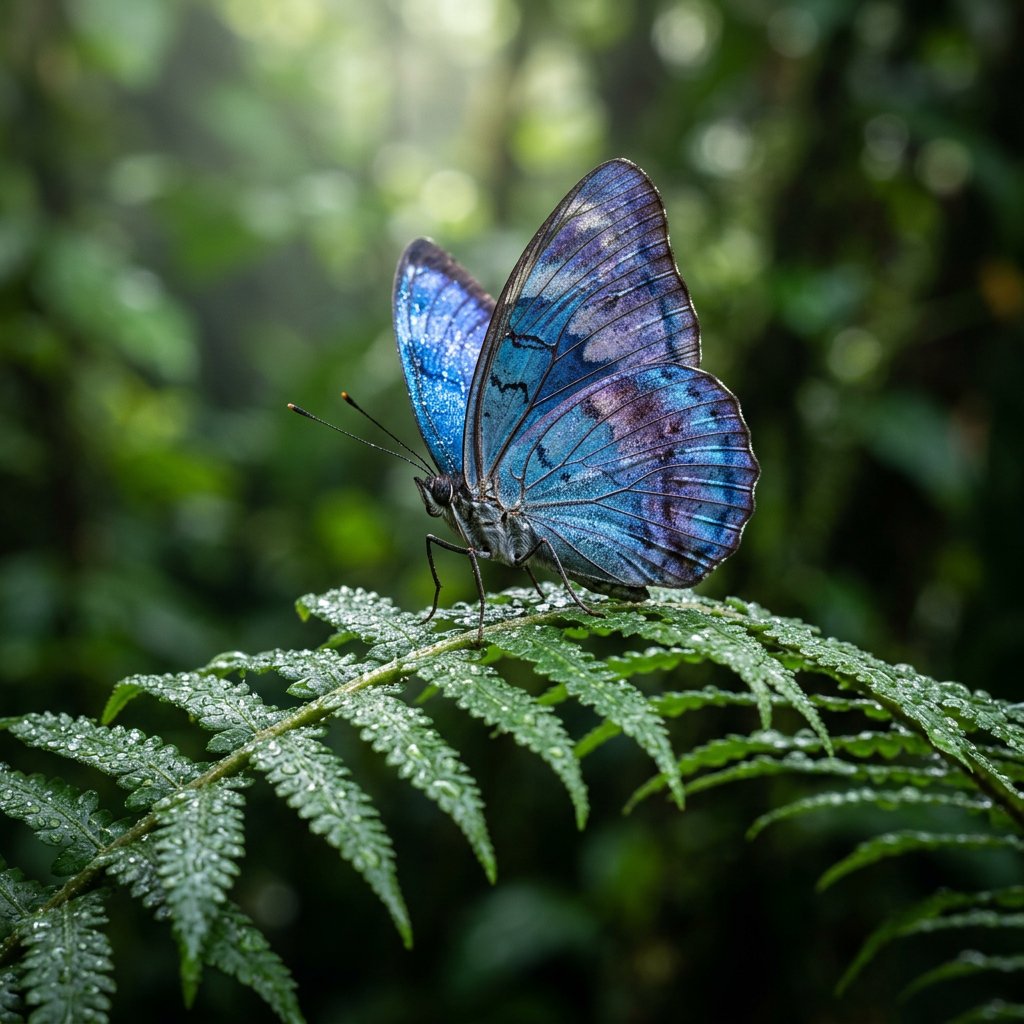
Often called the "Sapphire Metalmark," the Lasaia is the living equivalent of a flying gemstone. These small but breathtaking butterflies are famous for their intense, iridescent blue or teal wings that seem to glow when hit by direct sunlight. Found primarily in the tropical regions of the Americas, they are a favorite for photographers who enjoy capturing the interplay of light and color on their metallic scales.
🔍 How to Identify
- 💎 Iridescent Wings: The most striking feature is the brilliant metallic blue or turquoise sheen on the upper side of the wings, which changes intensity depending on the angle of the light.
- 🖤 Intricate Patterns: Upon closer inspection, the metallic base is often decorated with delicate black spots, lines, or "scribbles" that give the wings a textured, ornate appearance.
- 📏 Compact Build: They are relatively small butterflies with a somewhat "squat" body and wings that are more angular or squared-off compared to the rounded wings of a typical Cabbage White.
🌲 Habitat & Ecology
- ☀️ Sun Worshipers: Lasaia butterflies are highly active in bright sunlight. They are often seen perching on top of leaves with their wings spread wide to soak up the sun’s energy, which powers their rapid, darting flight.
- 💧 Puddling Behavior: Like many metalmarks, males are frequently found near damp soil or the edges of streams. They engage in "puddling," where they sip mineral-rich water from the mud to aid in reproduction.
- 🌿 Host Plants: Their caterpillars typically feed on plants in the legume family (Fabaceae) or shrubs in the Asteraceae family, playing a quiet but vital role in the local ecosystem's food web.
⚠️ Safety & Toxicity
- ✅ Harmless Friend: The Lasaia is completely harmless to humans. They do not bite, sting, or possess any chemical defenses that make them dangerous to touch.
- 🦋 Garden Benefit: As pollinators, they are a welcome sight in any tropical or subtropical garden. They pose no threat to pets or children and are indicators of a healthy, pesticide-free environment.
✨ Fun Fact
The brilliant blue of the Lasaia isn't actually caused by blue pigment! It is "structural color," created by microscopic, light-reflecting structures on their scales that act like tiny prisms, bouncing back only the blue wavelengths of light to your eyes.
More Details







