Info
The Grass Eggar is a robust, fuzzy moth that feels like a tiny, winged teddy bear of the insect world. Often found dancing over coastal dunes and heathlands, its name comes from its caterpillar’s love for clover (Trifolium) and the remarkably smooth, egg-shaped silk cocoon it constructs. While the adult moth is a master of earthy camouflage, its life begins as a strikingly bold and bristly caterpillar.
🔍 How to Identify
- 🦋 The Wings: Broad, reddish-brown or ochre wings with a single, distinct white spot (the discal spot) centered on each forewing.
- 🧸 The Body: Very stout and densely "furry," giving the moth a thick, insulated appearance designed for cooler coastal evenings.
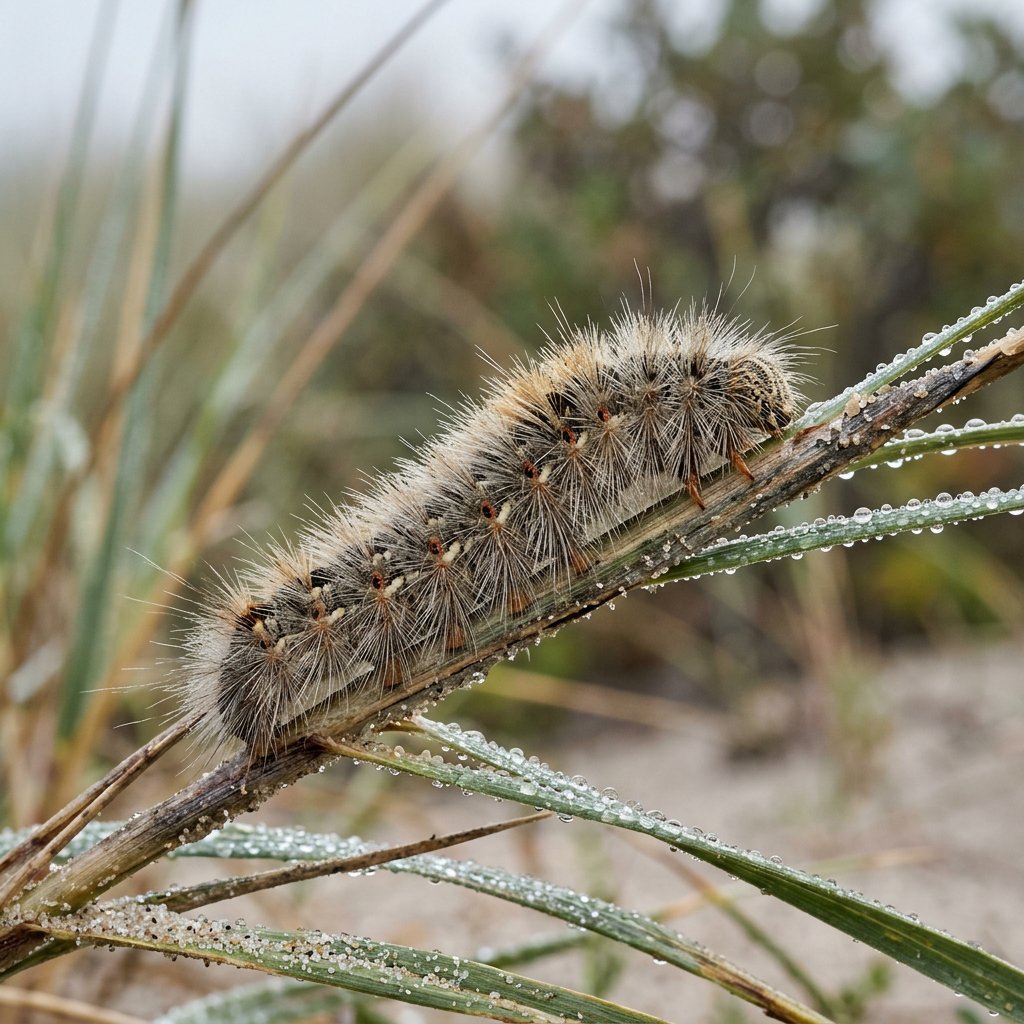
- 🐛 The Caterpillar: Early stages are black with bright orange bands, but mature larvae become a mass of long, golden-brown hairs that can almost hide their true shape.
🌲 Habitat & Ecology
- 🏖️ Coastal Specialist: While they inhabit inland grasslands, they are most famous for thriving in harsh coastal environments like sand dunes, salt marshes, and cliffsides.
- 🌿 Generalist Grazer: Despite the "Clover" in its name, the larvae are not picky; they feed on a variety of tough plants including Gorse, Broom, and various hardy grasses.
- 🥚 The Eggar Cocoon: When it is time to pupate, the caterpillar spins a hard, parchment-like cocoon that looks so much like a miniature bird's egg that it gave the entire Lasiocampa family the nickname "Eggars."
⚠️ Safety & Toxicity
- 🚫 Look, Don't Touch: The adult moth is completely harmless, but the caterpillar should be treated with respect.
- ⚠️ Urticating Hairs: The caterpillar is covered in defensive hairs that can break off and lodge in the skin. This can cause a prickly, itchy rash or "lepidopterism" in humans and can be quite painful for curious dogs who try to sniff or mouth them.
✨ Fun Fact
Male Grass Eggars are "sun-chasers." Unlike most moths that wait for the dead of night, the males fly frantically during the late afternoon in a zig-zag pattern, using their massive, feathery antennae to track the scent of a female hidden deep in the grass.
More Details








