Info
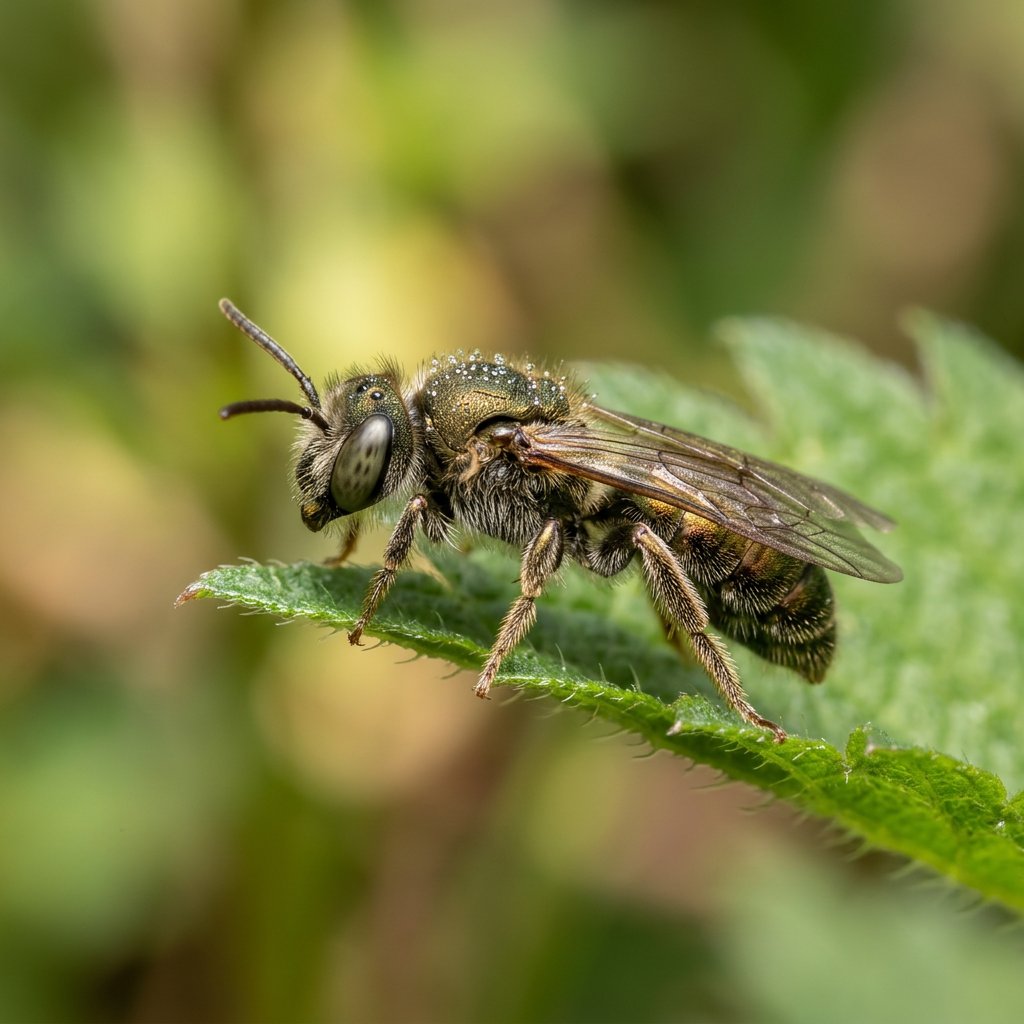
Known as the Green Metallic Furrow Bee, Lasioglossum morio is a tiny, shimmering jewel often mistaken for a small fly. These bees are essential "friends" of the garden, performing the quiet, heavy lifting of pollination while larger bumblebees take all the credit. Despite their small stature, they are incredibly industrious and exhibit a fascinating range of social behaviors that vary depending on where they live.
🔍 How to Identify
- ✨ Metallic Luster: They possess a distinct, though sometimes subtle, dark metallic green or bronzy-black sheen across their head and thorax.
- 📏 Diminutive Size: They are very small, usually measuring only 5 to 7 millimeters in length—roughly the size of a grain of rice.
- 🦵 Pollen Trousers: Look at their hind legs; females have dense, specialized hairs (scopae) that they pack with bright yellow pollen, making it look like they are wearing tiny, colorful leggings.
🌲 Habitat & Ecology
- 🏡 The Ground Dwellers: Unlike honeybees that use hives, these bees are excavators. They dig intricate tunnels in bare soil, south-facing banks, or even the crumbling mortar of old garden walls.
- 🌸 Generalist Pollinators: They aren't picky eaters! You’ll find them visiting a huge variety of flowers, from common dandelions to delicate garden herbs, making them one of the most effective pollinators for a diverse backyard.
- 🤝 Social Flexibility: They are "polymorphic" in their social lives. In warmer climates, they may live in small colonies with a queen and workers, but in cooler areas, they often live as solitary "lone wolves."
⚠️ Safety & Toxicity
- 🐝 Gentle Nature: These bees are exceptionally docile. They have no "nest defense" instinct like wasps do and will only sting if they are physically pinched or stepped on.
- 🩹 Low Impact: Because they are so small, their stinger often cannot even penetrate human skin. If a sting does occur, it is generally very mild and short-lived, posing no threat to pets or children unless there is a rare, specific allergy.
✨ Fun Fact
Lasioglossum morio belongs to the "Sweat Bee" family (Halictidae). While this specific species is mostly interested in flowers, some of its close cousins are famous for landing on hikers to sip a tiny bit of salty perspiration for extra minerals!
More Details








