Info
Meet the Labor Day Ant, the tiny architect behind those miniature "volcanoes" of soil you see dotting your lawn or sidewalk cracks. While many homeowners view them as a nuisance, these ants are the unsung farmers of the insect world, tirelessly tending to their "livestock" beneath the grass to keep their colony thriving.
🔍 How to Identify
- 🟤 Color & Sheen: Typically a rich, dark brown to nearly black color with a subtle, velvety sheen across their abdomen caused by very fine, dense hairs.
- 📏 Compact Size: They are quite small workers, usually measuring only 2 to 4 millimeters in length, making them easy to overlook until they congregate.
- 🐜 The "One-Bump" Waist: Like all members of the Lasius genus, they have a single, prominent node (petiole) between their thorax and abdomen, giving them a distinct "waistline."
🌲 Habitat & Ecology
- 🐄 Aphid Ranchers: These ants are famous for "farming." they protect aphids and root mealybugs from predators and, in return, "milk" them for a sugary substance called honeydew.
- 🌋 Open-Air Architects: They prefer sunny, open spaces like fields, gardens, and lawns. Their nests are easily identified by the small, circular craters of loose soil they kick up during excavation.
- 🍂 Seasonal Timing: They are most active in late summer and early autumn, playing a massive role in aerating soil and recycling nutrients in the ecosystem.
⚠️ Safety & Toxicity
- 🛡️ Harmless Neighbor: Lasius neoniger is considered safe. They do not possess a functional stinger and their mandibles are far too small to break human skin or cause pain.
- 🏠 Kitchen Visitors: While they are not "pest" ants in the same way carpenter ants are, they may wander into your home in search of sugary snacks. They don't cause structural damage; they are simply hungry scouts!
✨ Fun Fact
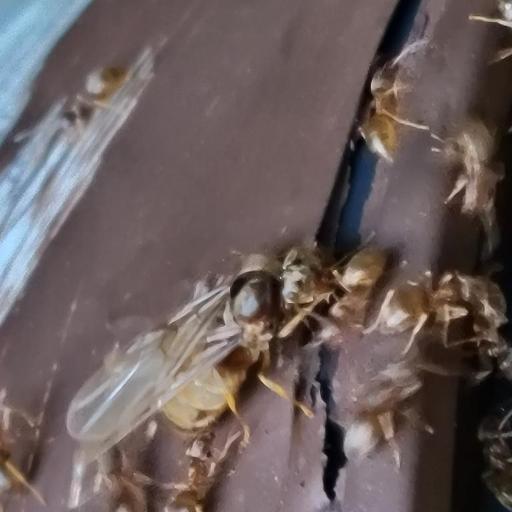
They earned the nickname "Labor Day Ant" because of their incredibly synchronized mating flights. Around early September, millions of winged queens and males from different colonies take to the sky at the exact same time across the entire region to ensure genetic diversity.
More Details








