Info
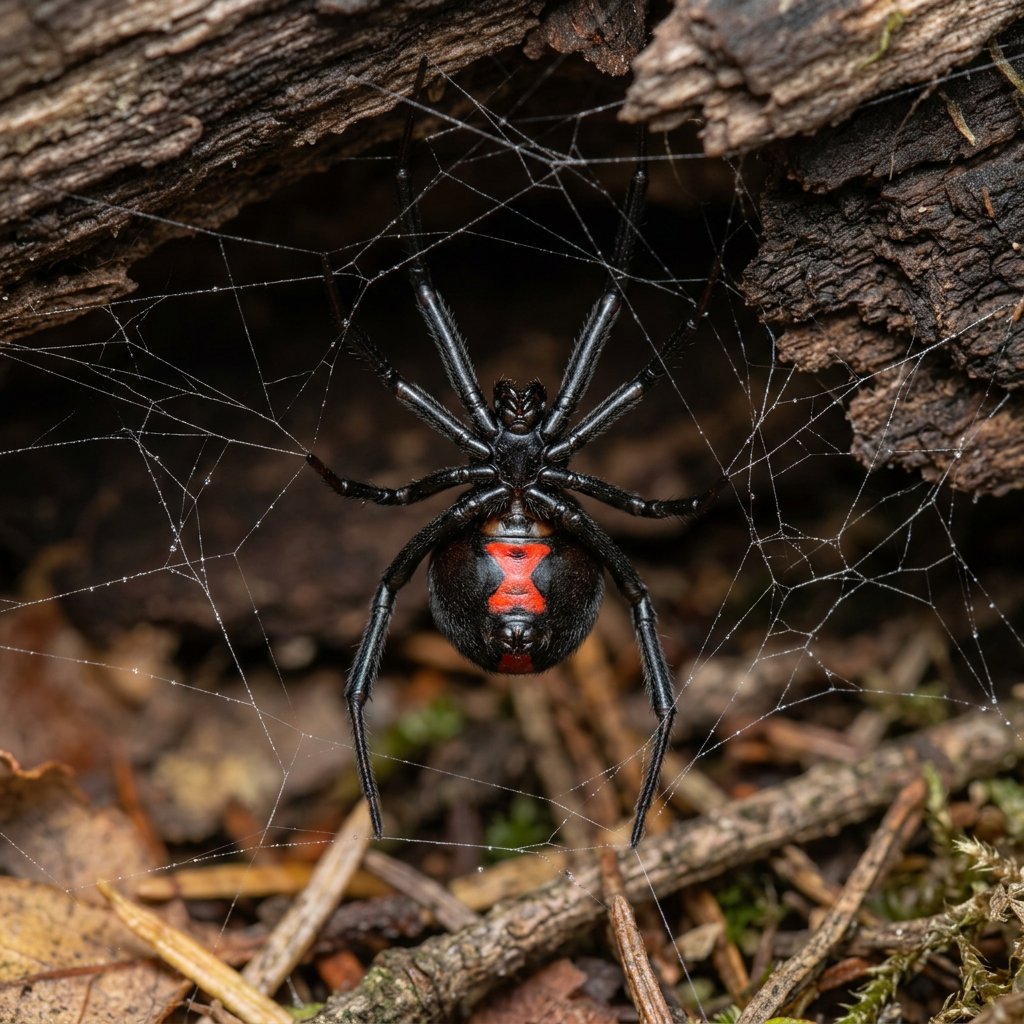
Although your search included the word "plant," Latrodectus variolus is actually a famous member of the arachnid family: the Northern Black Widow. This sleek, obsidian-colored spider is a master of the shadows, often found lurking in the quiet corners of forests and old barns. While its name might send a shiver down your spine, this spider is a shy recluse that plays a vital role in controlling the insect population.
🔍 How to Identify
- 🕷️ The "Broken" Hourglass: Unlike the solid red hourglass of its southern relative, the Northern Black Widow usually features two distinct red spots or triangles on its underside that do not touch.
- 🔴 Red Racing Stripes: It often sports a row of bright red spots or even white diagonal bands along the center of its back, making it look like it’s wearing a decorative costume.
- 🌑 High-Gloss Finish: The body is famously bulbous and jet-black, with a texture that looks like polished patent leather or a dark glass marble.
🌲 Habitat & Ecology
- 🕸️ The "Tangle" Web: You won't find this spider in a neat, circular web. They build "cobwebs"—irregular, messy, and incredibly strong tangles of silk in dark, recessed areas like hollow logs, stone walls, or woodpiles.
- 🦗 The Silent Guardian: As a nocturnal predator, it waits in its retreat for the vibration of the silk. It feeds on a wide variety of "pests," including beetles, grasshoppers, and even some invasive species, acting as a natural form of pest control.
⚠️ Safety & Toxicity
- 🚫 Venomous: WARNING. The Northern Black Widow is highly venomous. Its bite delivers a neurotoxin that can cause "latrodectism," resulting in severe muscle pain, cramping, and nausea.
- 🧤 Non-Aggressive: Despite the danger, these spiders are not "mean." They are very shy and typically only bite if they are accidentally squeezed or if a person reaches into their hiding spot. Always wear gloves when moving old wood or cleaning out dark sheds.
✨ Fun Fact
Black Widow silk is legendary in the scientific world! It is stronger than steel of the same thickness. Because of its incredible durability and thinness, it was used during World War II as the "crosshairs" in various telescopic sights and navigational instruments.
More Details








