Info
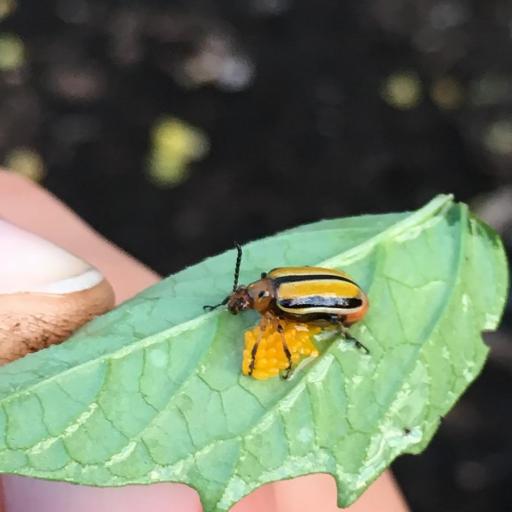
Often looking like tiny, living jewels wandering across your foliage, beetles from the genus Lema are striking members of the leaf beetle family. While their metallic sheen or bold stripes make them easy to spot, they are often a source of frustration for gardeners and farmers alike. Whether it’s the deep blue of the Cereal Leaf Beetle or the racing stripes of the Three-lined Potato Beetle, these insects are specialized herbivores with a very "stinky" way of staying safe.
🔍 How to Identify
- 🪲 Elongated Build: Unlike the round, dome-like shape of a ladybug, Lema beetles have a more rectangular, elongated, and elegant body.
- 🎨 Vibrant Coloring: Depending on the specific species, they are usually a brilliant metallic midnight blue or a bright yellow-orange with three distinct black stripes running down their backs.
- 📡 Prominent Antennae: They possess long, bead-like antennae that are roughly half the length of their entire body, used to "smell" their favorite host plants.
🌲 Habitat & Ecology
- 🍽️ The Picky Eater: These beetles are highly specialized. Some species focus entirely on cereal crops and grasses, while others are famous for infesting "Nightshades" like potatoes, tomatoes, and tomatillos.
- 🛡️ Gross Protection: The larvae have a truly unique (and stomach-turning) defense mechanism. They cover their bodies in their own sticky excrement (a "fecal shield") to deter predators like birds or ladybugs who find the sight and smell repulsive.
- 🚜 Agricultural Impact: Because they can congregate in large numbers, they are often viewed as pests. They tend to "skeletonize" leaves, eating the soft tissue and leaving behind a lace-like pattern of veins.
⚠️ Safety & Toxicity
- ✅ Harmless to Humans: Lema beetles are completely non-toxic to touch. They do not bite, sting, or carry any diseases that affect humans or household pets.
- 🌱 Threat to Gardens: While they won't hurt you, they are a significant threat to your vegetable patch. If you see the larvae (which look like small, slimy black slugs), it is best to remove them to save your harvest.
✨ Fun Fact
The "fecal shield" used by Lema larvae isn't just gross—it’s recycled chemical warfare! By eating toxic plants like Nightshades, the larvae concentrate those toxins into their waste, making their "poop backpack" poisonous to any insect brave enough to try a taste.
More Details








