Info
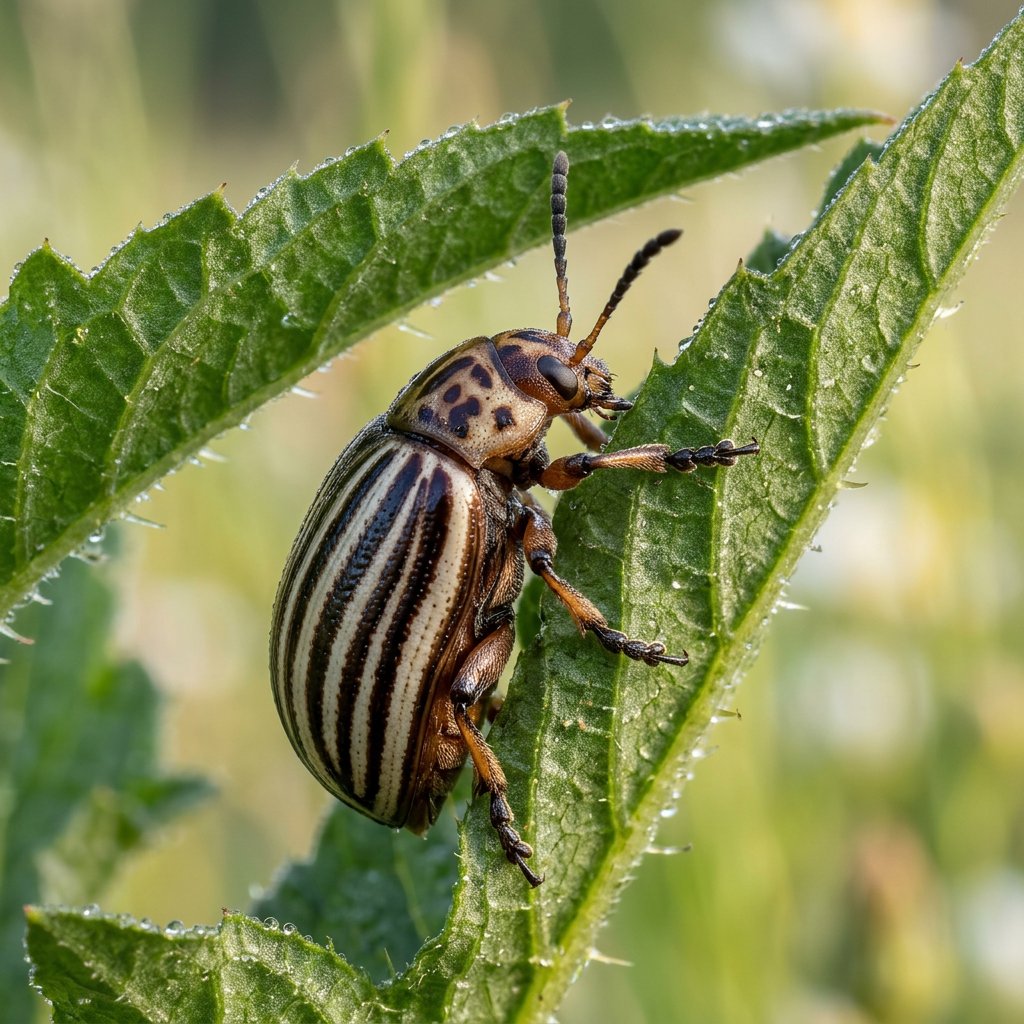
Often called the "False Potato Beetle," this striped wanderer is the ultimate master of mistaken identity. While it looks nearly identical to the notorious pest that devours potato crops, this beetle is actually a specialized eater that prefers wild "junk food" over your garden vegetables. It plays a quiet, helpful role in the ecosystem by keeping certain aggressive weeds in check.
🔍 How to Identify
- 🪲 The Stripe Trick: Look closely at the black lines on its creamy-white wing covers. In this species, the third and fourth stripes (counting from the middle) are usually joined or separated by a brownish-orange space, whereas its famous cousin has clear, separate stripes.
- 🎨 Spotted Legs: Check the "thighs" (femora). The False Potato Beetle features a distinct dark spot on each leg, a detail its "True" counterpart lacks.
- 🐛 The Larva Signature: The larvae are plump, humpbacked, and orange-red. You can tell them apart because they only have one row of black dots along their sides, while the common potato pest has two rows.
🌲 Habitat & Ecology
- 🌿 The Nightshade Specialist: This beetle is incredibly loyal to its favorite plant, the Horse Nettle (Solanum carolinense). Because it focuses on this prickly weed, it rarely causes damage to commercial potato or tomato crops.
- 🌞 Sunny Real Estate: You will typically find them in overgrown fields, meadows, or along the sunny edges of forests where wild nightshades grow abundantly.
- 🍂 Winter Naps: During the cold months, adults burrow deep into the soil to hibernate, emerging just as the first spring weeds begin to sprout.
⚠️ Safety & Toxicity
- ✅ Harmless to Humans: This beetle is a "gentle" insect. It does not bite, sting, or carry any venom. It is perfectly safe to observe or move by hand.
- 🐶 Pet Note: While not highly toxic, these beetles ingest alkaloids from the nightshade plants they eat. If a curious dog or cat eats a large number of them, it might result in a mild stomach upset, but they are generally not a cause for concern.
- 🌱 Garden Friend or Foe?: In most cases, it is a friend! By eating invasive weeds like Horse Nettle, it prevents them from taking over your garden. However, it may occasionally nibble on eggplant or peppers if its preferred weeds are removed.
✨ Fun Fact
The False Potato Beetle and the Colorado Potato Beetle are a classic example of "divergent evolution." Long ago, they shared a common ancestor, but they eventually "agreed" to eat different plants so they wouldn't have to compete for the same dinner table!
More Details








