Info
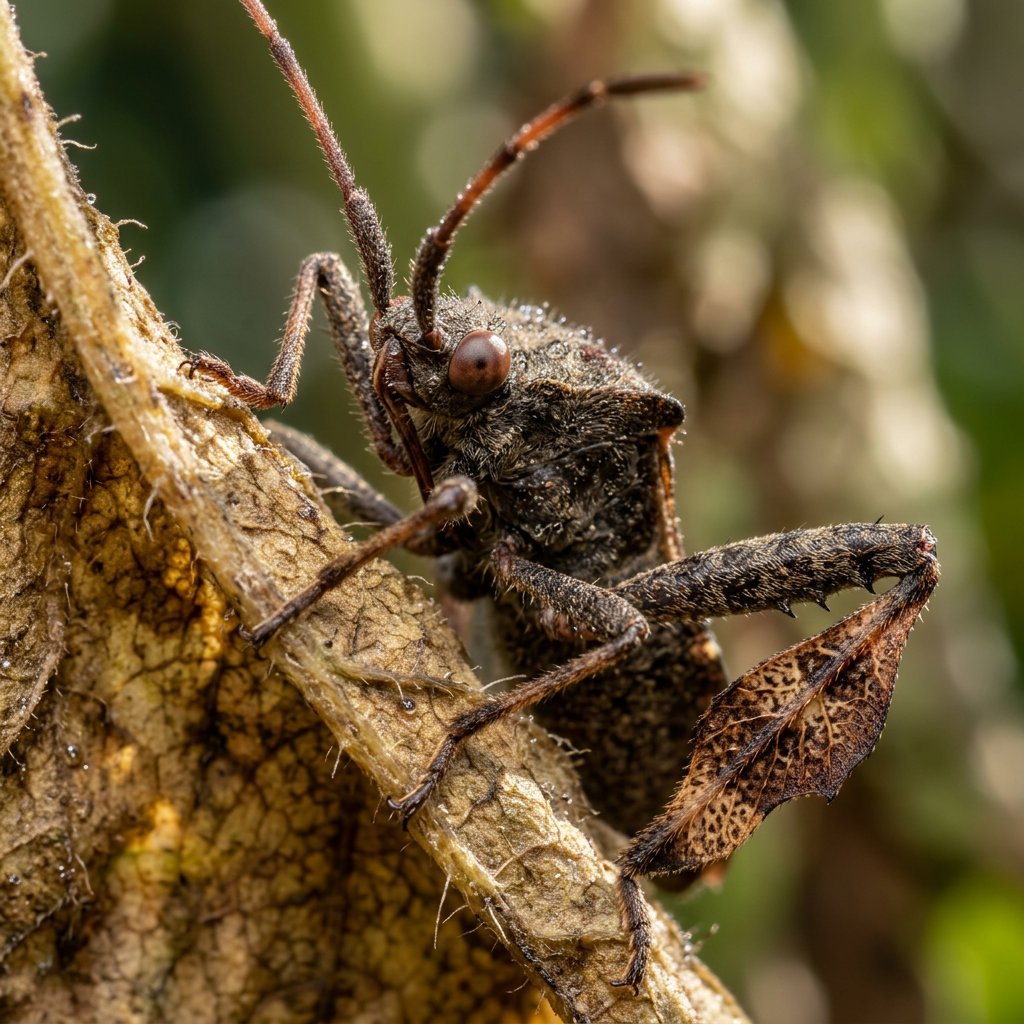
Often mistaken for a "giant mosquito" or a dangerous predator because of its prehistoric appearance and long, needle-like snout, the Northern Leaf-footed Bug is actually a slow-moving sap-sucker. Known for the distinctive "flares" on its back legs that look like tiny leaves, this insect is a common sight in backyard gardens during the late summer and autumn months.
🔍 How to Identify
- 🦵 The "Leaf" Leg: The most iconic feature is the flattened, leaf-like expansion on the tibia of the hind legs, resembling a pair of flared bell-bottom trousers.
- ⚪ The White Dots: Unlike many of its cousins, this species typically features two distinct, small white spots on its dark brown back (hemelytra).
- 👃 Long Proboscis: It possesses a very long, needle-like mouthpart used for piercing fruit and seeds, which can look intimidating but is not used for biting people.
🌲 Habitat & Ecology
- 🌽 A Fruit & Seed Fan: These bugs are primarily seed-feeders. You will likely find them congregating on pomegranates, tomatoes, corn, or privet trees where they drink the juices of ripening fruit.
- 🛡️ Smelly Defense: Much like their relatives, the stink bugs, they possess scent glands. If handled roughly, they release a pungent, citrusy-but-foul odor to discourage birds and curious gardeners from bothering them.
⚠️ Safety & Toxicity
- 🟢 Non-Aggressive: Despite their "scary" appearance, they are completely harmless to humans and do not possess a stinger.
- 🐾 Pet Safety: They are non-toxic to cats and dogs. However, if a pet decides to eat one, the bitter defensive chemical might cause some temporary drooling or an upset stomach.
- 🪴 Plant Impact: While they are "pests" in the sense that they can cause spotting on fruit, they rarely cause enough damage to kill a healthy plant.
✨ Fun Fact
Leaf-footed bugs are master chemists; they use their long, straw-like mouthparts to inject specialized enzymes into a seed, turning the solid interior into a liquid "soup" so they can easily slurp it back up!
More Details








