Info
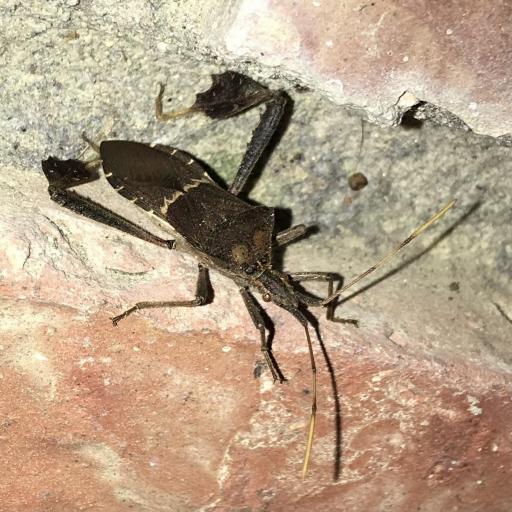
Often called the Zonated Leaf-footed Bug, this insect looks like a tiny, armored knight wearing flared trousers. While its prehistoric appearance and long "beak" might seem intimidating, it is a common sight in backyard orchards and vegetable patches across the Americas. Gardeners often recognize them by the distinct white "zig-zag" that decorates their backs like a bolt of lightning.
🔍 How to Identify
- 🦵 The "Leaf" Legs: Its most famous feature is the flattened, leaf-like expansions on the hind legs (tibiae), which look like small brown flags or paddles.
- ⚡ White Zig-Zag: Look for a prominent, creamy-white wavy line running horizontally across the middle of its dark brown wings.
- 🟡 Shoulder Spots: Two bright yellow or orange spots are located on the "shoulders" (pronotum) just behind the head.
- 👃 Long Proboscis: It carries a long, needle-like mouthpart tucked under its body, which it swings forward to feed on fruit.
🌲 Habitat & Ecology
- 🍎 Fruit Piercers: These bugs are "foes" to the harvest. They use their needle-like mouths to drill into pomegranates, citrus, tomatoes, and almonds to suck out the juices, often leaving behind dimpled or "pithy" spots on the fruit.
- 🍂 Winter Hiders: They are excellent survivalists, often congregating in large groups under tree bark or inside woodpiles to stay warm during the cold months.
- 🛡️ Aggregation: You will rarely find just one; they often hang out in clusters, especially when they are young (nymphs), appearing as bright red-orange crawlers.
⚠️ Safety & Toxicity
- ✅ Harmless to Humans: They do not bite or sting. Their mouthparts are designed for plants, not skin, and they carry no venom.
- 🤢 The Stink Factor: Like their cousins, the Stink Bugs, they possess scent glands. If they feel threatened or are crushed, they release a pungent, foul-smelling chemical that can linger on your hands.
- 🐶 Pet Safety: They are non-toxic to pets, though a curious dog who tries to eat one will likely be deterred by the bitter, "stinky" spray.
✨ Fun Fact
Leaf-footed bugs are the "wrestlers" of the insect world. Males will use those oversized, leaf-like hind legs to kick and shove rival males in dramatic battles over the best territory for attracting mates!
More Details








