Info
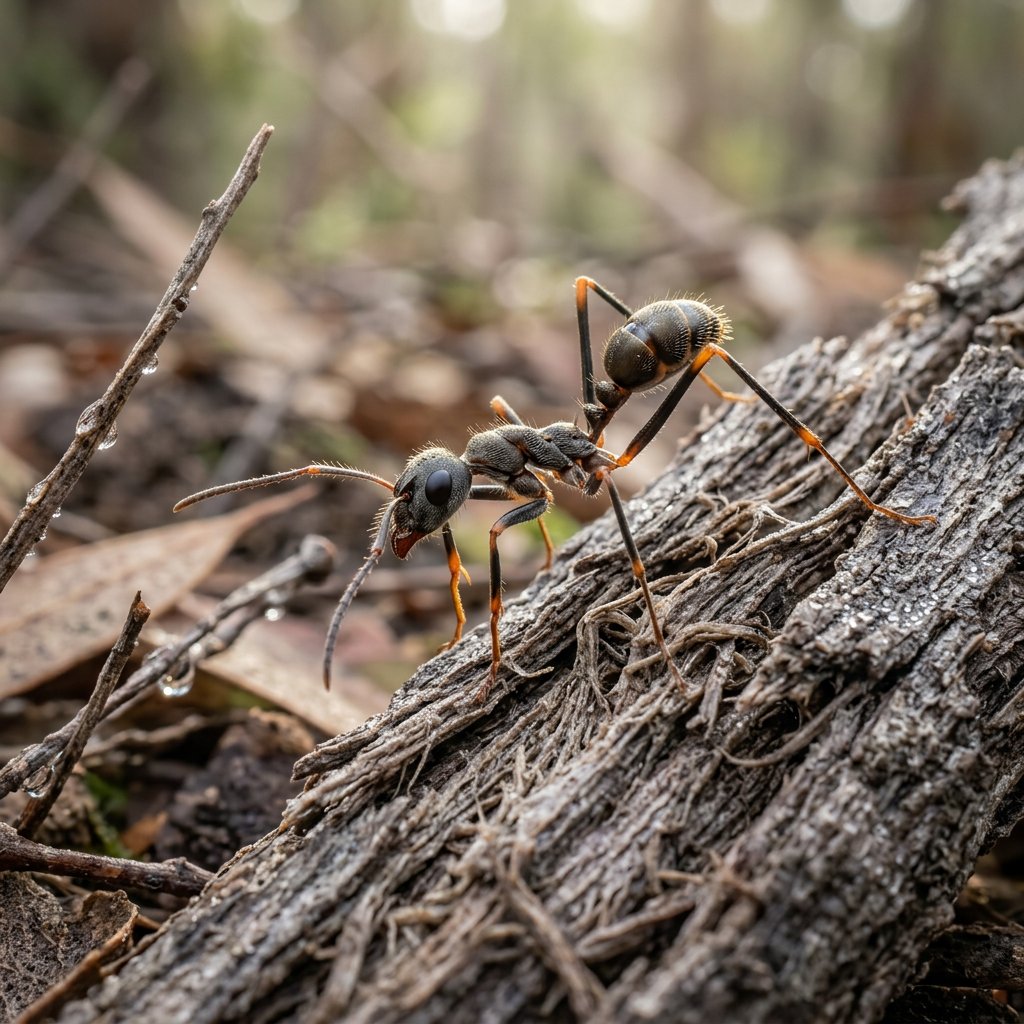
Often called "Spider Ants," members of the Leptomyrmex genus are some of the most elegant and strange-looking insects in the southern hemisphere. Primarily found in Australia, New Guinea, and New Caledonia, these ants get their name from their incredibly long, spindly legs and their unique, high-stepping gait that mimics a spider. They are often seen wandering alone rather than in massive trails, acting as the sophisticated "long-distance runners" of the ant world.
🔍 How to Identify
- 🕷️ Spider-like Legs: They possess exceptionally long, thin legs that make them appear much larger and more spider-like than other common ants.
- 🦂 The "Curled" Posture: When moving, they often carry their abdomen (gaster) arched forward over their thorax, a defensive posture that can make them look a bit like tiny scorpions.
- 🎨 Distinct Coloring: Most species are a striking bicoloration of orange and black or a uniform deep reddish-brown with a matte, velvety texture.
🌲 Habitat & Ecology
- 🍯 Liquid Diet: These ants are "liquid specialists." They spend their days foraging for floral nectar or "honeydew" secreted by aphids and scale insects, which they carry back to the nest in their social stomachs.
- 🏠 Bushland Architects: They typically build nests in the soil, often under rocks or at the base of trees. Unlike many ants that create sprawling colonies, Leptomyrmex colonies are usually smaller and more centralized.
- 🏃 Solo Foragers: You will rarely see them in thick lines. Instead, they are solitary hunters and gatherers, using their speed and long legs to cover vast distances quickly to find high-energy food sources.
⚠️ Safety & Toxicity
- 🛡️ Stingless Defense: Spider Ants do not have a functional stinger. They are generally shy and will choose flight over a fight whenever possible.
- 🧪 Chemical Spray: If they feel extremely threatened, they can spray a defensive chemical (iridomyrmecin) from the tip of their abdomen. While not dangerous to humans, it has a pungent, medicinal smell and can be irritating if it gets into a small cut or the eyes.
- 🐶 Pet Safety: They are non-toxic and pose no threat to curious cats or dogs, though the chemical spray might discourage a pet from trying to eat one twice.
✨ Fun Fact
Unlike most ants where queens have wings to start new colonies, some Leptomyrmex species have "ergatoid" queens. These queens look exactly like giant workers and never grow wings, meaning the colony must spread by simply walking to a new location!
More Details








