Info
Known as the "Claret Dun" by fly-fishers and nature enthusiasts, Leptophlebia vespertina is a delicate master of the wetlands. This tiny aeronaut spends most of its life hidden underwater as a nymph, only to emerge for a brief, shimmering dance in the evening air. Its presence is a gold standard for water quality, as it rarely thrives in polluted environments.
🔍 How to Identify
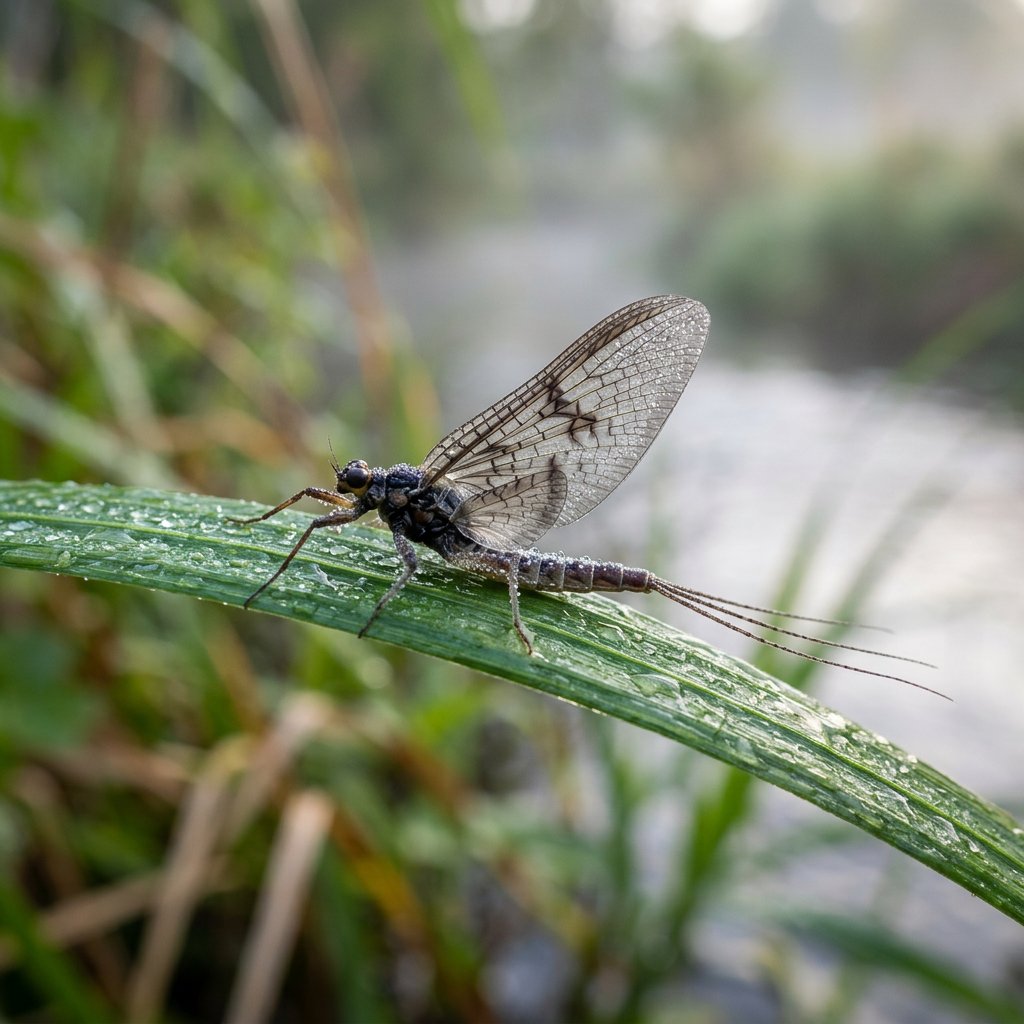
- 🪶 Smoky Wings: The wings are translucent but tinted with a dark, smoky grey or brownish hue, usually held upright like a sail when the insect is at rest.
- 🛶 Slender Abdomen: A very thin, dark brown to blackish body. In the right light, you might see a deep "claret" or wine-red undertone that gives them their common name.
- 🦯 Triple Tails: Look closely at the rear; this species boasts three very long, hair-like filaments (tails) that are often longer than its actual body.
🌲 Habitat & Ecology
- 💧 Still Water Specialist: While many mayflies love rushing rapids, the Claret Dun prefers the quiet life. You’ll find them around the edges of ponds, lakes, and even acidic peat bogs.
- 🐟 The Ecosystem's Snack: They are a cornerstone of the freshwater food web. As nymphs, they crawl among underwater plants eating detritus, and as adults, they provide a vital protein source for rising trout and hungry dragonflies.
⚠️ Safety & Toxicity
- 🛡️ Status: Completely harmless. They are "friend" in every sense of the word.
- 🚫 No Bite or Sting: These insects do not have functional mouthparts or stingers. They cannot bite you, your children, or your pets; they are purely focused on their aerial dance.
✨ Fun Fact
- ⏳ Living on Air: Once they transition into their final adult form, Leptophlebia vespertina literally stops eating. They don't even have a functioning stomach! Their only goal for their few hours of adulthood is to find a mate and lay eggs before their energy runs out.
More Details








