Info
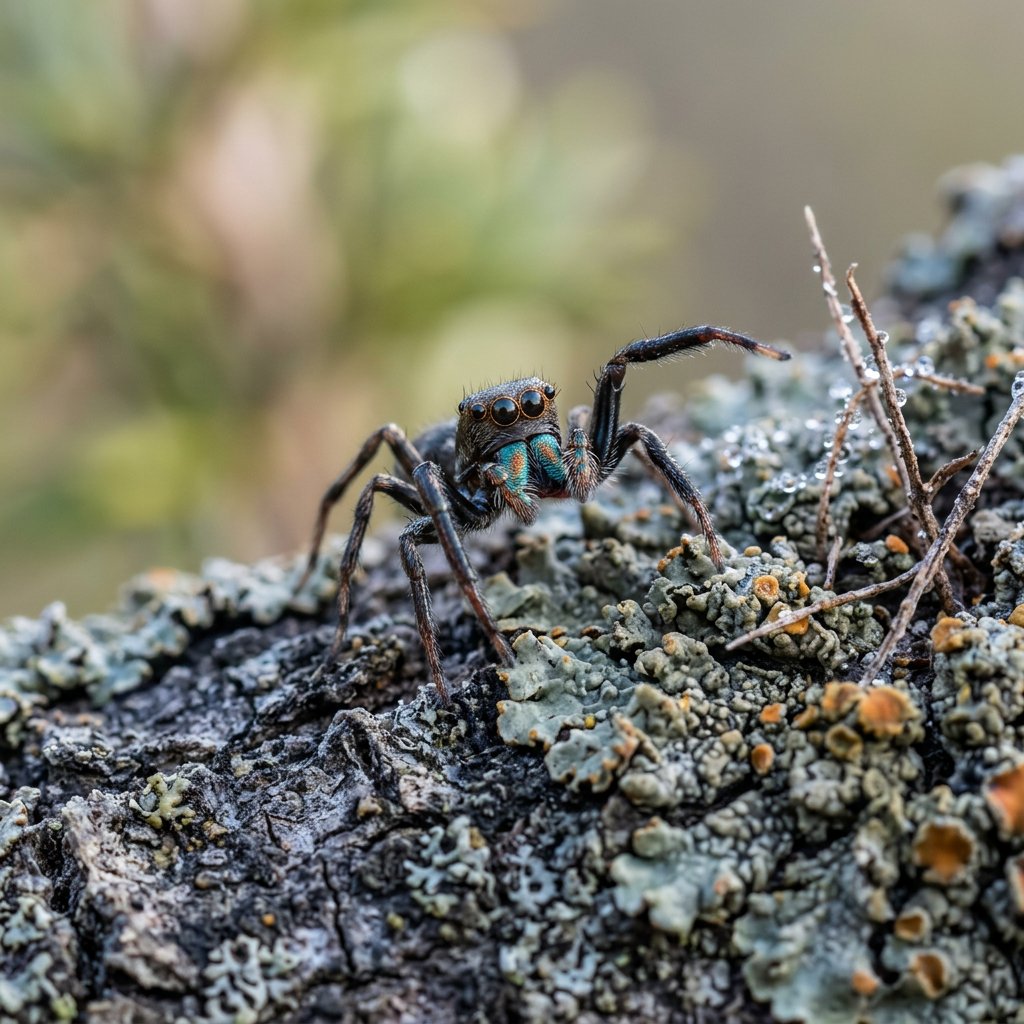
Meet the world’s most convincing tiny actor: the Ant-Mimic Jumping Spider (Leptorchestes). While it might look like a stray ant scurrying across a sunlit wall, this clever creature is actually a spider in disguise. By evolving to look and move like an ant, it avoids being eaten by birds (who generally find ants sour and aggressive) and can often sneak up on its own unsuspecting prey.
🔍 How to Identify
- 🐜 Body Shape: Unlike the rounded bodies of most jumping spiders, Leptorchestes has an elongated, slender body with a distinct "waist" constriction that perfectly mimics the segments of an ant.
- 📡 False Antennae: Watch closely! This spider frequently holds its front pair of legs up in the air and wiggles them to imitate the twitching antennae of an ant.
- 🏃 Erratic Movement: Instead of the typical "stop-and-jump" motion of other salticids, it moves with a frantic, zig-zagging scurrying pattern that is indistinguishable from a foraging ant to the untrained eye.
🌲 Habitat & Ecology
- ☀️ Sun Lovers: You will most likely spot them on sun-warmed vertical surfaces, such as old stone walls, tree trunks, or wooden fences where ants are common.
- 🕷️ The Solitary Hunter: Unlike the social ants they mimic, these are solitary predators. They don't spin webs to catch food; instead, they use their incredible eyesight to stalk and pounce on small flies and other tiny invertebrates.
- 🛡️ Batesian Mimicry: Their entire lifestyle is a survival strategy called Batesian mimicry. By pretending to be a "distasteful" ant, they enjoy a much higher survival rate against visual predators like songbirds.
⚠️ Safety & Toxicity
- ✅ Harmless: Leptorchestes is completely harmless to humans. They are far more afraid of you than you are of them.
- 🤏 No Bite Risk: Their fangs are too small to penetrate human skin, and they lack any venom that is medically significant to people or household pets.
- 🌿 Garden Friend: These spiders are excellent natural pest controllers, helping to keep small insect populations in check around your home and garden.
✨ Fun Fact
The mimicry is so deep that Leptorchestes even has "fake eyes." While they have the standard eight spider eyes, they often have dark patches on the sides of their heads that mimic the large compound eyes of an ant to complete the costume!
More Details








