Info
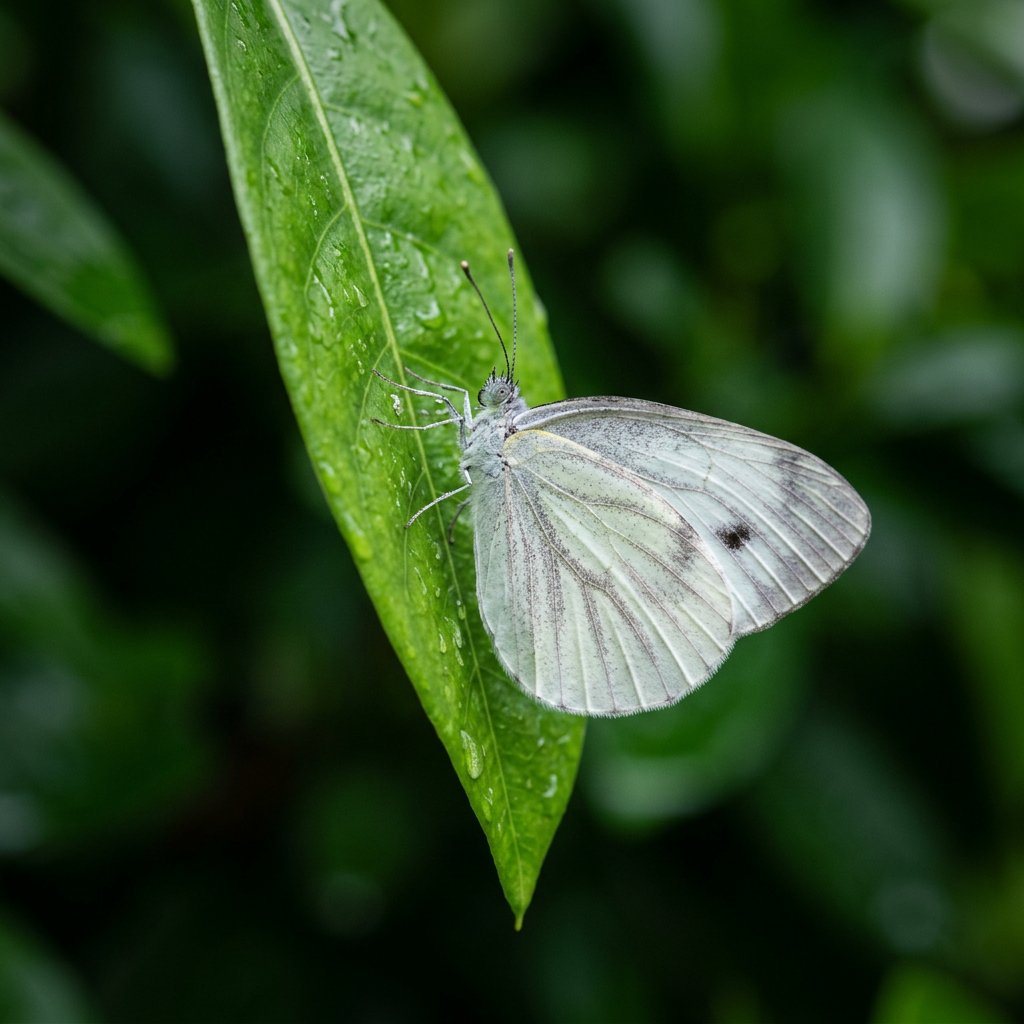
Commonly known as the Psyche, this tiny, delicate butterfly is a staple of gardens and woodland edges across South and Southeast Asia. Its name is derived from the Greek word for "soul" or "spirit," a fitting tribute to its ethereal, ghostly appearance as it flits through the shadows. It is one of the most gentle and unassuming insects you will ever encounter, often looking like a stray white petal caught in a breeze.
🔍 How to Identify
- 🦋 The Wings: Primarily paper-white with a single, prominent black spot on the upper side of each forewing. The wing tips (apices) also feature a small black smudge.
- 🍃 Underside Pattern: The underside of the wings is beautifully marbled with fine, mossy-green or greyish striae, providing excellent camouflage when the butterfly rests with its wings closed.
- 📏 Size and Shape: Very small and fragile, with a wingspan of only 25–45mm. The wings are notably rounded, lacking the sharp angles seen in many other butterfly species.
🌲 Habitat & Ecology
- 🌿 Low-Level Living: You will rarely see a Psyche flying high. They prefer to stay within a meter of the ground, bobbing through tall grass and low shrubs. This "bobbing" flight is their signature move, making them look like they are dancing rather than traveling.
- 🍳 Host Plants: They are closely tied to plants in the Capparaceae family (like the Spider Flower). Female Psyches carefully lay their eggs on the underside of these leaves to ensure the emerging green caterpillars have an immediate food source.
- 🌦️ Shade Lovers: Unlike many butterflies that crave the hot midday sun, the Psyche thrives in dappled sunlight and shaded forest floors, making it a frequent visitor to backyard gardens with plenty of ground cover.
⚠️ Safety & Toxicity
- ✅ Status: Completely harmless and "friendly."
- 👶 Interaction: The Psyche possesses no stinger, does not bite, and is not toxic if accidentally touched. Because of its slow, low-altitude flight, it is a perfect subject for children to observe closely without any risk.
✨ Fun Fact
🌬️ The Psyche is so light and its wing beat so weak that it is often at the mercy of the wind; it is one of the few butterflies that actually looks like it is "swimming" through the air rather than flying!
More Details








