Info
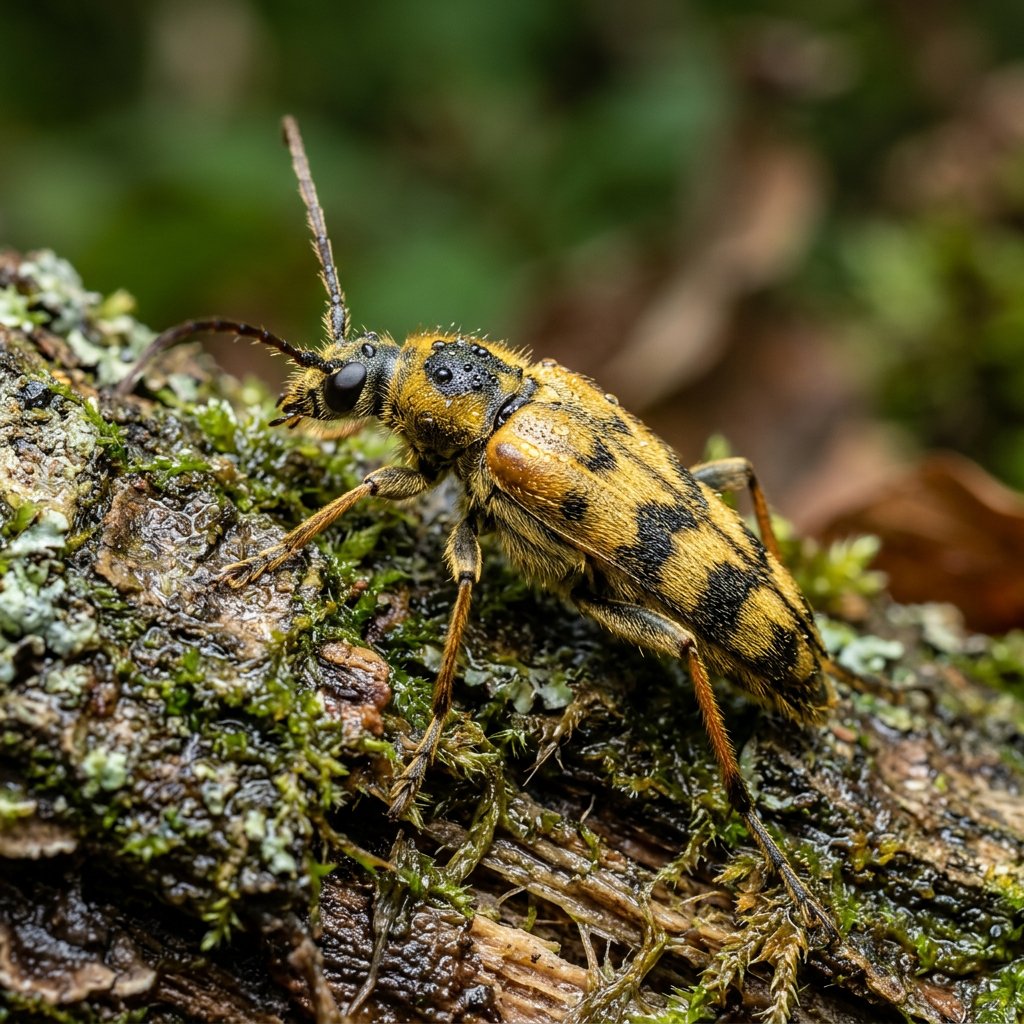
Often called the Golden-flowered Longhorn Beetle, Leptura aurulenta is one of nature’s most sophisticated "wasp impressionists." Draped in striking bands of gold and black, this beetle spends its summer days lounging on sun-drenched wildflowers, masquerading as a stinging insect to trick hungry birds. It is a prized sight for nature photographers and a hallmark of healthy, ancient woodlands.
🔍 How to Identify
- 🎨 Bold Pattern: The wing cases (elytra) feature four distinct, velvety golden-yellow bands set against a deep black background.
- 📏 Elegant Shape: It has a characteristically elongated, tapering body, usually measuring between 15 and 24mm in length.
- 📡 The Longhorns: True to its family name, it sports long, notched black antennae that it uses to "smell" the forest for nectar and mates.
🌲 Habitat & Ecology
- 🌳 Ancient Wood Enthusiast: This beetle is a specialist of old-growth deciduous forests. Its larvae are "wood-borers," spending several years developing deep inside the moist, decaying wood of ancient oaks, beeches, and chestnuts.
- 🌼 Sun-Loving Pollinator: On warm July afternoons, you’ll likely find the adults feeding on umbellifers (flat-topped white flowers like Hogweed). They play a vital role in woodland pollination while fueling up for their short adult lives.
⚠️ Safety & Toxicity
- 🎭 Batesian Mimicry: While its "warning colors" suggest a painful sting, this is a complete bluff. The beetle is entirely harmless and possesses no stinger or venom.
- 🌿 Gentle Giant: They are not aggressive towards humans or pets. While they have mandibles for feeding, they rarely bite unless they are physically squeezed or handled very roughly.
✨ Fun Fact
The Golden-flowered Longhorn Beetle is a slow-motion marvel; while the adult beetle only lives for a few weeks in the summer sun, its larvae may spend up to four years munching through a single fallen log before they are ready to transform!
More Details








