Info
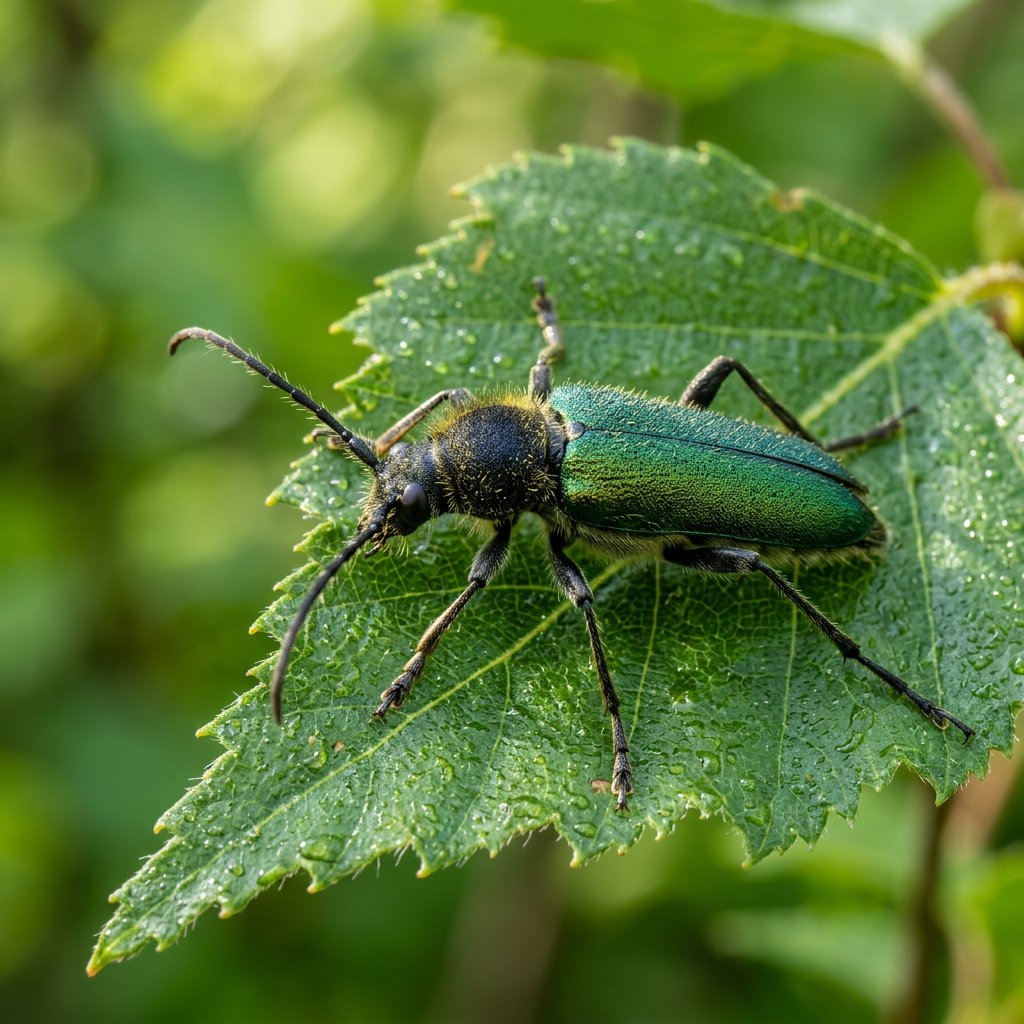
Commonly known as the Green Flower Longhorn, this beetle looks as though it has been dipped in lime-green velvet. Found primarily in the coniferous forests of Europe and Asia, it is a striking example of nature's "shaggy" aesthetics. While its long antennae might look intimidating to some, this beetle is a gentle pollinator that plays a vital role in the health of forest ecosystems.
🔍 How to Identify
- 🟢 Velvet Coat: The most striking feature is its dense covering of yellowish-green hairs, giving the entire body a soft, fuzzy texture.
- 📏 Longhorns: It possesses the signature long, segmented antennae of the Cerambycidae family, which it uses to "smell" its way to the best nectar sources.
- 📐 Tapered Shape: The body is broad at the shoulders and tapers significantly toward the back, a common trait among flower-visiting longhorns.
🌲 Habitat & Ecology
- 🌼 Flower Frequenters: You are most likely to spot the adults during mid-summer, sunning themselves on white flowers like Cow Parsley or Hogweed, where they feast on pollen and nectar.
- logs Forest Recyclers: The larvae live within decaying coniferous wood, particularly pine and spruce. They are essential "decomposers," helping to turn old logs back into nutrient-rich soil.
- 🏔️ Mountain Dwellers: This species is particularly fond of higher altitudes and cooler, mountainous woodland regions.
⚠️ Safety & Toxicity
- 🛡️ Status: Completely harmless. These beetles do not possess a stinger and are not aggressive toward humans or pets.
- 🌿 Plant Safety: Unlike some wood-boring pests, Lepturobosca virens does not attack healthy living trees or structural timber in homes; they prefer wood that is already dead and decaying.
✨ Fun Fact
The vibrant green "fuzz" on their backs isn't just for show—it acts as a form of camouflage. When resting on moss-covered logs or yellow-green flowers, the beetle becomes nearly invisible to predators like birds!
More Details








