Info
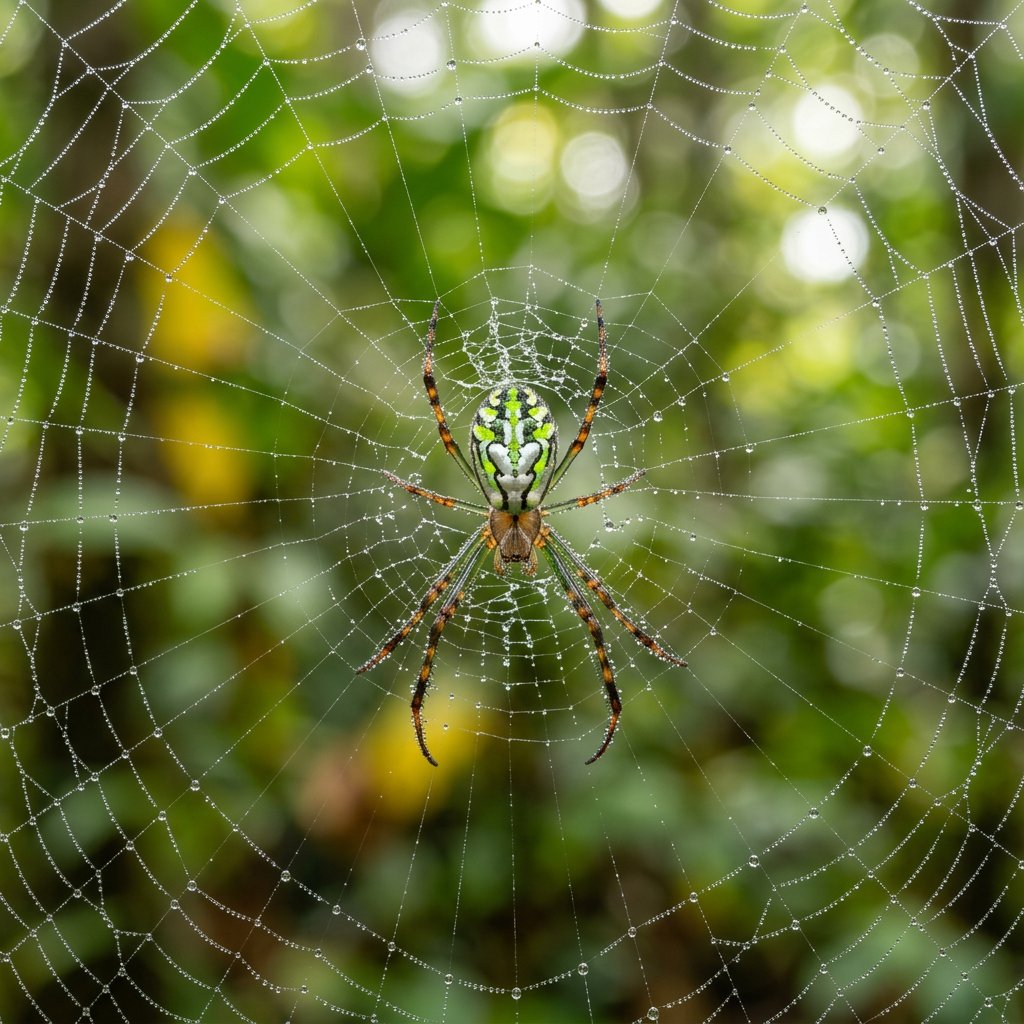
Commonly known as the Mabel Orchard Spider, this tiny architect is like a living piece of jewelry for your garden. Often found hanging upside down in the center of its shimmering web, its metallic abdomen sparkles under the sun, earning it a reputation as one of the most beautiful spiders in North America. While it might look exotic, it is a peaceful neighbor that spends its days quietly protecting your plants from flying pests.
🔍 How to Identify
- 💎 The "Silver" Back: The most striking feature is its elongated abdomen, which is primarily a brilliant, metallic silver designed to reflect sunlight and regulate body temperature.
- 🎨 Neon Accents: Look closely for vibrant splashes of neon green, yellow, and sometimes orange or red markings near the rear and sides, contrasted against dark black lines.
- 📐 Horizontal Webbing: Unlike many spiders that build vertical webs, this species often constructs its orb-shaped web at a horizontal or slightly slanted angle, usually at waist height or lower.
🌲 Habitat & Ecology
- 🍎 Orchard Dweller: As its name suggests, it loves orchards, woodland edges, and shrubby gardens where there is plenty of moisture and dappled sunlight.
- 🦟 Natural Pest Control: It is a master predator of small flying insects. By catching gnats, mosquitoes, and small flies, it acts as a chemical-free bodyguard for your backyard.
- 🏗️ The Upside-Down Life: You will almost always find this spider hanging belly-up beneath the center of its web. This posture helps it stay hidden from birds looking from above while keeping a "view" of the ground.
⚠️ Safety & Toxicity
- 🟢 Friend to Humans: The Mabel Orchard Spider is considered harmless. They are non-aggressive and will almost always choose to drop from their web and hide rather than confront a human.
- 🩹 Minor Reaction: While they do possess venom (like almost all spiders), it is not medically significant to humans. A bite—which is extremely rare—would likely feel like nothing more than a faint pinprick or a mild bee sting.
- 🐾 Pet Safety: They pose no threat to curious cats or dogs. Their small size and timid nature make them a "zero-risk" resident of your garden.
✨ Fun Fact
The "silver" color on the spider’s abdomen isn't just a pigment; it's caused by guanine crystals reflecting light from within its body. This "mirror finish" helps camouflage the spider against the bright sky when viewed from below by predators!
More Details








