Info
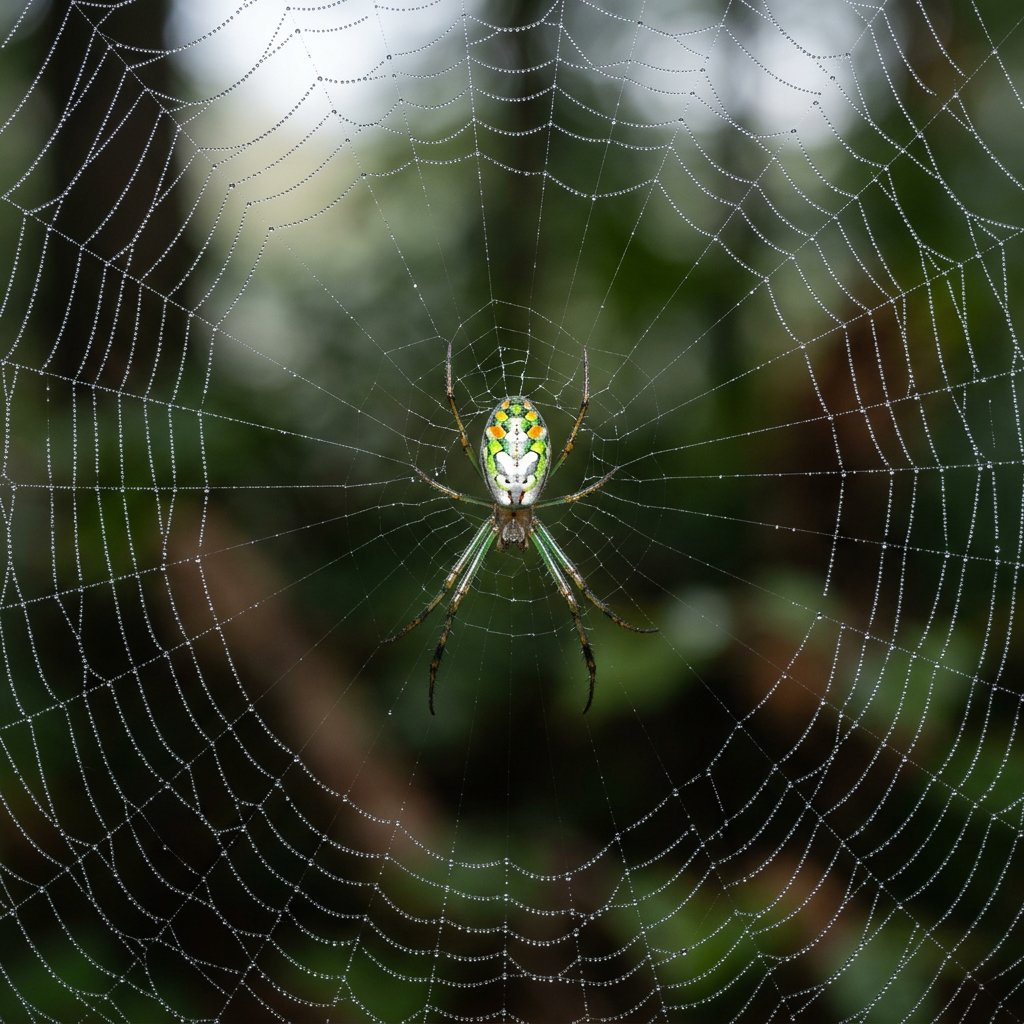
Known as the Orchard Spider, Leucauge venusta is one of the most vibrant and jewel-like spiders you will ever encounter in your backyard. Often looking like a shimmering drop of mercury suspended in the air, these tiny architects are famous for their metallic, neon-splashed bodies. They are a gardener's best friend, quietly patrolling the foliage to keep pest populations in check.
🔍 How to Identify
- 💎 Metallic Abdomen: The body is elongated and silvery-white, often reflecting a metallic green or gold luster that glints in the sunlight.
- 🎨 Neon Accents: Look for bright, "neon" spots of orange, yellow, or red at the very end of the abdomen—these look like tiny, glowing taillights.
- 🕷️ Long, Translucent Legs: Their legs are remarkably long and usually a delicate, see-through shade of green or yellowish-brown.
- 🕸️ Horizontal Web: Unlike many spiders that build vertical webs, the Orchard Spider usually hangs its orb-web horizontally or at a slight angle, often near eye level in shrubs.
🌳 Habitat & Ecology
- 🍎 A Garden Regular: True to their name, they love orchards, but they are equally at home in shrubbery, woodlands, and moist garden corners where sunlight filters through the leaves.
- 🦟 The Natural Exterminator: They specialize in catching small flying insects like gnats, flies, and leafhoppers, making them an essential part of a healthy backyard ecosystem.
- 🙃 Upside-Down Living: You will almost always find this spider hanging upside down in the center of its web, waiting patiently for a vibration that signals dinner.
⚠️ Safety & Toxicity
- 🟢 Harmless: The Orchard Spider is considered non-aggressive and poses no threat to humans or larger pets.
- 🤏 Tiny Fangs: While they do possess venom to paralyze their prey, their fangs are generally too small and weak to effectively pierce human skin. Even if a bite were to occur, the reaction is typically less severe than a common bee sting.
✨ Fun Fact
The Orchard Spider is so beautiful that it even caught the eye of the famous philosopher Henry David Thoreau, who wrote about its "shining, porcelain-like" beauty in his nature journals back in the 1850s!
More Details








