Info
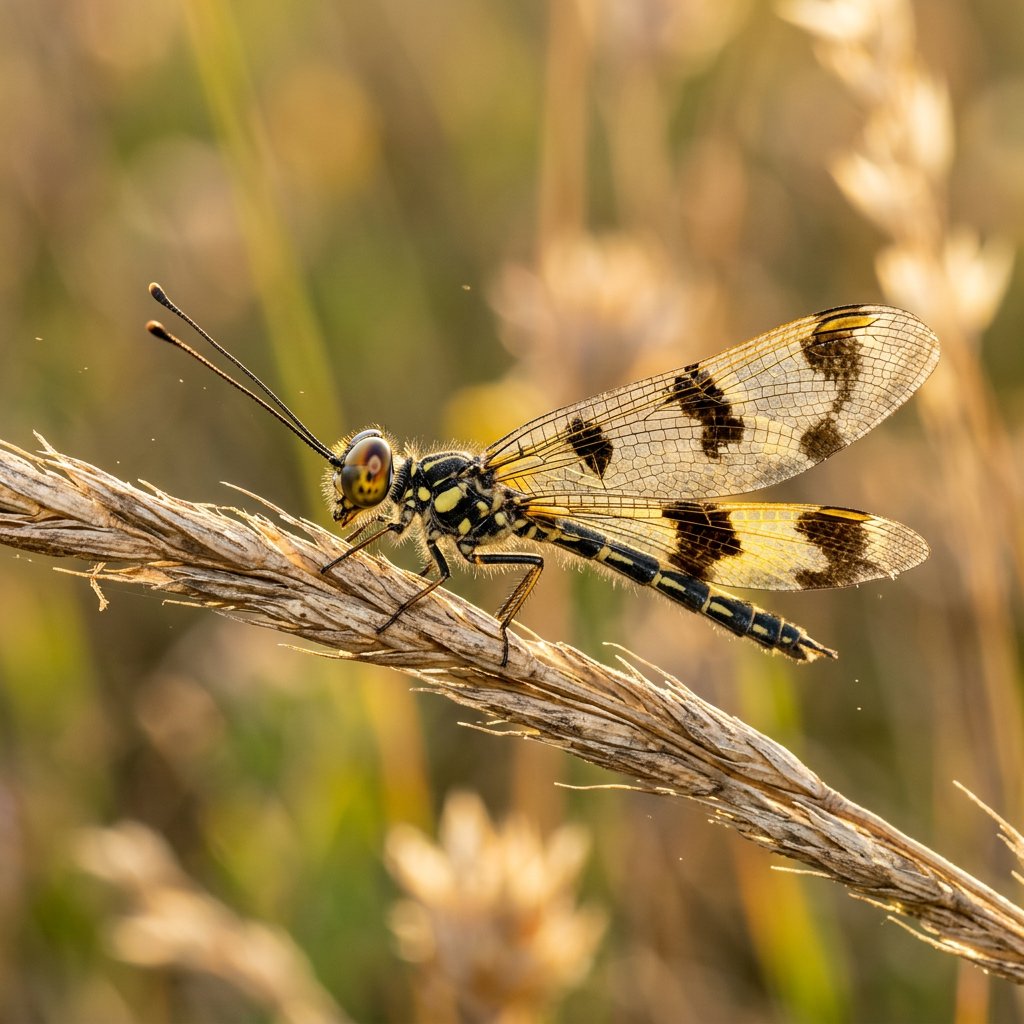
Looking like a whimsical cross between a dragonfly and a butterfly, the Yellow Owlfly (Libelloides macaronius) is one of the most striking aerial predators of the insect world. Often found dancing over sun-drenched meadows, these "butterfly-dragons" are master aviators that use their massive eyes to hunt mid-air. While their bold patterns might look like a warning, they are beneficial neighbors that help keep garden pests in check.
🔍 How to Identify
- 🦋 Butterfly-Like Antennae: Unlike dragonflies, they possess long, thin antennae with distinct clubs at the ends, strikingly similar to those of a butterfly.
- 🟡 Bold Wing Patterns: The wings are partially transparent with dramatic blotches of bright yellow and dark brown or black, designed to break up their silhouette in the sunlight.
- 🦉 Split Eyes: They have enormous, "owl-like" compound eyes that are physically divided into two parts: an upper section for detecting ultraviolet light and a lower section for standard vision.
🌲 Habitat & Ecology
- ☀️ Sun Seekers: You’ll find them in dry, open grasslands, rocky hillsides, and meadows. They are strictly diurnal and will only fly when the sun is out; if a cloud covers the sun, they often land abruptly and wait for the warmth to return.
- 🏹 The Aerial Hunter: They are voracious predators. Using their incredible speed and agility, they snatch smaller insects like flies and small moths right out of the air, clutching them with their powerful legs.
⚠️ Safety & Toxicity
- 🟢 Safe & Beneficial: These insects are entirely harmless to humans. They do not possess a stinger and are not aggressive.
- 🤏 Handle with Care: While they aren't toxic, they have strong mandibles meant for crunching through beetle shells. If you try to catch one by hand, it may give a tiny, harmless nip in self-defense, but they prefer to simply fly away.
✨ Fun Fact
The Yellow Owlfly has a "superpower" in its eyes—the upper half of their split eyes is specifically tuned to see ultraviolet light. This allows them to see the dark silhouettes of small flying insects against the bright UV-lit sky, making them elite "stealth" hunters that can spot prey from significant distances.
More Details








