Info
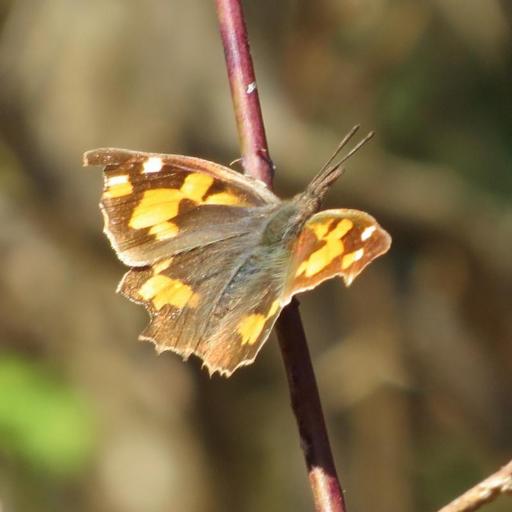
Often mistaken for a stray dead leaf or a tiny bird, the Nettle-tree Butterfly—also known as the "European Beak"—is a master of disguise. Its most striking feature is its elongated "beak," which makes it look less like a traditional butterfly and more like a dried twig. It is a common and welcome sight in Mediterranean and Asian gardens, where it darts through the air with surprising speed.
🔍 How to Identify
- 👃 The "Beak": It possesses unusually long labial palpi that extend forward like a snout. When the butterfly perches, this snout looks exactly like a leaf stem.
- 📐 Angular Wings: Unlike the rounded wings of most butterflies, its forewings have a distinctively jagged, "squared-off" tip, giving it a unique geometric silhouette.
- 🍂 Dull Underside: The underside of the wings is a mottled greyish-brown. When the wings are closed, the insect becomes virtually invisible against tree bark or dead foliage.
🌲 Habitat & Ecology
- 🌳 The Nettle Tree Connection: This butterfly is a specialist; its life cycle is almost entirely dependent on the Nettle tree (Celtis australis). The caterpillars feed on the leaves, while adults often congregate around these trees to mate.
- ☀️ Sun-Seeker: You will frequently find them basking on warm rocks or dirt paths. They are sun-lovers but are very skittish—at the slightest shadow, they vanish into the canopy or drop to the ground to hide.
- 💨 Powerful Flier: Despite its small size, it is an incredibly strong flier and is known to be migratory, sometimes traveling long distances in search of fresh host plants.
⚠️ Safety & Toxicity
- ✅ Completely Harmless: The Nettle-tree Butterfly is a gentle visitor. It does not sting, bite, or produce any irritating chemicals.
- 🐶 Pet & Child Safe: There is no risk to curious pets or children. It is a "friend" to the garden and serves as a minor pollinator and a food source for local birds.
✨ Fun Fact
The Nettle-tree Butterfly is a "living actor." When it perches on a branch to hide, it tucks its antennae away and tilts its body at an angle, perfectly mimicking a dead leaf still attached to a branch. This camouflage is so effective that even experienced entomologists can walk right past one without noticing!
More Details








