Info
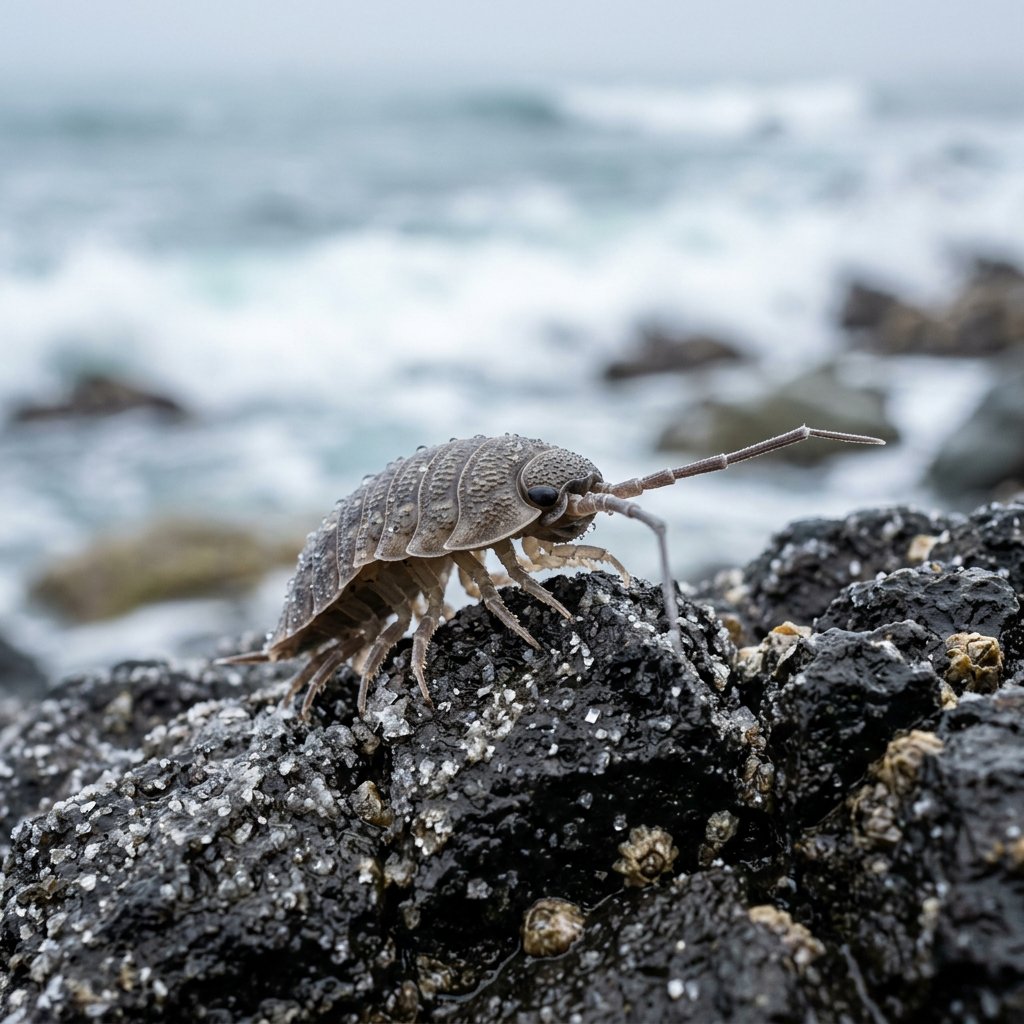
Commonly known as the Wharf Roach or Sea Slater, Ligia exotica is a master of disguise and speed. While it looks like a cockroach and moves like a silverfish, it is actually a land-dwelling crustacean—a relative of crabs and shrimp that has traded the deep ocean for the rocky splash zone.
🔍 How to Identify
- 🪳 The Body: A flat, oval-shaped body consisting of several overlapping plates, usually mottled gray or brown to blend in with damp rocks.
- 👀 The Eyes: Large, prominent compound eyes that give it excellent vision to spot predators (and humans) from a distance.
- 📡 The "Tails": Two long, thin, fork-like appendages (uropods) protruding from the rear, which help it sense its environment and maintain moisture.
🌊 Habitat & Ecology
- 🦀 Coastal Scavenger: These "insects" are the cleanup crew of the coastline. They primarily feed on decaying organic matter, algae, and washed-up debris, keeping piers and jetties clean.
- 💧 The Moisture Rule: Although they live on land, they are still crustaceans and breathe through specialized "gills." They must stay near the water's edge to keep their gills damp, or they will suffocate.
- 🏃 High-Speed Sprinters: They are incredibly fast and skittish. At the slightest vibration or shadow, dozens of them will scatter simultaneously, creating a "crawling" effect on stone walls.
⚠️ Safety & Toxicity
- ✅ Status: Completely harmless to humans.
- 🛡️ No Bite or Sting: They lack any venom, stingers, or mouthparts capable of biting humans. Their only defense is their incredible speed.
- 🐱 Pet Safety: While they aren't toxic to pets, your cat or dog might find their erratic movement irresistible. They are safe if accidentally mouthed, though they may carry typical coastal bacteria from their scavenging.
✨ Fun Fact
Wharf Roaches are "evolutionary commuters"—they represent a middle ground in evolution, showing how ancient sea creatures eventually transitioned to living on dry land!
More Details








