Info
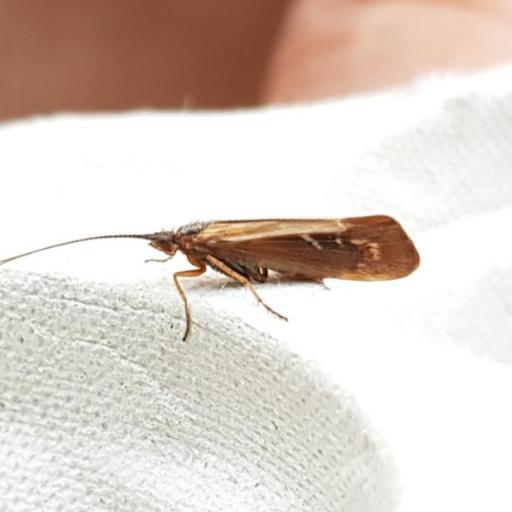
Often mistaken for a small, unassuming moth, the Limnephilus auricula is actually a member of the caddisfly family. These insects are the quiet "engineers" of the freshwater world, spending the first half of their lives as underwater architects. While they aren't flashy, their presence is a sign of a functioning ecosystem, and they play a vital role in the diet of many birds and fish.
🔍 How to Identify
- 🦋 Tent-Shaped Wings: When at rest, they hold their mottled brown wings in a steep, tent-like fashion over their bodies.
- 🧶 Hairy Wings: Unlike moths, which are covered in scales, these insects have wings covered in fine, silky hairs (the name Trichoptera literally means "hair-wing").
- 👂 The "Ear" Mark: Its scientific name, auricula, refers to the small, pale, ear-shaped spot (the thyridium) found near the center of the wing.
🌲 Habitat & Ecology
- 💧 Still Waters: You are most likely to spot them near ponds, marshes, and slow-moving ditches. They prefer habitats where water is standing or seasonal, as their larvae are experts at surviving in temporary pools.
- 🏗️ Master Builders: As larvae, they live underwater and construct "mobile homes" out of bits of grass, fallen leaves, and silk. These cases protect their soft bodies from hungry fish.
- 🔦 Nocturnal Visitors: The adults are most active at night. If you leave a porch light on during a humid summer evening, don't be surprised to find one resting on your screen door.
⚠️ Safety & Toxicity
- 🛡️ Harmless Friend: These insects are entirely "passive" neighbors. They do not have stingers, and their mouthparts are designed only for drinking nectar or water, so they cannot bite.
- 🐶 Safe for Pets: They are non-toxic to cats and dogs. While a curious pet might try to chase or eat one, they pose no chemical or physical threat.
✨ Fun Fact
Caddisflies are so skilled at construction that artists have actually collaborated with them! By placing larvae in tanks with gold flakes and tiny pearls, the insects "weave" beautiful, ornate jewelry cases that can be worn as necklaces once the insect matures and leaves the case behind.
More Details








